


Tokyo Haneda Airport has quietly become one of Japan’s most enjoyable places to shop, whether you are chasing limited-edition sweets, refined Japanese crafts, or a sharp deal on cosmetics and whisky. With the international-focused Terminal 3 at its core, Haneda now combines an Edo-style shopping street with sleek duty-free halls and practical convenience stores that stay open late for last-minute buys. This guide walks you through where to shop, what to look for, and how to get the most value from your time and money before you fly.
Get the latest updates straight to your inbox!
Understanding Haneda’s Terminals and Where to Shop
Most international travelers will spend their time in Terminal 3, which concentrates the airport’s best mix of souvenir boutiques, Edo-style shopping streets, and large duty-free stores. The main shopping areas are on the third and fourth floors of the departure zone, with additional convenience stores and vending machines scattered near the gates. If you are connecting from a domestic flight in Terminals 1 or 2, you will also find strong souvenir options there, but the deepest selection of international cosmetics, liquor, and luxury brands sits firmly in Terminal 3.
Before security, the public areas of Terminal 3 offer broad shopping at the Edo Market on the fourth floor, along with travel goods shops, lifestyle boutiques, and a handful of brand corners. This is the best place for travelers seeing off friends or those arriving early who want to browse in a more relaxed environment. After security and immigration, a central duty-free hall is surrounded by brand boutiques and mixed-category stores, so even if you cut it close on time you can still do efficient, one-stop shopping close to your gate.
If you have several hours before your flight, a smart strategy is to do a first pass through the Edo-style area on the fourth floor before heading airside. Pick up bulky snacks, regional souvenirs, or fragile craft items first, then use duty-free after security for compact, high-value purchases such as cosmetics, fragrances, and liquor. This way you avoid juggling heavy bags in the more crowded post-security zone and keep your time there for targeted buys.
Edo Koji: An Edo-Style Street for Souvenirs and Snacks
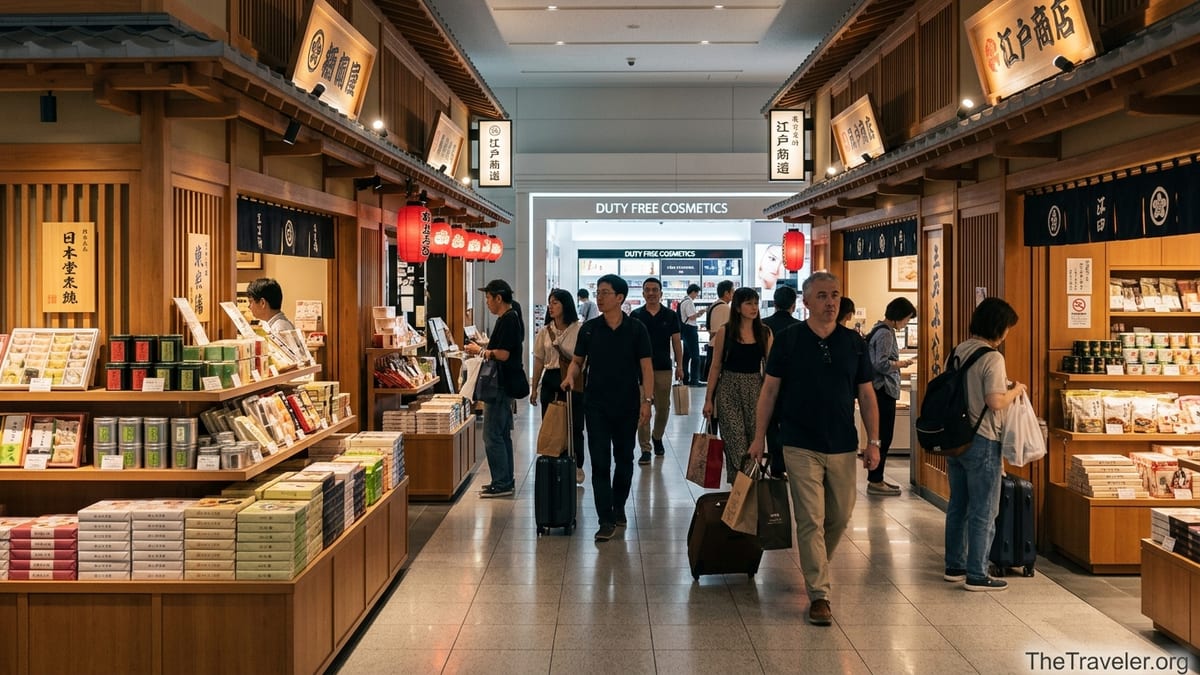
One of Haneda’s most distinctive attractions is Edo Koji, sometimes called Edo Market, on the fourth floor of Terminal 3. Designed to evoke the wooden townhouses and lantern-lit streets of old Edo, this compact “neighborhood” packs in restaurants and souvenir shops that lean heavily into Japanese aesthetics. It is an ideal place to buy omiyage that still feel authentic even if you are shopping at the eleventh hour.
In Edo Koji you will find shops selling beautifully boxed senbei rice crackers, yokan bean jellies, and regional sweets from Tokyo and beyond, often in seasonal limited-edition flavors. A typical mid-range box of assorted cookies or rice crackers might run around 1,000 to 2,000 yen, which makes it easy to buy in multiples for colleagues back home. Because many products are airport exclusives or Tokyo-only lines, the packaging tends to be bold and photogenic, which is part of the appeal if you are giving them as gifts.
Look out for stores curated around “Tokyo-made” items, where you can pick up small lacquerware trays, tenugui hand towels with skyline motifs, or compact ceramics that fit in hand luggage. Prices for these start at a few hundred yen for simple textiles and climb into the low thousands for hand-crafted pieces. For travelers who realize at the last minute that they need something more lasting than snacks, these shops are a way to bring home a piece of traditional design without committing to heavy or fragile luggage.
Food-focused travelers should also note that Edo Koji connects easily to areas with freshly made onigiri rice balls, bento boxes, and baked goods that work well as in-flight meals. If your airline’s catering is basic, grabbing a well-packed bento and some Japanese sweets here can turn a routine departure into a quiet personal feast once you are airborne.
Top Duty-Free Stores and How to Use Them
Duty-free shopping at Haneda centers on large mixed-category outlets in Terminal 3. Shops branded as TIAT Duty Free or run by airlines such as JAL and ANA carry a broad range including cosmetics, skincare, liquor, tobacco, confectionery, and some fashion accessories. These stores are arranged so that you pass through or alongside them on your way from security to the gates, which makes it difficult to miss the deals even if you are short on time.
Cosmetics and skincare are among the strongest categories. Global labels like Shiseido, SK-II, and Clé de Peau Beauté typically offer sets and larger sizes aimed at travelers, often at prices that undercut downtown department stores by the amount of sales tax. A high-end face serum that might cost around 30,000 yen inclusive of tax in the city can be a noticeable amount cheaper in the duty-free hall. In addition, many brands sell travel-exclusive kits that bundle popular items into compact pouches, ideal for gifting or testing a new routine.
Liquor is another highlight. Japanese whiskies can be harder to find at ordinary retailers, but Haneda’s duty-free shops usually dedicate full walls to them, from widely distributed bottles to more limited blends. Prices fluctuate and rare labels can sell out quickly, so think of this as a convenient last stop rather than the single best place for collectors. If you are simply looking for a respectable bottle of Japanese whisky, sake, or umeshu to bring home, the duty-free selection is solid and clearly labeled in English.
To get the most value, many travelers now reserve duty-free purchases online before arrival at the airport. Airline-operated shops in particular often give an extra percentage off if you pre-order by website and pick up at a specified counter in Terminal 3. The process is straightforward: browse items in advance, place a reservation under your flight number, and then pay on the day of departure when you retrieve your items. This can be a practical way to secure popular cosmetics shades or limited whiskies that sometimes sell out when flights are busy.
Iconic Souvenirs: From Tokyo Sweets to Japanese Tea
Haneda is ideal for classic Japanese food souvenirs, and Terminal 3’s shops are laid out with this in mind. You will find entire walls lined with neatly stacked boxes of Tokyo Banana sponge cakes, regional cheesecakes, matcha-flavored cookies, and mochi assortments. These items are wrapped for travel, with clear indications of how many pieces are inside and how many days they will stay fresh. A standard Tokyo Banana multipack, for example, is a convenient size for office sharing and is typically priced so that picking up two or three boxes does not feel extravagant.
Japanese tea is another safe bet, especially at specialty counters that present sencha, hojicha, and matcha in tins designed for gifting. Some shops package tea together with small teacups or snacks in gift sets, making it easier for first-time visitors to choose. Prices range from modest everyday teas that cost little more than supermarket blends to premium leaves and ceremonial-grade matcha in the low thousands of yen per tin. Staff are generally willing to explain flavor profiles in simple English, and many packages use icons or diagrams to indicate brewing temperature and strength.
For something more personal, look for stores that feature stationery and small design goods. It is common to find Tokyo-themed notebooks, washi tape, and pens that incorporate motifs such as cherry blossoms or the Tokyo Tower. These items are light, unlikely to cause trouble with customs, and easy to divide up among friends. A handful of thoughtfully chosen stationery pieces can feel more individual than a generic box of cookies, particularly for recipients who enjoy writing or art.
If you are traveling with children or buying for younger relatives, keep an eye out for character-themed souvenirs. Although Haneda does not match downtown character malls, airport shops often stock a focused range of Hello Kitty, Pokémon, and other popular characters in the form of candy tins, small plush toys, and keychains. These usually sit near the snack sections, so it is possible to pick up an assortment of both sweets and toys in a single circuit of one store.
Last-Minute Essentials: Convenience Stores, Travel Goods, and Vending Machines
Not every traveler arrives at Haneda in a shopping mood. Sometimes you realize at the gate that you are short on toiletries, have forgotten a travel adapter, or simply want a proper snack for the flight. Terminal 3 caters to these needs with convenience stores, travel goods outlets, and increasingly well-stocked vending machines, especially near the international gates.
Convenience stores inside security, including branches of major chains, typically carry onigiri, sandwiches, salads, and bento boxes that are fresher and often better value than airline food. Expect prices similar to what you would pay in the city: a rice ball for a couple of hundred yen, a hearty bento for under 1,000 yen. Snacks like chocolate, chips, and bottled tea are priced only slightly above downtown levels, which makes the convenience store a good place to use up remaining coins.
For travel accessories, look for electronics and travel-goods retailers with names recognizable from Japanese electronics districts. These shops stock plug adapters, charging cables, portable batteries, headphones, and practical items such as neck pillows and compression socks. If you realize that your suitcase is slightly overweight, you can often buy light foldable bags to redistribute items into carry-on. Prices here tend to be higher than in city discount electronics stores, but the trade-off is convenience and guaranteed compatibility with Japanese plugs and voltage.
Vending machines at Haneda have also become minor attractions in themselves. Near certain gates in Terminal 3, you may come across machines that sell character merchandise, including limited-run plush toys and small souvenirs, alongside more standard drinks and snacks. Stock levels change throughout the day, and popular items can sell out, so if you see something you like as you pass your gate it is wise to buy it rather than assuming it will still be available on your way back.
Money, Tax, and Practical Tips for Savvy Shoppers
Understanding how tax and payment work at Haneda can save both time and confusion. In Japan, regular shops outside the secure area typically charge consumption tax, but many airport stores selling to departing international travelers offer tax-free prices or handle the paperwork so that the final shelf price already reflects the discount. Duty-free stores after immigration operate on a slightly different system, where eligible goods are sold without certain domestic taxes on the condition that they leave the country with you.
For most travelers, the distinction is largely invisible: what matters is that prices in the main duty-free hall are generally lower than those in downtown department stores for the same product, occasionally by a noticeable margin on high-ticket items like fragrances or premium skincare. When comparing, remember that frequent flier promotions or pre-order discounts can sometimes stack with these tax advantages, particularly at airline-branded duty-free counters. If you tend to buy the same perfume or makeup regularly, it can be worth checking its usual price at home first to judge whether the airport’s offer is genuinely competitive.
Payment is straightforward. Credit cards from major networks are widely accepted, as are many mobile payment systems and some foreign debit cards. It is still sensible to carry a small amount of yen for smaller purchases at casual food stalls or for vending machines that may not support international cards. While it is increasingly common to see multilingual signage for prices and promotions, it pays to read receipts carefully, especially if you are buying high-value electronics or watches where warranty conditions may differ for overseas buyers.
Finally, keep customs limits in mind. Duty-free status in Japan does not automatically mean tax-free status on arrival in your home country. If you are buying liquor or tobacco in particular, check your destination’s personal allowance limits before loading up on bottles or cartons. A single extra bottle of whisky might not raise an eyebrow, but bringing home a full case could require declarations and additional tax payments that undercut any initial savings.
The Takeaway
Haneda has evolved from a simple transit point into a compact shopping destination in its own right. The Edo-style streets of Terminal 3 evoke a final stroll through old Tokyo, complete with traditional sweets and crafts, while the modern duty-free hall delivers the global mix of cosmetics, liquor, and fashion that experienced travelers expect. Layered on top are practical touches such as late-opening convenience stores, well-stocked travel goods shops, and surprisingly interesting vending machines.
For many visitors, this means that a last-minute airport run is no longer a compromise. You can still track down thoughtful omiyage, Tokyo-only snack flavors, or a neatly boxed bottle of sake even if you left your shopping until the day of departure. With a little planning, using pre-order options for big-ticket items and the Edo Market for lighter, more traditional souvenirs, Haneda becomes an easy place to balance value, variety, and time.
Whether you are a first-time visitor to Japan or a frequent flier passing through on a tight connection, it is worth arriving at Haneda slightly earlier than strictly necessary. A relaxed circuit through its shops can turn an ordinary wait into an enjoyable final chapter of your Tokyo trip, and send you on your way with luggage that feels a little richer in stories and gifts.
FAQ
Q1. Is it cheaper to shop at Haneda Airport than in central Tokyo?
Prices for everyday snacks and souvenirs are similar to the city, but duty-free cosmetics, fragrances, and liquor in Terminal 3 are often noticeably cheaper than downtown department stores because they exclude sales tax and sometimes offer additional traveler discounts.
Q2. How early should I arrive at Haneda if I want time to shop?
For international flights, aim to arrive at least three hours before departure if you want a relaxed shopping experience. This gives you time to clear security and immigration, explore Edo Koji before security if you wish, and still browse the duty-free hall without rushing to your gate.
Q3. Are the best shops before or after security in Terminal 3?
The most comprehensive duty-free selection, including major cosmetics and liquor brands, is after security and immigration. However, the Edo-style souvenir street and some charming specialty shops are located before security, so many travelers split their time between both areas.
Q4. Can I use credit cards and mobile payments at Haneda’s shops?
Yes. Most stores in Haneda’s Terminals 1, 2, and 3 accept major international credit cards and an increasing range of mobile payment systems. It is still useful to carry some cash for smaller food stalls and certain vending machines that may not accept foreign cards.
Q5. What are the best souvenirs to buy if I am short on space?
Compact items such as boxed sweets, Japanese tea tins, tenugui hand towels, and small stationery sets are ideal. They pack flat, travel well, and feel distinctly Japanese without adding much weight or bulk to your luggage.
Q6. Do shops in Terminal 3 stay open late at night?
Opening hours vary by store, but many convenience stores and some airport shops in Terminal 3 keep extended or even 24-hour schedules to match late-night and early-morning flights. Duty-free boutiques may close earlier, so check posted hours if you have a very late departure.
Q7. Can I move between terminals to shop before my flight?
Yes. Free shuttle buses and rail connections link Haneda’s terminals on the landside, so with sufficient time you can visit shops in Terminals 1, 2, and 3 before clearing security for your international flight. Be sure to allow for transfer time and re-check which terminal your airline uses.
Q8. Are there good options for buying last-minute food for the flight?
Terminal 3 has convenience stores and takeout counters offering onigiri, sandwiches, bento boxes, and drinks that are well suited to in-flight meals. Prices are close to what you would pay in the city, and the quality is generally higher than standard airplane snacks.
Q9. Is it possible to reserve duty-free items in advance at Haneda?
Several duty-free operators at Haneda allow travelers to reserve products online and pick them up in Terminal 3 on the day of departure. This is especially useful for popular cosmetics shades and certain liquor brands that can sell out during peak travel periods.
Q10. Are there unique items at Haneda that I cannot find elsewhere?
Yes. Some sweets, character goods, and beverages are sold in airport-exclusive packaging or flavors targeted specifically at international travelers. Edo Koji also features Tokyo-focused souvenirs and collaborations that may be difficult to find outside of the airport, making Haneda a worthwhile last stop for distinctive gifts.