


Tokyo Haneda Airport has a reputation for being efficient, but at busy times it can still mean long walks, crowded security lanes, and confusing transport choices. With a little preparation and a few insider tricks, you can turn Haneda into one of the easiest big airports you ever use. These 12 practical tips focus on saving time, reducing stress, and getting you into (or out of) Tokyo with minimal friction.
Get the latest updates straight to your inbox!
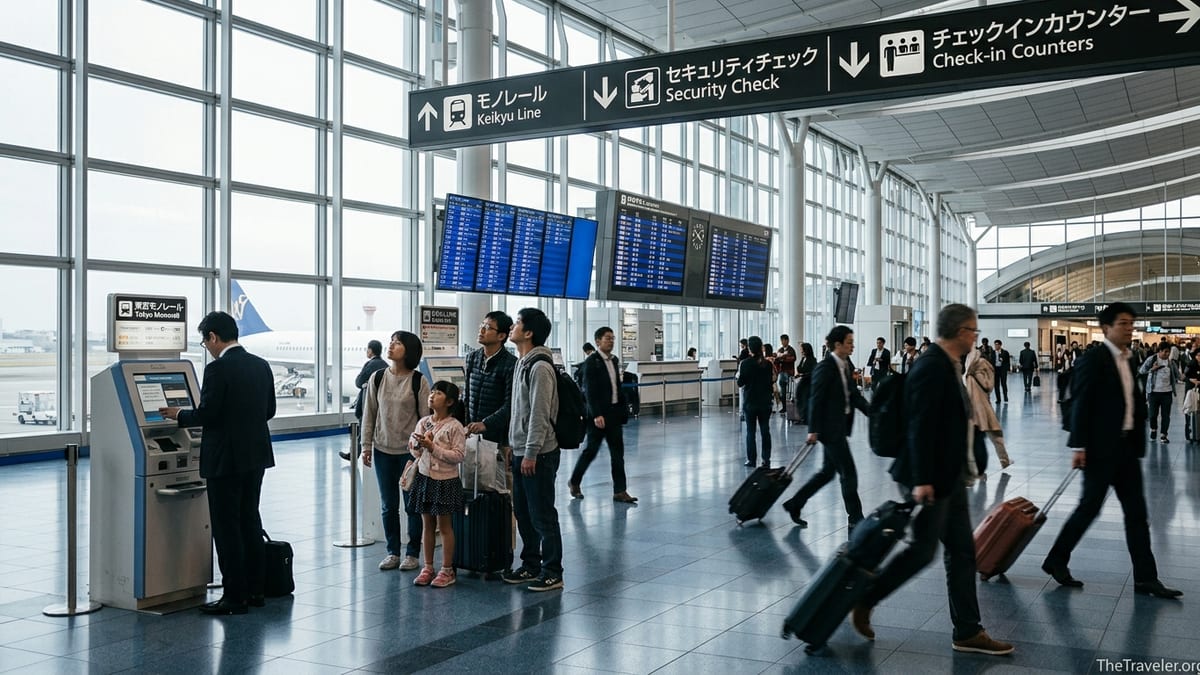
1. Know Your Terminal Before You Land
Haneda has three main terminals: Terminal 1 and Terminal 2 for most domestic flights, and Terminal 3 for most international flights. Some international services also use sections of Terminal 2, particularly on All Nippon Airways, so always confirm your exact terminal in your airline app or booking email before you fly. This matters because the three terminals are not all connected airside, which means you may need to clear security again if you go to the wrong one.
For example, if you arrive from Singapore on an ANA international flight, you might land in Terminal 3, but a connecting domestic flight to Sapporo could depart from Terminal 1. In that case, you cannot simply walk straight to your next gate. You will clear immigration and customs in Terminal 3, follow the signs for "Airport Shuttle" or rail connections, and transfer landside to Terminal 1, then pass through security again. Knowing this in advance lets you build that time into your plans.
The airport displays your terminal on overhead signs in English and Japanese from the moment you exit the aircraft. Domestic passengers will see separate arrows for Terminal 1 and Terminal 2, while international arrivals are clearly directed to Terminal 3. Make a habit of checking your boarding pass: it will usually show a large "T1," "T2" or "T3" alongside your gate number, which is your quick reference as you move through the building.
If you realize at baggage claim that you are in the wrong terminal for your onward transport or meeting point, do not panic. You can usually correct it in 15 to 25 minutes by following the free shuttle buses or using the short monorail or Keikyu hop between terminals, which is free for interterminal transfers when you pick up a transfer ticket at an information counter.
2. Use Real-Time Wait Tools and Plan Your Arrival Time
Although Haneda is efficient by global standards, security and immigration queues in Terminal 3 have grown longer in recent years during peak holiday periods and early morning departure banks. Japanese airport data and third party trackers show that average security waits can be around 10 to 20 minutes, but can spike significantly during heavy outbound waves. Many airlines at Haneda now recommend arriving 2 to 3 hours before international flights and at least 60 to 90 minutes before domestic flights.
To avoid surprises, check live or forecasted wait times for Haneda on your departure day. Several flight tracking websites and apps publish airport specific pages for Haneda that estimate current and typical security waits by hour of the day. Typing the airport code "HND" into those tools before you leave your hotel can reveal, for example, that security in Terminal 3 is currently in a "slow" or "severe" period, so you know to leave earlier than usual.
Combine those estimates with your airline’s guidance. For a 10:30 a.m. international departure from Terminal 3, a good rule of thumb is to aim to reach the check in counters by 7:30 to 8:00 a.m. On a quiet weekday afternoon this may feel early, but during busy seasons like late March cherry blossom or late December New Year, it can be the difference between a calm coffee after security and a stressful sprint to the gate.
Domestic flights are generally faster to process, but even then it pays to be conservative. For example, a 4:00 p.m. JAL flight from Haneda to Fukuoka in Terminal 1 might only require 45 minutes in theory, but if you are traveling with checked baggage and children, arriving closer to 90 minutes ahead gives you breathing room for any check in queues, security delays, or last minute bathroom stops.
3. Pre-Prepare Immigration and Customs to Breeze Through
Japan has streamlined many formalities for international arrivals through online forms and automated gates, and Haneda is one of the main beneficiaries. Before you fly, complete the Visit Japan Web procedures, which let you pre-register immigration information and customs declarations in a single digital profile. Once finished, you receive QR codes you can present on your phone on arrival, instead of filling out paper landing and customs cards in the immigration hall.
In practice, this means that when you land at Terminal 3, you can follow the purple Visit Japan Web signs and move directly toward immigration counters or automated gates with your QR code ready. Travelers who have completed both immigration and customs registration online often move through formalities noticeably faster than those still queuing to fill paper forms at the side desks. This can save 10 to 20 minutes if multiple wide body flights arrive at once.
Japan also operates Automated Gates at Haneda for eligible travelers, including many Japanese citizens, some foreign residents and certain short stay visitors who register their facial data or fingerprints. If you qualify, you simply tap your passport, look at the camera, and proceed through without waiting for a staffed immigration booth. Automated gates are especially valuable during late night arrival peaks when manual lines can back up.
For customs, Haneda has introduced digital kiosks where you scan your Visit Japan Web customs QR code, answer brief questions on a screen, and then pass through an e-gate. Often there is a staff member observing but you do not need to hand over a paper form. Families should be aware that group declarations are still possible; one adult can complete the process for a household, which is convenient for parents carrying sleeping children after a long haul flight.
4. Choose the Fastest Transport Option for Your Destination
The biggest time saver once you are landside is choosing the right transport into Tokyo based on exactly where you are staying. Haneda is directly linked to two rail lines: the Tokyo Monorail running to Hamamatsucho, and the Keikyu Line running to Shinagawa and Yokohama. From these hubs, you can transfer easily to the JR Yamanote Line and other metro and suburban lines that reach most hotel districts.
As of 2026, a one way adult fare on the Tokyo Monorail from Terminal 3 to Hamamatsucho using an IC card such as Suica or PASMO is a little over 500 yen, and the fastest Haneda Express services take about 13 minutes. This is often the best choice if your hotel is near Hamamatsucho, Shimbashi, Tokyo Station or Ueno. JR Pass holders can ride the Tokyo Monorail without paying extra, which makes it particularly attractive for rail pass users starting a longer Japan trip.
The Keikyu Airport Line is usually the cheapest rail option, with fares to Shinagawa around the low 300 yen range and a journey time of roughly 15 to 20 minutes. It is ideal if you are heading to Shinagawa itself or transferring cheaply to the Yamanote Line toward Shibuya, Shinjuku and Ikebukuro. All Keikyu train types cost the same for this section, so you can just board the first one going in the right direction, instead of waiting for a particular service.
For door to door comfort, the Airport Limousine Bus network and fixed price taxis are good alternatives. Buses run from all terminals to major hotel areas such as Shinjuku, Shibuya, Tokyo Disney Resort and some central business districts. Fares are typically in the low to mid thousand yen range per person, and travel time can vary with traffic. Flat fare taxis from Haneda to central Tokyo commonly cost the equivalent of around 7,000 to 10,000 yen, making them cost effective for groups of three or four, especially with large luggage or late night arrivals after trains have stopped.
5. Master the Free Shuttle and Interterminal Transfers
Because Haneda’s terminals are separated, understanding the free shuttle options can prevent missed connections and wasted time. A shuttle bus connects Terminals 1, 2 and 3, usually running every few minutes during the day and taking about 5 to 10 minutes between terminals depending on traffic. Stops are clearly marked outside arrivals levels with English signs reading "Free Shuttle Bus" and the terminal numbers.
Imagine you arrive internationally into Terminal 3 at 6:00 a.m. and have a 9:00 a.m. domestic ANA flight from Terminal 2. After immigration and customs, you exit into the arrivals lobby of Terminal 3. From here you can follow signs either to the free shuttle bus stand or to the train station one level below. The shuttle bus is simple: you board, ride to Terminal 2, and then head up to domestic departures. Many travelers prefer this option because it keeps everything within the airport environment without needing tickets.
Alternatively, you can transfer via the Tokyo Monorail or Keikyu Line between terminals. These rides are extremely short but do require passing through ticket gates. For interterminal transfers only, you can get a free ticket at an information counter or from airline staff. This is particularly useful if the bus queues are long, you have mobility issues, or you are already in the rail concourse after buying a transport pass and simply realize you need the other terminal.
Note that Terminals 1 and 2 are also connected by an underground walkway, so if you arrive at one but your check in or lounge is in the other, it may be quicker to walk. The corridor is well signposted and takes around 10 minutes at a relaxed pace. This is convenient for travelers using domestic lounges or meeting friends on different domestic airlines who want to move between buildings without going outside.
6. Save Time at Security With Smart Packing
Security screening at Haneda is generally smooth, but lines can build at peak times in Terminal 3, particularly early morning and late night when many international flights cluster. The quickest way to move through is to pack with Japanese security expectations in mind. Laptops and large electronics typically need to be taken out, and liquids must follow the standard 100 milliliter rule in a transparent bag for international departures.
Instead of digging through your belongings at the conveyor belt, place your laptop, tablet, and liquid bag together near the top of your carry on before leaving your hotel. Travelers who keep these items in a separate pouch can simply unzip once and slide everything into a tray, then repack in one motion after screening. This saves valuable seconds per person that add up quickly in a busy lane.
Footwear and belts are usually less of an issue in Japan than at some overseas airports, but metal items like large buckles or watch straps can still set off walk through detectors and force a manual check. If you wear heavy boots or many accessories, consider putting them in your cabin bag before security and putting them back on afterward. Parents with strollers should know that security staff are generally efficient and gentle, but they will need to screen the stroller separately, so having your child temporarily in your arms as you approach the belt can prevent delays.
Haneda sometimes opens additional security lanes during congested periods, and staff may direct passengers with earlier flight times into specific queues. Pay attention to the screens above the lanes, which often show upcoming departure times and flights. If your boarding time is listed on a lane with fewer people, it is worth politely asking staff if you can join that line to make your flight comfortably.
7. Eat, Shower, and Recharge Strategically
One of Haneda’s strengths is the quality of its food and rest facilities, but exploring them without a plan can eat into your buffer time. In Terminal 3, the main restaurant and shop area is clustered around the fourth floor Edo Koji zone, which recreates old Tokyo streets with ramen shops, tempura counters, and izakaya style eateries. If you arrive early for a late night international flight, it makes sense to clear check in and security first, then come back to this area if your gate is nearby, so you are not stressing about queues while sitting down for a bowl of tonkotsu ramen.
There are multiple convenience stores inside and outside security in all terminals, including familiar brands selling onigiri rice balls, sandwiches, salads, snacks and drinks at normal city prices. This is ideal if you are tight on time or traveling with picky eaters. For instance, a family landing on a short domestic hop from Osaka with only 40 minutes before their connecting flight to Kushiro might skip restaurants and simply grab triangle onigiri, bottled tea, and a small bento box from a convenience store opposite the gate.
For long layovers or red eye flights, the paid shower rooms in Terminal 3 are valuable. They allow you to rent a private cubicle with shower, mirror and basic amenities for a set time slot, usually in 30 minute blocks at a moderate fee. Travelers connecting from Europe to domestic Japan often schedule a quick shower on arrival before boarding their final domestic leg, which can help fight jet lag and make you feel ready to explore as soon as you reach your hotel.
Power outlets and USB charging points are scattered around seating areas and near many gates. Some newer gate zones have long counter style tables with integrated power and view windows overlooking the apron. If you need to recharge both devices and yourself, look for these counters, plug in your phone and laptop, and then pick up a coffee from a nearby cafe. You can easily turn 45 minutes of waiting time into a productive planning session for your Tokyo itinerary.
8. Use IC Cards and Passes for Seamless Transfers
Time at ticket machines can quickly add friction to your journey from Haneda into Tokyo. The easiest way to avoid this is to use a rechargeable IC card such as Suica, PASMO or PASMO Passport, which you can tap on both the Tokyo Monorail and Keikyu Line ticket gates, as well as on most JR and metro trains, buses and even in convenience stores and vending machines.
If you do not already have an IC card, you can purchase one from vending machines or staffed counters near the rail entrances in Terminal 3 or the domestic terminals. Many machines now offer English instructions and accept major credit cards. Try to load a few thousand yen equivalent at once, enough to cover your journey into the city and perhaps your first day of local transport, so that you do not have to top up immediately at a crowded city station after a long flight.
Travelers planning to use JR trains extensively, including the Shinkansen, may hold a Japan Rail Pass. This pass covers the full fare for the Tokyo Monorail between Haneda and Hamamatsucho, letting you simply tap or present your pass at the gate depending on the current procedures. For example, a visitor arriving with a rail pass might ride the Monorail to Hamamatsucho, transfer to the JR Yamanote Line toward Shinjuku at no additional cost, and then only need to pay for non JR subway lines later in their stay.
There are also combination tickets that bundle the Tokyo Monorail with a ride on the JR Yamanote Line, offered at a small discount when purchased together. These are especially handy if you know you are headed to a Yamanote station such as Shibuya, Shinjuku, Ueno or Ikebukuro. Buying one at the airport saves you from figuring out transfer fares after a long flight and can reduce queuing at transfer stations where ticket machines are busier.
9. Make the Most of Lounges and Quiet Zones
For travelers with early departures, long layovers or delays, knowing where to rest can greatly improve the experience at Haneda. In addition to airline operated lounges from carriers such as ANA and JAL for eligible passengers, there are several pay per use lounges in the domestic terminals and Terminal 3. These lounges usually offer comfortable seating, power outlets, soft drinks and sometimes showers for an hourly fee, and are accessible to any traveler regardless of airline or ticket class.
For example, a traveler flying economy on a late evening international departure from Terminal 3 who still wants a quiet workspace with stable Wi Fi might choose to pay for entry to a contract lounge after security instead of waiting at the crowded gate. They can charge devices, print or review documents, and enjoy a light snack while keeping an eye on departure screens. This can be especially attractive for business travelers finishing work remotely before boarding.
If you prefer free options, Haneda offers numerous quiet seating areas away from main thoroughfares. In Terminal 1 and Terminal 2 domestic areas, upper floors above the main concourses often have benches and windows with relatively few people, particularly in the middle of the day. Families with small children sometimes use these spaces to spread out toys or let kids nap in a stroller while one adult keeps watch.
Do not overlook the observation decks on the upper floors of each terminal. These open air or semi open spaces provide runway views and a welcome break from the indoor environment. Plane spotters, photographers and kids all enjoy watching aircraft take off and land with the Tokyo skyline in the background. If you have arrived early and sailed through security faster than expected, spending 20 minutes on the deck can be a calming way to mark the start or end of your trip.
10. Shop Smart and Know Where to Find Essentials
Haneda has grown into a serious shopping destination, but wandering aimlessly between boutiques can be a time trap if you are not careful. Start by identifying what you actually need. If your priority is to buy last minute souvenirs like Japanese sweets, character goods or regional snacks, you will find large duty free and specialty stores airside in Terminal 3 and landside in all terminals. It is usually safe to assume that common gifts such as Tokyo banana cakes, matcha KitKats and regional rice crackers will be available after security, so you do not have to carry them through check in and screening.
Travelers who need practical items such as SIM cards, pocket Wi Fi rentals, or travel adapters should handle those as soon as they enter the arrivals hall. In Terminal 3, telecom counters and electronics shops are clustered along the main passage just past customs. Queue times can be longer in the morning when many flights arrive from North America and Europe, so if possible, pre order a SIM or eSIM from your provider before you fly and simply activate it after landing, skipping the airport lines altogether.
If you forget toiletry essentials like toothbrushes, moisturizers, or cosmetics, do not worry. Convenience stores and drugstore style outlets around the terminals stock a broad range of Japanese brands in travel sizes at normal city prices. For example, you may find travel bottles of popular skincare, basic medicines, and even small laundry detergent packs if you need to freshen clothes during a long trip. This means you can pack lighter, knowing that Haneda will have many day to day items you might otherwise overpack.
Remember that many of the more upmarket boutiques and gift shops are concentrated in the international areas, so domestic travelers looking for luxury cosmetics or high end confectionery might have fewer choices airside. If you are flying domestically from Terminal 1 or 2 but connecting to an international flight elsewhere, consider doing most of your tax free or brand specific shopping at your final international departure point instead of rushing around at Haneda.
11. Prepare for Late Night and Early Morning Flights
Haneda’s location close to central Tokyo means it handles many late night and early morning flights timed for international connections. If you are arriving after 11:00 p.m. or departing before 7:00 a.m., you should plan ahead for transport and food, since train and bus frequencies drop and some shops close overnight. Checking the first and last train times for the Tokyo Monorail and Keikyu Line on your exact date can prevent a costly surprise taxi ride.
For example, if your flight lands at 11:45 p.m., you may miss the last monorail or Keikyu service into the city. In this case, check whether your hotel offers a late night airport transfer or be ready to use a fixed fare taxi into central Tokyo. Splitting the fare between two or three people can be reasonable compared to being stranded. It is also worth picking up snacks and bottled drinks from a convenience store inside the terminal before heading out, as some city shops near your hotel may already be closed.
On the departure side, passengers on very early flights, such as a 6:00 a.m. domestic departure to Sapporo, should confirm what time security opens at their terminal and how early public transport can deliver them to the airport. It might make sense to stay at an airport hotel directly connected to one of the terminals or reachable via a short shuttle ride, especially if you are traveling with children or large suitcases.
Overnight within the terminal itself, seating areas remain open, but many services like full service restaurants, currency exchange counters and larger shops close or operate with reduced hours. If you anticipate spending part of the night at Haneda between flights, consider booking a capsule style or budget hotel connected to the airport complex. This gives you access to a bed, shower and secure place for your luggage, turning a potentially exhausting overnight wait into a manageable rest period.
12. Keep Cash, Cards, and Connectivity Ready
Even though Japan is steadily embracing cashless payments, having a small amount of yen cash at Haneda can still save time. Some smaller vending machines, older coin lockers or certain shuttle services may prefer coins or notes, and having a few thousand yen in your wallet allows you to pay quickly without hunting for ATMs. Currency exchange counters and ATMs are available in all terminals, but queues can form after big international arrivals, so using an ATM in your home country before departure or carrying a travel card that works in Japanese ATMs can be more efficient.
Most larger services at Haneda, including rail tickets, shops, cafes and convenience stores, now accept major credit cards and contactless payments. However, occasionally a small outlet or temporary kiosk might only accept cash. For example, a small stand selling local snacks near a domestic gate may have a handwritten sign indicating cash only. In those cases, exact or near exact cash speeds up the line for everyone, including you.
Free Wi Fi is provided throughout the terminals, which is useful for downloading rail apps, confirming hotel directions, or messaging family. The network typically requires agreeing to terms of use on a splash page. If you rely on navigation apps or translation tools heavily, consider arranging a Japanese eSIM or rental pocket Wi Fi to ensure continuous coverage beyond the airport. Activating your eSIM while waiting for baggage is a smart use of otherwise idle time.
Finally, keep screenshots of key information stored on your phone in case you lose connectivity. A screenshot of your hotel address in Japanese, your train route from Haneda, and your airline confirmation with terminal details can all be accessed even if the network is congested. This small habit can be invaluable when trying to explain your destination to a taxi driver or station attendant who speaks limited English.
The Takeaway
Navigating Tokyo Haneda Airport efficiently is less about secret shortcuts and more about understanding how the terminals, formalities and transport options fit together. By confirming your terminal, using digital immigration tools, choosing the right train or bus for your destination, and making smart use of shuttles, lounges and facilities, you can strip much of the stress from both arrival and departure.
Real world details matter at Haneda because the airport is large but tightly integrated into Tokyo’s transport network. A traveler who lands with Visit Japan Web QR codes ready, an IC card loaded with credit, and a clear plan to take the Monorail to Hamamatsucho or Keikyu to Shinagawa will be comfortably in their hotel room while others are still figuring out ticket machines. With the tips above, you can turn Haneda from a potential bottleneck into a smooth and even enjoyable part of your Japan journey.
FAQ
Q1. How early should I arrive at Haneda for an international flight?
For most international departures from Terminal 3, arriving 2 to 3 hours before scheduled departure is a safe target, and closer to 3 hours during peak holiday seasons.
Q2. Which is faster into central Tokyo, the Tokyo Monorail or the Keikyu Line?
For areas near Tokyo Station, Hamamatsucho or Ueno, the Tokyo Monorail plus a JR transfer is usually fastest, while Keikyu is often quicker and cheaper for Shinagawa, parts of Shibuya and Yokohama.
Q3. Can I use a JR Pass from Haneda Airport?
Yes, the Japan Rail Pass typically covers the Tokyo Monorail between Haneda and Hamamatsucho, so you can ride into the JR network without paying a separate monorail fare.
Q4. Is Visit Japan Web really necessary for arrival at Haneda?
It is not strictly mandatory, but completing Visit Japan Web in advance usually speeds up immigration and customs, reducing time spent in lines after a long flight.
Q5. How much does a taxi from Haneda to central Tokyo cost?
Flat fare taxis from Haneda to many central Tokyo areas generally cost the equivalent of around 7,000 to 10,000 yen, making them good value for groups or late night arrivals.
Q6. Are there showers available at Haneda Airport?
Yes, Terminal 3 has paid shower facilities where you can rent a private shower room for a set time slot, which is ideal after overnight or long haul flights.
Q7. What is the best option if my flight arrives after the last train?
If you land after trains stop, your main choices are fixed fare taxis, pre booked private transfers, or staying at an airport area hotel reachable by late night shuttle or short taxi ride.
Q8. Do I need cash at Haneda, or are cards enough?
Most shops and transport options accept cards and IC payments, but carrying a few thousand yen in cash is wise for small kiosks, older vending machines or emergencies.
Q9. Is there a free shuttle between terminals at Haneda?
Yes, a free shuttle bus connects Terminals 1, 2 and 3, usually every few minutes during the day, and the ride between terminals typically takes under 10 minutes.
Q10. Can I easily find food late at night or early in the morning?
Some convenience stores and a limited number of eateries stay open late, but choices shrink overnight, so it is smart to grab snacks and drinks before shops close.