


More news on this day
A freight train derailment along Aylett Road in Howard County has disrupted rail operations, forced road closures, and drawn regional attention to rail safety and infrastructure resilience in this fast-growing suburban corridor.
Get the latest news straight to your inbox!
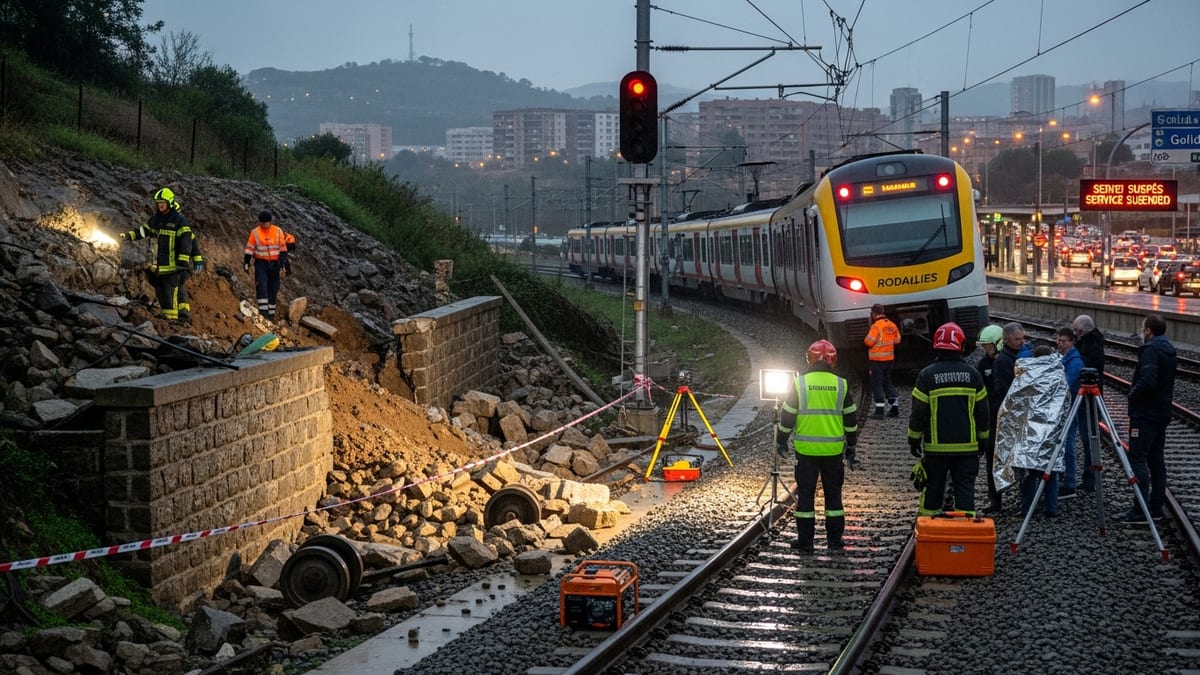
Derailment Along Local Roadway Prompts Swift Closures
The derailment occurred near a rail crossing on Aylett Road, where a freight consist left the tracks and came to rest alongside the roadway. Early reports indicate that multiple railcars left the rails in the incident, blocking portions of the corridor that links neighborhoods, schools, and local businesses in Howard County.
Publicly available information suggests that first responders moved quickly to secure the scene, establish perimeters around the damaged railcars, and assess nearby structures and utilities. While detailed technical findings are not yet available, initial accounts point to the derailment as a low-speed incident that nonetheless created a wide debris field close to the road.
Traffic along Aylett Road and connecting residential streets has been diverted while crews assess track damage, remove derailed cars, and inspect overhead lines and underground utilities. Local travelers are being advised through regional traffic alerts and social media updates to seek alternate routes and allow extra time for commutes.
Rail operators have temporarily suspended movements through the affected stretch while damage surveys continue. Neighboring rail segments are reportedly operating at reduced speeds, a common precaution in the hours after an incident of this kind.
Impact on Commuters and Nearby Neighborhoods
The location of the derailment along Aylett Road has had an outsized effect on local mobility despite the relatively limited geographic footprint of the crash site. The road is a familiar cut-through for commuters between residential subdivisions and larger arterial highways in Howard County, and even a short closure can cascade into delays during peak periods.
Residents closest to the tracks have reported an uptick in truck traffic on smaller streets as commercial vehicles and delivery services navigate around the blocked section. Some school bus routes and ride-share pickups in the area are expected to be adjusted until railcars and heavy machinery are cleared from the right-of-way.
Available traffic mapping data shows congestion building at key intersections feeding into Aylett Road, with backup spilling toward nearby collector roads. Transportation updates indicate that signal timing adjustments and temporary signage are being used to manage the increased loads on alternate corridors.
For now, transportation planners are emphasizing patience and caution, particularly during the evening rush when detoured drivers may be unfamiliar with residential shortcuts and unmarked curves around the rail corridor.
Environmental and Cargo Safety Assessments Underway
Reports indicate that the derailed train was a freight movement, with cars carrying a mix of bulk and containerized loads. As with any rail incident, the stability of the cars and the nature of the cargo have been key early questions for emergency managers monitoring the scene along Aylett Road.
According to published coverage of the response, crews have been inspecting the railcars for leaks, structural deformation, and signs of shifted loads. At this stage, publicly available information does not indicate a large-scale release of hazardous materials, but standard protocols typically require recurring inspections until all cars are re-railed, emptied, or removed.
Environmental monitoring in similar derailments often includes checks on nearby drainage channels, stormwater infrastructure, and soil conditions adjacent to the right-of-way. Aylett Road’s proximity to residential lawns, small wooded buffers, and roadside ditches means that even minor spills may require prompt containment and cleanup.
Freight railroads operating in the region are subject to federal incident reporting rules, and summaries of the derailment and any confirmed releases are expected to appear in public safety databases once the initial fact-finding phase is complete.
Ongoing Investigation and Rail-Safety Context
While the precise cause of the Aylett Road derailment has not yet been detailed in official investigative reports, similar events across North America frequently involve a combination of track conditions, equipment performance, and train handling factors. Rail-safety analyses note that defects in rail, fasteners, or ballast can contribute to wheel climb or gauge spreading under heavy loads, particularly in high-use corridors.
Recent research into derailment risk highlights that freight trains, although generally safer per ton-mile than highway transport, can produce significant local disruption when even a small number of cars leave the tracks. Studies emphasize the importance of proactive inspection regimes, continuous rail monitoring, and data-driven maintenance programs to detect emerging problems before they lead to accidents.
In Howard County, the Aylett Road incident is likely to be folded into a broader conversation about freight traffic volumes, grade-crossing protection, and the relationship between rail lines and rapidly expanding residential communities. Publicly available planning documents in many rail-adjacent counties discuss buffer zones, noise and vibration standards, and emergency access requirements, all of which may receive renewed scrutiny in the wake of a derailment.
Transportation safety agencies customarily publish synopses of their findings months after such events, and those summaries often shape future investment in track improvements, signal technology, and training for first responders who operate along the rail corridor.
What Travelers Should Know in the Days Ahead
For travelers passing through Howard County, the most immediate effect of the Aylett Road derailment is likely to be slower trips and occasional detours near the rail corridor. Navigation apps may not reflect barricades or one-way traffic controls in real time, so drivers are encouraged to watch for temporary signage and flaggers near the closure zones.
Regional travelers relying on rail may experience lingering schedule changes as freight carriers adjust dispatching and routing around the damaged segment. Even after the line reopens, speed restrictions may remain in place while track engineers monitor settlement and the performance of new components installed during repairs.
Local tourism and day-trip plans that involve crossing between different parts of Howard County may also require minor adjustments. Visitors heading to historic districts, parks, and trailheads near the affected corridor may find that familiar shortcuts along Aylett Road are temporarily unavailable.
As cleanup and repairs progress, publicly available information from transportation agencies and county emergency management offices is expected to provide the clearest picture of when normal traffic patterns and rail operations will resume along this key link in Howard County’s transportation network.