


More news on this day
Train services on a busy commuter route were suspended and significantly reduced on Sunday as emergency services attended an incident on the line, leaving passengers facing extended delays and short-notice cancellations.
Get the latest news straight to your inbox!
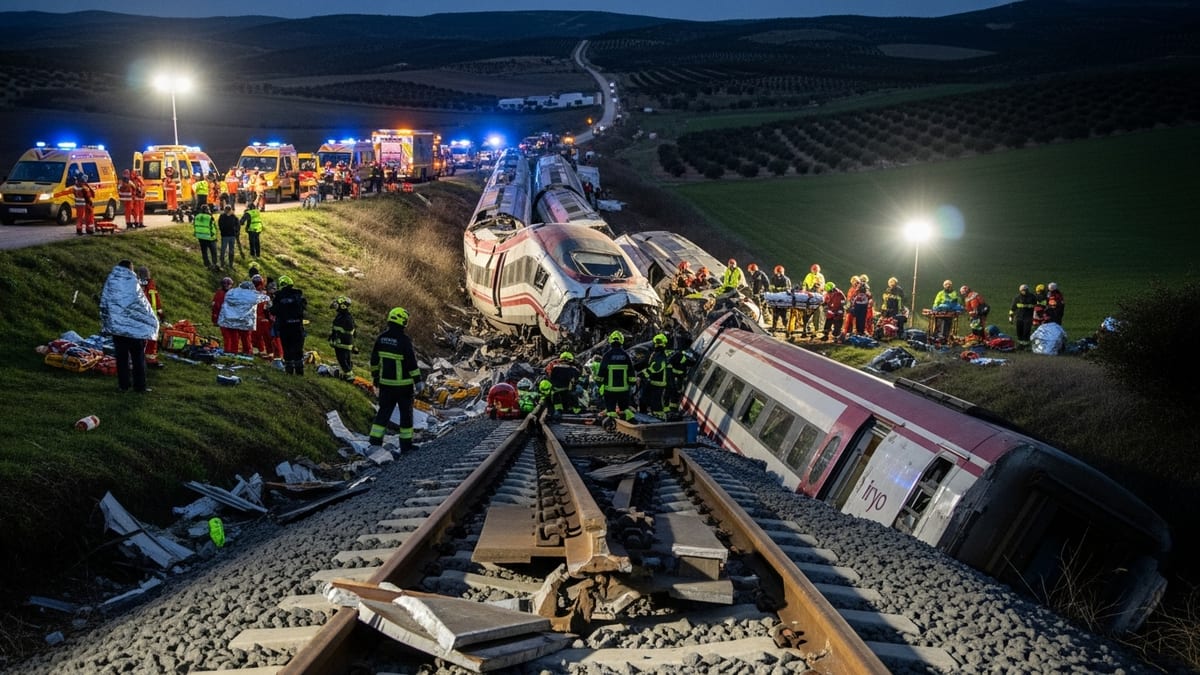
Services halted while emergency response takes place
Operational updates from rail industry channels indicate that services were brought to a standstill on part of the network while emergency services dealt with an incident on or near the tracks. Standard safety procedures require train movements in the affected area to be stopped to create a safe working environment for responders, which can quickly lead to knock-on disruption across a wider section of the timetable.
Initial information shared through disruption feeds described emergency teams attending an incident on the line, a phrase commonly used when police, ambulance or fire crews are required on railway infrastructure. Full details of the circumstances are not immediately available, but service alerts show that trains were held in both directions and some services were diverted or terminated short of their planned destinations.
In several recent incidents of this nature, including cases reported on urban and regional routes in the United Kingdom and United States, services have been suspended for periods ranging from one to several hours while responders complete their work and engineers assess the line before trains can move again. The latest disruption appears consistent with this pattern, with normal services only able to resume once investigations and essential safety checks are complete.
Rail operators typically avoid publishing specific details about individuals involved in such incidents, focusing instead on service impacts and alternative travel options. This approach aligns with wider rail-industry practice aimed at minimising distress and discouraging speculation while emergency teams manage the situation.
Passengers warned of delays, cancellations and diversions
Publicly available information from rail operator and infrastructure-manager channels shows that passengers on the affected route have been advised to check live departure boards and journey planners before travelling. Disruption of this type can result in full cancellations, partial cancellations where trains start or terminate at different stations, and extended journey times due to diversions or enforced speed restrictions past the site of the incident.
In comparable recent incidents, replacement buses have been organised on some routes to maintain limited connectivity between key stations when the line is fully blocked. These road services often take longer than the equivalent rail journey and can themselves be affected by road congestion, but they provide a crucial link for passengers who have no easy alternative way to complete their trips.
Experience from previous disruption events suggests that even once the line reopens, residual delays can continue for some time as trains and crews are out of position. Timetables may take several hours to recover, particularly on complex commuter networks where services are tightly timed and depend on precise sequencing through key junctions.
Passengers already on trains at the time of the incident can also face extended periods on board while awaiting clearance to move. Recent cases logged in operational summaries show trains held at signals for significant periods while emergency services work trackside, underlining the cascading impact that a single event can have across a busy railway.
Safety protocols dictate full line blocks in incident areas
Guidance published by infrastructure managers explains that whenever emergency services are called to an incident on or near the railway, strict safety protocols require rail traffic to be halted in the immediate area. This can involve blocking all lines through a section so that responders can work without the risk posed by moving trains or live electrical equipment.
Specialist railway teams are deployed to support emergency responders, isolate power where necessary and inspect track, signalling and overhead line equipment before any trains are permitted to pass. In past cases involving collisions, medical emergencies or suspected obstructions on the line, these checks have been central to deciding whether temporary speed limits or diversions are needed as trains begin to run again.
Operational reports and independent reviews have repeatedly highlighted the trade-off between safety and service continuity in these situations. While passengers may experience frustration at long delays and limited information, industry documentation emphasises that the priority in any incident involving emergency services is to protect life and secure the scene, even if this causes widespread timetable disruption.
Data from rail performance and safety reviews also indicate that incidents requiring emergency attendance, although relatively infrequent compared with routine technical faults, tend to result in disproportionately high levels of delay. This is partly because they are unplanned and can occur during peak travel periods when the network is already operating close to capacity.
Recent cases highlight broader impact on regional networks
The latest disruption comes against a backdrop of several high-profile rail incidents in recent months where emergency interventions have led to substantial service impacts. In the United Kingdom, publicly available logs show a series of events in which persons were struck by trains or where police attended incidents close to the tracks, prompting full line closures and extended knock-on delays on busy intercity and suburban routes.
Elsewhere, major metropolitan transit systems have also experienced significant disruption following incidents in tunnels or at busy stations, with services suspended over multiple stops while emergency medical teams and technical staff gained access to trains. In some cases, services on parallel or intersecting lines were adjusted to relieve crowding and provide alternative routes, underlining how a single incident can ripple across a wider urban network.
Internationally, detailed investigations into derailments and infrastructure failures have documented how emergency responses, recovery operations and subsequent engineering works can affect rail services for days rather than hours. Although the current situation appears more limited in geographic scope, it reflects the same operational challenges of coordinating emergency access, passenger welfare, infrastructure inspection and the staged restoration of services.
Such events have prompted calls in several countries for continued investment in incident management planning, staff training and real-time passenger information systems, so that travellers receive clearer, faster updates when trains are unable to run as scheduled.
Advice for affected travellers
Passenger guidance shared in connection with the latest disruption encourages travellers to verify their route using live journey planners before setting out, and to allow additional time for their trips. When services are heavily disrupted, some operators advise avoiding non-essential travel through the affected area until a more stable timetable is restored.
For those already en route, published advice from recent incidents suggests staying on the train unless instructed otherwise by railway staff, as self-evacuation onto the track presents significant safety risks. Travellers are also encouraged to retain tickets and booking confirmations where delay compensation schemes apply, since entitlement is often based on verified disruption to specific services.
Industry-facing documentation notes that disruption involving emergency services can be emotionally distressing for those on board and at stations, particularly when incidents involve serious injury or loss of life. In response, some operators highlight the availability of support information and signposting to specialist organisations as part of their public communications following such events.
As operational teams work to normalise services after the latest incident, further updates are expected to be issued through journey planners, station announcements and operator communication channels, allowing passengers to adjust their plans as the service pattern gradually stabilises.