


More news on this day
A trucking company with a crash history that federal data link to 12 previous roadway incidents is facing fresh scrutiny after one of its tractor-trailers collided with a freight train in southwest Atlanta, igniting a fire and disrupting commuter rail service.
Get the latest news straight to your inbox!
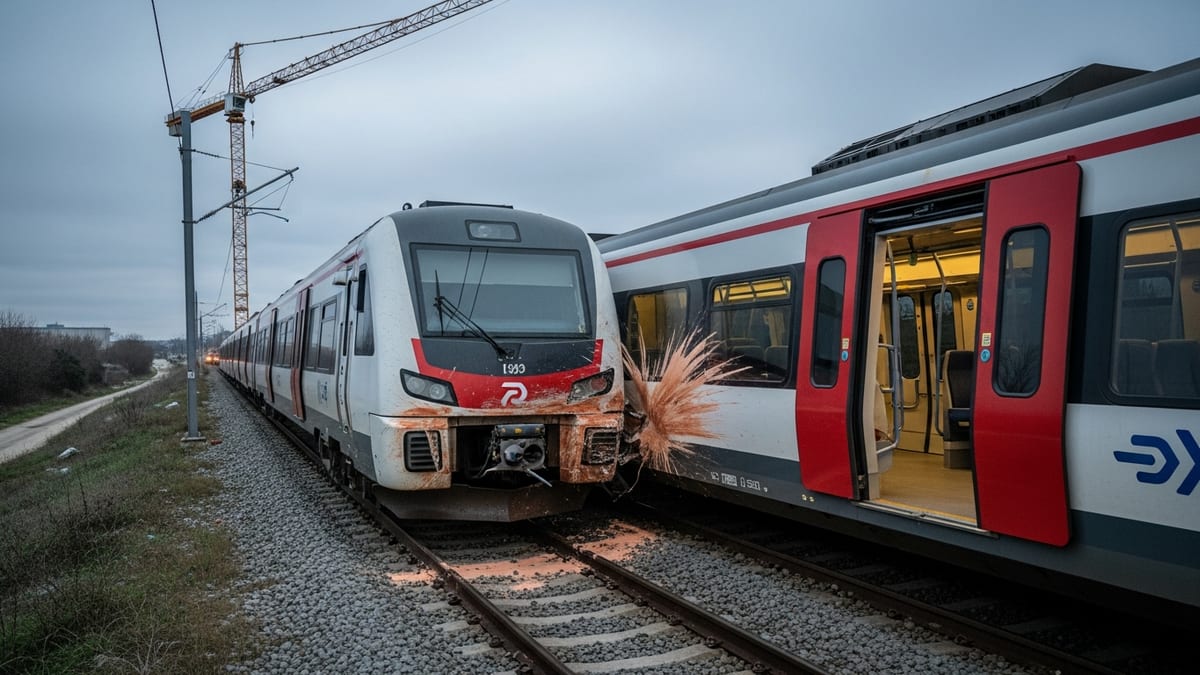
Pre-dawn collision disrupts freight and commuter traffic
The most recent crash unfolded in the early hours near Lee Street and Sylvan Road in southwest Atlanta, where a semi-truck struck a CSX freight train on a Norfolk Southern line. Published coverage indicates the impact sparked a fire that engulfed the truck’s cab and trailer and scattered debris along the right of way beneath elevated MARTA tracks that carry trains between the West End and Oakland City stations.
Transit updates reported that MARTA briefly suspended service through the corridor while crews assessed damage and fire officials extinguished the blaze. Service resumed later in the morning, but images from the scene showed scorched pavement, charred wreckage and rail infrastructure ringed by emergency vehicles.
According to reports, no injuries have been confirmed and investigators are still piecing together the sequence of events, including whether the truck was stopped on the tracks or moving at the moment of impact. Early accounts also note that the tractor-trailer’s driver was not immediately located after the incident.
The Atlanta crash adds to a broader pattern of truck and train conflicts at highway-rail crossings across the United States, incidents that frequently trigger lengthy delays for freight and passenger traffic even when there are no serious injuries.
Federal records link carrier to 12 previous crashes
Publicly accessible federal safety data reviewed by independent trucking analytics platforms indicate that the carrier involved in the Atlanta collision is linked to 12 prior crashes recorded over recent years. These events, logged through Federal Motor Carrier Safety Administration (FMCSA) systems and republished by third-party scorecards, range from property-damage-only wrecks to crashes with reported injuries.
Aggregated crash summaries show that, taken together, the dozen incidents involve multiple towed vehicles and at least several injury cases, although no recent fatal crashes are currently tied to the company in the available data. Safety dashboards that compile this information typically flag such records as “many crashes per truck” relative to the size of the fleet, a warning signal that places additional reputational pressure on the operator.
FMCSA data feeds are updated on a rolling basis as police reports are processed, so counts can lag behind very recent events. Even so, the pattern that emerges for this carrier places it above national benchmarks on several key indicators, including out-of-service rates and crash involvement, raising questions about how aggressively its safety performance has been monitored and corrected.
Industry observers note that a history of double-digit crashes does not automatically imply regulatory violations, but it can influence insurance costs, customer decisions and route-planning requirements, particularly when trucks operate in dense metropolitan areas with numerous rail crossings.
Atlanta’s freight chokepoints heighten risk at rail crossings
The southwest Atlanta crash highlights how complex the interface between road and rail has become in the city’s older industrial corridors. Planning documents for metro Atlanta identify the region as a major freight hub, with high volumes of heavy trucks sharing space with busy freight lines and commuter rail infrastructure in tight urban rights of way.
Analyses of truck-related crashes in nearby jurisdictions have found that the vast majority of incidents involve property damage only, yet the sheer number of truck movements translates into thousands of wrecks over multi-year periods. In corridors where highways, local streets, railroads and transit lines intersect, even a single crash can quickly ripple outward, disabling signals, blocking intersections and freezing both rail and road traffic.
Rail safety reports for the Atlanta area also document prior collisions at grade crossings, including events in which trains have struck vehicles that entered or remained on the tracks after gates were activated. In one recent case, a freight train hit an unoccupied vehicle that had pre-empted crossing gates, underscoring how little margin for error exists once a train is committed to a block of track.
For travelers and commuters, the latest crash is another reminder that pinch points around rail crossings can become sudden bottlenecks. For carriers and shippers, it illustrates how a momentary lapse in route planning or situational awareness can convert into hours of delay, equipment loss and potential liability.
Scrutiny on carrier oversight and route planning
The Atlanta incident is likely to intensify attention on how trucking companies with challenging safety records are overseen and dispatched on routes that traverse rail crossings. Legal and safety analyses of previous truck-train collisions have repeatedly highlighted failures in route assessment, clearance checks and communication with railroads when oversized or slow-moving loads are involved.
Guidance from transportation safety investigators in past cases emphasizes that companies are expected to vet crossings on designated routes, verify that vehicles can clear tracks without stalling and ensure that drivers understand when and how to contact rail dispatchers if a vehicle becomes stuck. When a carrier’s internal safety culture is weak, these safeguards can erode, contributing to repeat incidents even when individual crashes have different immediate causes.
For a company already associated with 12 recorded crashes, insurers, freight brokers and business partners may take a harder look at audit reports, driver training records and maintenance programs. Analysts who track FMCSA scores note that conditional or poor ratings can limit a carrier’s access to premium freight and may lead some shippers to shift volume to competitors perceived as lower risk.
At the same time, advocates for stricter oversight argue that cumulative crash histories should factor more clearly into enforcement decisions, including targeted inspections, mandatory corrective action plans or, in extreme cases, shutdown orders. The outcome of ongoing inquiries into the Atlanta collision could influence whether additional regulatory steps are considered warranted.
Travelers urged to remain cautious around freight corridors
While the focus of the latest Atlanta crash rests on the trucking company and its safety record, travelers in the region are once again being reminded of the particular hazards that accompany movement through active freight corridors. Even in the absence of serious injuries, an event that ignites a tractor-trailer and halts both freight and commuter rail highlights how quickly conditions can change near tracks.
Transportation safety campaigns in Georgia and other states routinely encourage drivers to avoid stopping on tracks, respect warning signals and treat rail corridors as dynamic environments where trains can appear with limited notice. For pedestrians and cyclists using routes that thread through industrial districts, the advice is similar: assume trains can arrive at any time and that stopping distances for rail equipment are far longer than for highway vehicles.
For visitors passing through Atlanta by car, bus or train, the disruption illustrates the importance of allowing extra time when itineraries involve travel near major freight lines, especially during early-morning or late-night windows when heavy truck traffic often peaks. For local residents navigating familiar routes, it serves as a reminder that even routine crossings can present unexpected hazards when any link in the freight chain falters.
As investigators review crash data, signal records and carrier histories, the combination of a trucking company linked to a dozen prior incidents and a fiery collision beneath one of Atlanta’s key transit arteries is likely to remain a focal point in ongoing discussions about freight safety in urban centers.