


More news on this day
President Donald Trump returned to the White House a day early from Camp David on Saturday, September 19, 2026, as the U.S. government circulated new security messaging for Americans in the Middle East amid renewed regional attacks and the risk of sudden travel disruptions.
Get the latest news straight to your inbox!
What changed this weekend for travelers
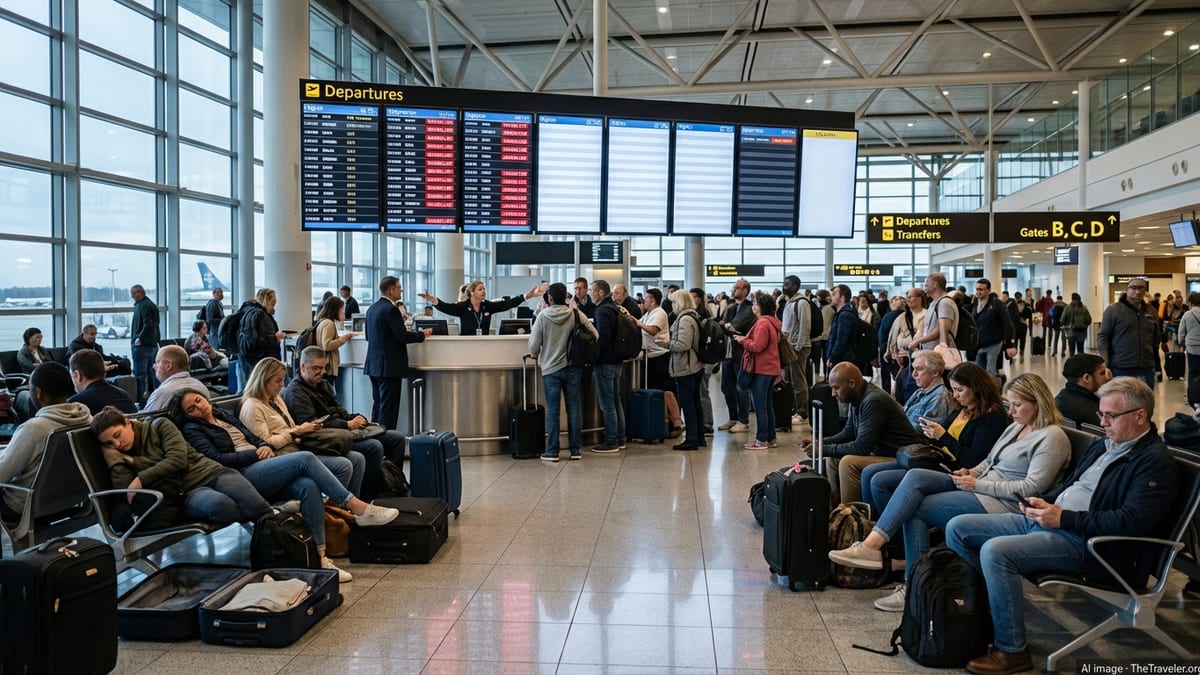
Published coverage indicated Trump’s abbreviated Camp David schedule coincided with a wave of U.S. embassy security alerts across the region. The alerts broadly advised U.S. citizens to exercise heightened vigilance and to anticipate potential flight cancellations, temporary airspace closures, and other disruptions that can cascade quickly across major hubs.
The timing followed reports of renewed Houthi attacks on Saudi Arabia, including reports tied to the Riyadh area, which raised immediate questions about the reliability of commercial aviation routings over parts of the Gulf and Red Sea corridors. Even when flights continue operating, the practical impact can include last-minute reroutes, longer flight times, missed connections, and sudden changes to airport access procedures.
For travelers planning near-term trips, the immediate takeaway is that this is not a single-country issue. The security messaging was distributed across multiple U.S. missions in the Middle East, reflecting how quickly disruption risks can spread through regional airspace and transit networks.
Where the new security alerts are focused
The weekend alerts appeared on U.S. embassy sites in a wide set of Middle East destinations, including Bahrain, Iraq, Jordan, Kuwait, Lebanon, Oman, Qatar, Saudi Arabia, the United Arab Emirates, and Israel. Separately, the State Department continues to maintain country-specific Travel Advisories that can differ sharply by destination, and those levels have been updated at different points across 2026.
As of mid-September 2026, publicly available Travel Advisory pages show Saudi Arabia at Level 3 “Reconsider Travel,” citing risks that include missile and drone threats, armed conflict concerns, and terrorism, with additional cautions about legal and administrative issues such as exit bans. Iraq remains at Level 4 “Do Not Travel,” reflecting the U.S. government’s longstanding warnings about terrorism, kidnapping risks, armed conflict, and limits on emergency services for U.S. citizens in-country.
Travelers should also distinguish between a “Security Alert” and a Travel Advisory level. A Security Alert is a near-term operational warning that may be driven by rapidly changing events, while a Travel Advisory level is a broader risk assessment that can guide trip planning and insurance decisions.
What to do now if you are flying to, from, or through the region
When alerts highlight possible airspace closures and flight disruptions, the most useful step is to verify real-time flight status directly with your airline and to monitor airport operations, especially if your itinerary relies on a regional hub for connections. Disruptions can appear first as schedule changes, aircraft swaps, or reroutes that still show as “on time” until later in the travel day.
Travelers transiting the Gulf often have tightly timed connections, and a reroute to avoid specific air corridors can quickly create misconnect risk. If your trip is in the next few days, consider building additional connection time, minimizing separate-ticket itineraries, and confirming whether your checked baggage will be through-tagged if a connection changes.
U.S. citizens already in the region are typically encouraged, via embassy messaging, to stay plugged into official updates. The State Department’s Smart Traveler Enrollment Program (STEP) remains a primary way to receive location-specific security messages from the nearest U.S. embassy or consulate.
How this may affect tourism, business travel, and trip costs
Even for travelers not headed to high-risk areas, broad regional alerts can reshape demand and airline capacity. Airlines may trim frequencies, consolidate flights, or change routings to minimize exposure to certain air corridors, and that can reduce seat availability on popular long-haul services that normally rely on the region’s hub airports.
Business travelers may also face knock-on constraints beyond aviation. Corporate travel policies often key off U.S. Travel Advisory levels, and a heightened risk environment can trigger additional approvals, itinerary restrictions, or requirements for vetted ground transport and lodging plans in specific cities.
Trip costs can become harder to predict during periods of regional instability because reroutes can add time and operational cost for carriers, and disruption-driven rebooking can increase demand on remaining flights. If your dates are flexible, monitoring fare trends and checking your airline’s change and refund policies before departure can be as important as monitoring the headlines.
What Camp David signals in this moment, and what travelers should watch next
Camp David frequently serves as a venue for high-level national security deliberations, and Trump has used the Maryland retreat repeatedly in his second term. While the White House has not framed the travel alerts as tied to any single itinerary decision, the optics of an early return to Washington underscore how quickly the situation can change for both policymakers and the traveling public.
In the days ahead, travelers should watch for three practical signals: additional embassy security alerts; changes to country-level Travel Advisories; and airline operational notices that suggest reroutes or schedule reductions. Those signals often translate into real-world impacts before broader travel guidance changes.
For now, the clearest message for travelers is operational rather than theoretical: plan for volatility, confirm the status of every flight segment, and treat Middle East transits and stopovers as potentially disruption-prone until the regional security outlook stabilizes.