


More news on this day
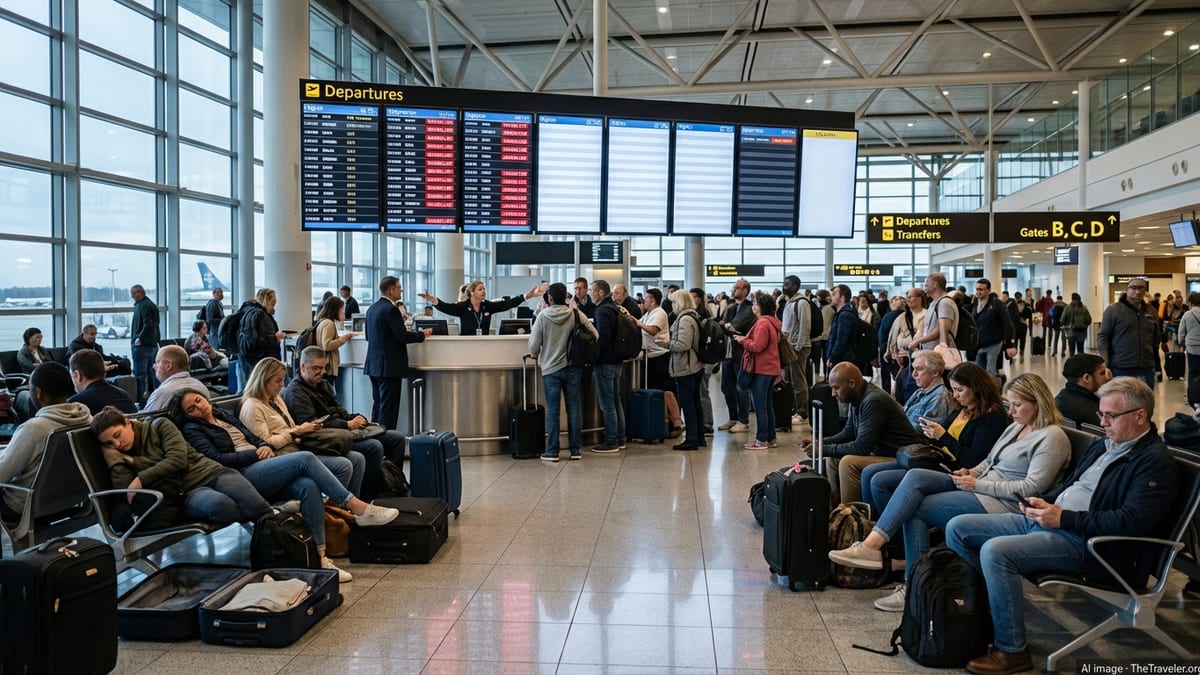
The United States has renewed heightened travel warnings for the Middle East, advising Americans to be prepared for sudden flight cancellations, airspace closures, and broader disruptions as regional tensions again raise security and logistical risks for civilian travelers.
Get the latest news straight to your inbox!
Regionwide Alert Renewed as Tensions Rise
Recent alerts directed at U.S. citizens across the Middle East indicate a renewed focus on the security environment from the eastern Mediterranean to the Gulf. Publicly available notices circulating on embassy channels and traveler information services in late September 2026 describe a broad security alert that applies across multiple countries, including Israel, Jordan, Lebanon, Iraq, Kuwait, Bahrain, Qatar, Oman, Saudi Arabia, and the United Arab Emirates. The messages describe an elevated risk landscape and encourage Americans to reconsider nonessential trips through the region.
According to published coverage summarizing the new alerts, the language emphasizes the potential for hostilities involving Iran and allied groups, as well as follow-on incidents that could affect U.S. interests and locations associated with Americans. Earlier regional security messages in June and July 2026 had already pointed to increased caution for U.S. citizens in the Middle East, but the most recent advisories broaden that framing, highlighting the possibility of rapid escalation and regionwide ripple effects.
The emerging picture is of a layered warning environment. In addition to country-specific Travel Advisories that classify nations from Level 1 to Level 4, regionwide notices and security alerts now underline that even airports and hubs previously seen as transit points rather than destinations may be subject to disruption. Travelers connecting through Gulf hubs or using Middle Eastern carriers are therefore being encouraged to monitor changing conditions closely.
Country Advisories: From Reconsider Travel to Do Not Travel
The U.S. Department of State’s online advisory system continues to show a patchwork of risk levels across the Middle East, but the overall trend points to greater caution. As of late September 2026, Travel Advisories reviewed on the official portal indicate Israel at Level 3, or “Reconsider Travel,” following an August 26, 2026 update. Jordan is also listed at Level 3, based on a May 4, 2026 advisory. Regional guidance focused on the Middle East confirms that these levels remain in place.
Other destinations carry even stronger warnings. Lebanon is rated Level 4, “Do Not Travel,” in an advisory dated May 6, 2026, with an additional information page updated in August 2026 detailing terrorism, civil unrest, and the limited ability of the U.S. government to provide emergency services outside Beirut. Separate global and regional alerts reiterate that Iran, Iraq, Syria, Gaza, and Yemen are also in the highest risk category, reflecting ongoing conflict, terrorism concerns, and the potential for sudden border or airport closures.
A dedicated Middle East information page on the State Department’s travel website, last updated in March 2026, brings together links to advisories for Egypt, Israel and the Palestinian territories, Jordan, and Lebanon, along with general crisis guidance. Publicly available information on that page stresses the importance of enrolling in the Smart Traveler Enrollment Program, monitoring local media, and having contingency plans in case commercial options are reduced or suspended on short notice.
These varying advisory levels shape airline and tour operator decisions, although carriers and cruise lines apply their own risk assessments. In practice, a Level 3 or Level 4 warning can translate into a thinner schedule of flights, higher insurance costs, and fewer package options, even to countries where day-to-day life continues relatively normally in major cities and resort areas.
Airspace Restrictions and Airline Routing Changes
Parallel to diplomatic advisories, aviation authorities in the United States and elsewhere continue to refine route guidance for airlines operating near conflict zones. A key reference point remains FAA notices and special rules for U.S. civil aviation, including an advisory known as FDC NOTAM 3/2646 that addresses the Middle East and eastern Mediterranean. The text of that notice, as published in FAA documentation, highlights that coalition military forces may be active in multiple airspaces from the eastern Mediterranean and Red Sea to the Gulf of Oman and Arabian Gulf, and confirms that Iraqi territorial airspace is closed to non-coalition aircraft except for limited humanitarian and emergency operations.
The FAA’s consolidated page on prohibitions, restrictions, and notices, updated in mid September 2026, lists additional constraints affecting flights involving Iran, Iraq, Yemen, and overwater routes in the Persian Gulf and Gulf of Oman. For airlines, this translates into longer routings, higher fuel burn, and potential scheduling knock-on effects as crews and aircraft are shifted away from higher-risk corridors. Public aviation safety pages underscore that these limitations remain in force until further notice.
Travelers are encountering the impact most visibly in the form of altered flight paths and schedule uncertainty. Aviation tracking data over recent months has shown transcontinental flights that once traversed Iraq’s airspace instead arcing north over Turkey or south over Saudi Arabia, and carriers have periodically trimmed frequencies on some Middle Eastern routes. U.S. embassy security alerts shared through traveler communities in September explicitly warn Americans in the region to be prepared for “periodic airspace closures” and related delays.
For passengers, this means that even if a particular destination is open and welcoming visitors, the route used to reach it may be changed at short notice. Travel specialists recommend leaving more time for connections, choosing tickets that allow for flexibility, and staying in contact with airlines through mobile apps or messaging services so that last-minute gate or routing changes do not come as a surprise.
Red Sea, Suez Canal, and Cruise Itinerary Disruptions
Maritime movements are also evolving in response to the security picture. The 2026 Strait of Hormuz crisis earlier in the year prompted major container carriers to suspend or curtail transits through key chokepoints in the Gulf and Red Sea region, according to open-source summaries of shipping data and news reporting. Some vessels moved to longer routes around Africa’s Cape of Good Hope, increasing transit times and costs and putting additional strain on global supply chains already adjusting to other canal-related pressures.
Recent communications from major shipping lines indicate a cautious partial return to the Red Sea and Suez Canal on specific services, but only after detailed security reviews. For example, notices from container operators in September 2026 describe the limited resumption of east–west schedules via Suez on carefully selected loops, while maintaining alternative routings for others. An advisory from the Suez Canal Authority dated September 23, 2026, notes that more services from prominent lines have resumed canal transits and that traffic has been flowing without major operational disruption, even as the authority continues to monitor regional developments around the clock.
The cruise industry, by contrast, is retreating from some parts of the Middle East for the coming seasons. Cruise sector tracking published in September 2026 shows that major brands have withdrawn regular itineraries in the Arabian Gulf for both the 2026–27 and 2027–28 seasons, citing ongoing security concerns and uncertainty about future conditions. Instead, operators are repositioning ships to alternative regions or focusing on Red Sea and eastern Mediterranean itineraries that can be adjusted if shipping advisories change.
Nevertheless, cruise timetable aggregators for September 2026 still list voyages transiting the Suez Canal itself, reflecting continued demand for repositioning cruises and extended voyages between Europe and Asia. These sailings are often marketed as once-in-a-lifetime routes, but current events underscore how quickly plans can shift. Prospective passengers are being encouraged by travel advisors to pay attention not only to port lists but also to the operator’s stated policies on deviations, cancellations, and refunds if routes must be altered for safety reasons.
What Travelers Should Expect and How to Prepare
For U.S. travelers, the renewed Middle East warnings translate less into a blanket prohibition on all movement and more into a call for active risk management. Public guidance on the State Department’s Middle East advisory hub emphasizes that citizens should enroll in the Smart Traveler Enrollment Program to receive security messages, verify that their contact details are current, and monitor both local and international news outlets in real time. These steps can provide early notice of curfews, border closures, protest activity, or transport disruptions that could affect onward travel.
At an individual trip level, recent alerts posted through embassy communication channels urge Americans in the region to maintain flexible plans. This includes carrying sufficient funds and essential medications to cope with an unexpected stay, confirming that travel insurance provides coverage for security-related disruptions, and being prepared for last-minute changes to airport access or departure times. Travelers are also advised in public materials to identify alternative routes out of a country, such as land borders or third-country hubs, in case primary airports become temporarily inaccessible.
Industry notices from port agents and maritime advisory firms in 2026 similarly highlight the value of contingency planning. Documents circulated in March 2026, for example, describe how port operators in the Gulf have made arrangements to reroute cargo flows through secondary ports when needed, while cautioning that passengers should not approach airports or cruise terminals without confirmation of actual departure times. While these advisories are geared mainly toward shipping and logistics professionals, the same principles apply to individual travelers booking flights or cruises through the region.
For now, commercial air and sea travel across much of the Middle East continues, but with a more fragile and changeable backdrop than in calmer years. The renewed U.S. travel warnings and aviation restrictions are a reminder that itineraries touching the region require closer attention than usual, not only at the time of booking but in the days and hours before departure, as developments on the ground can rapidly reshape what is feasible and safe.