


More news on this day
The U.S. government has issued a fresh warning urging citizens to reconsider nonessential travel across a broad swath of the Middle East, as ongoing tensions, sporadic attacks and constrained consular access push much of the region into the State Department’s Level 3 “Reconsider Travel” category.
Get the latest news straight to your inbox!
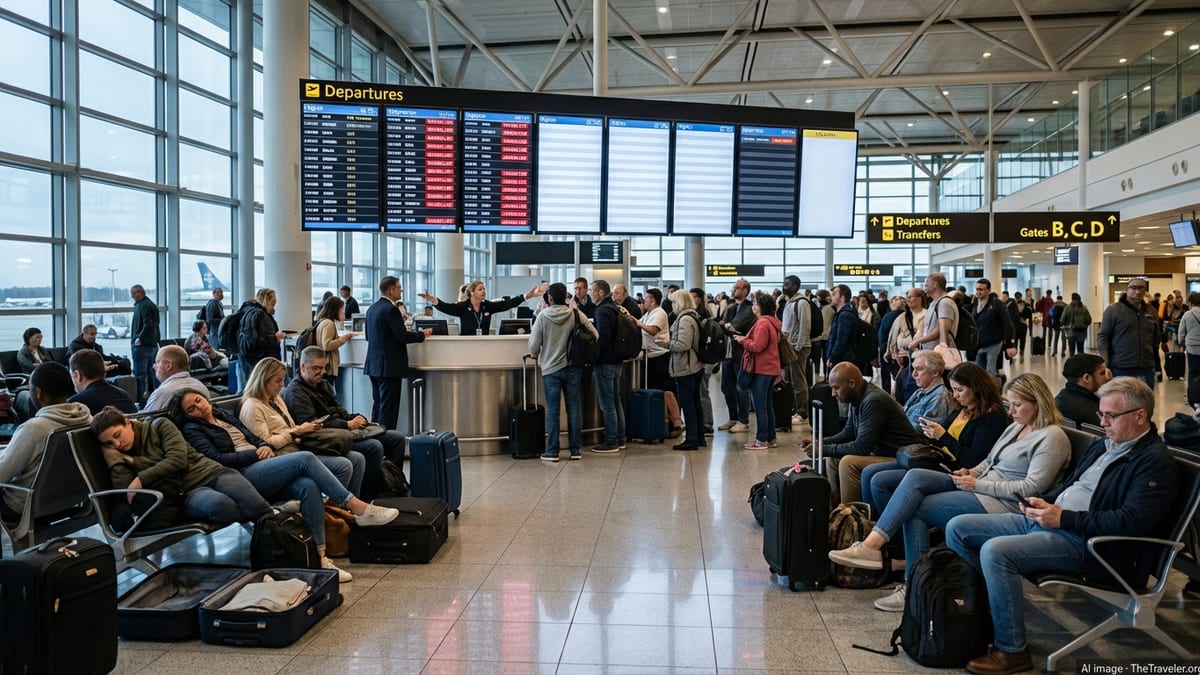
Expanded Caution Across a Cluster of Middle Eastern States
Recent updates to the State Department’s travel advisories show a dense cluster of Level 3 "Reconsider Travel" warnings across the Middle East, covering countries such as Bahrain, Israel, the West Bank, Jordan, Kuwait, Oman, Qatar, Saudi Arabia and the United Arab Emirates. Publicly available advisory data compiled in September 2026 indicates that these destinations are grouped at the same elevated level, reflecting a shared environment of security uncertainty rather than a single, isolated flashpoint.
The Level 3 designation is the second-highest advisory level used by the U.S. government, below only Level 4 "Do Not Travel." It signals that travelers should think carefully about the necessity of their trip, be prepared to change plans at short notice and understand that U.S. government assistance may be limited if conditions deteriorate. The language is calibrated to capture serious, ongoing risks that fall short of the extreme circumstances associated with Level 4.
Although each country’s advisory lists distinct local conditions, the overarching pattern across the region centers on terrorism threats, regional tensions, and the possibility of sudden unrest or disruptions to transportation routes. This regional context is shaping how airlines, tour operators and insurance providers view itineraries that cross multiple Middle Eastern hubs in a single trip.
The cluster of Level 3 advisories also means that travelers using the region as a connecting corridor, rather than as a final destination, may be exposed to restrictions or heightened screening, especially where routes pass through multiple airports covered by the elevated guidance.
Understanding What “Reconsider Travel” Means for U.S. Citizens
The State Department’s four-tier system is intended to give a clear, standardized signal of risk: Level 1 "Exercise Normal Precautions," Level 2 "Exercise Increased Caution," Level 3 "Reconsider Travel" and Level 4 "Do Not Travel." Public guidance from consular affairs materials explains that a Level 3 advisory reflects serious safety and security risks that warrant postponing or significantly modifying travel plans if possible.
In practice, a Level 3 advisory often means that travelers may face curfews, checkpoints, road closures, flight disruptions or sudden restrictions on movement. Publicly available documents outlining the system note that U.S. personnel can be subject to their own internal travel limits in such areas, which can reduce how quickly consular staff are able to reach citizens in distress. In some locations, nonemergency staff may be drawn down, further constraining in-person assistance.
Advisories also highlight that private medical and security infrastructure may be under strain if incidents occur. This can affect access to emergency medical care, availability of hospital beds and the ability to arrange medical evacuation. While some major regional hubs maintain high-end private healthcare and established security services, the Level 3 rating underscores the possibility that these systems could be disrupted by wider instability.
Travelers should also be aware that third parties often rely on the same advisory scale. University study-abroad programs, some nongovernmental organizations and certain corporate travel policies use Level 3 status as a trigger to suspend trips, impose additional approval steps or alter insurance coverage terms.
Worldwide Caution and Regional Flashpoints
The Level 3 cluster in the Middle East is unfolding against the backdrop of a standing worldwide caution, which urges U.S. citizens abroad to exercise increased awareness of terrorism and other security threats. A recent worldwide message notes the potential for attacks in places frequented by foreigners, including hotels, transport hubs, shopping centers and places of worship, and encourages travelers to remain alert to local developments.
Within the Middle East itself, advisory language highlights several specific concerns, including the risk of missile or drone attacks, cross-border hostilities, and sporadic rocket fire in certain conflict-adjacent areas. In some locations, the guidance emphasizes the unpredictability of demonstrations and the potential for protests to escalate quickly, even when they begin peacefully.
The regional nature of these risks means that an incident in one country can have ripple effects across borders, from temporary airspace closures to changes in overflight rules or rerouted shipping traffic. Travelers may experience knock-on effects such as last-minute flight cancellations, extended layovers or diversions to airports in neighboring states that share the same Level 3 status.
Public information on previous advisory updates shows that such regional patterns are not new, but current tensions and recent security alerts have renewed the focus on how quickly conditions can change and how closely destinations in the region are interconnected.
How Advisories May Affect Flights, Insurance and Itineraries
While the State Department does not control commercial air service, Level 3 advisories can influence how airlines and tour operators manage routes in and out of the affected region. Carriers may adjust schedules, consolidate flights or revise crew layover policies, which can in turn affect the range of nonstop options available from U.S. gateways.
Travel insurance products also frequently reference official advisory levels. Policy documentation from major insurers often distinguishes between trips booked before and after an advisory change. In many cases, travelers who purchased comprehensive “cancel for any reason” coverage before an advisory escalation retain the broadest flexibility, while those buying standard policies after the region has already been labeled Level 3 may have more limited protections if they decide not to travel.
Multi-country itineraries that combine Middle Eastern destinations with Europe or Asia may warrant a closer look at routing. Some travelers may opt to route through airports in countries rated at Level 1 or Level 2 where possible, reducing exposure to potential disruptions in Level 3 hubs and making it easier to adjust plans if tensions rise.
Corporate and institutional travelers should also anticipate additional internal review. Risk management teams often require specific justification for nonessential journeys into Level 3 areas, including clear business need, documented contingency plans and confirmation of local partners’ security protocols.
Practical Steps for Travelers Considering the Region
For those who decide to proceed with travel to or through the Middle East despite the Level 3 advisories, planning and preparation become especially important. Publicly available guidance from U.S. government resources encourages travelers to monitor the latest country-specific advisories in detail, paying particular attention to maps or sections that single out especially high-risk border zones, conflict-adjacent areas or specific cities.
Travel experts and safety briefings commonly recommend building flexibility into itineraries, including longer connection times, fully refundable or changeable tickets where feasible, and accommodations that can be canceled without penalty if security conditions shift. Maintaining multiple ways to receive local information, such as hotel notices, airport announcements and regional media, can help travelers respond quickly to evolving situations.
Travelers are also urged in public guidance to ensure that their passports are valid for at least six months beyond their planned return date and to keep digital and physical copies of key documents, including identification, insurance details and proof of onward travel. Those planning extended stays or travel outside major urban centers may wish to verify that local mobile networks and data services are reliable in the areas they intend to visit.
Given the combination of a worldwide caution and region-wide Level 3 advisories, many travelers are weighing whether trips can be shortened, postponed or re-routed. For those who continue with their plans, a careful reading of the latest advisories, attention to airline updates and a conservative approach to logistics can help manage the heightened risks described in the current guidance.