


More news on this day
Major UAE carriers, including Emirates, Etihad, Air Arabia and flydubai, are continuing to adjust flight schedules and reroute services as regional airspace restrictions, volcanic ash and operational constraints trigger rolling disruptions across parts of their networks.
Get the latest news straight to your inbox!
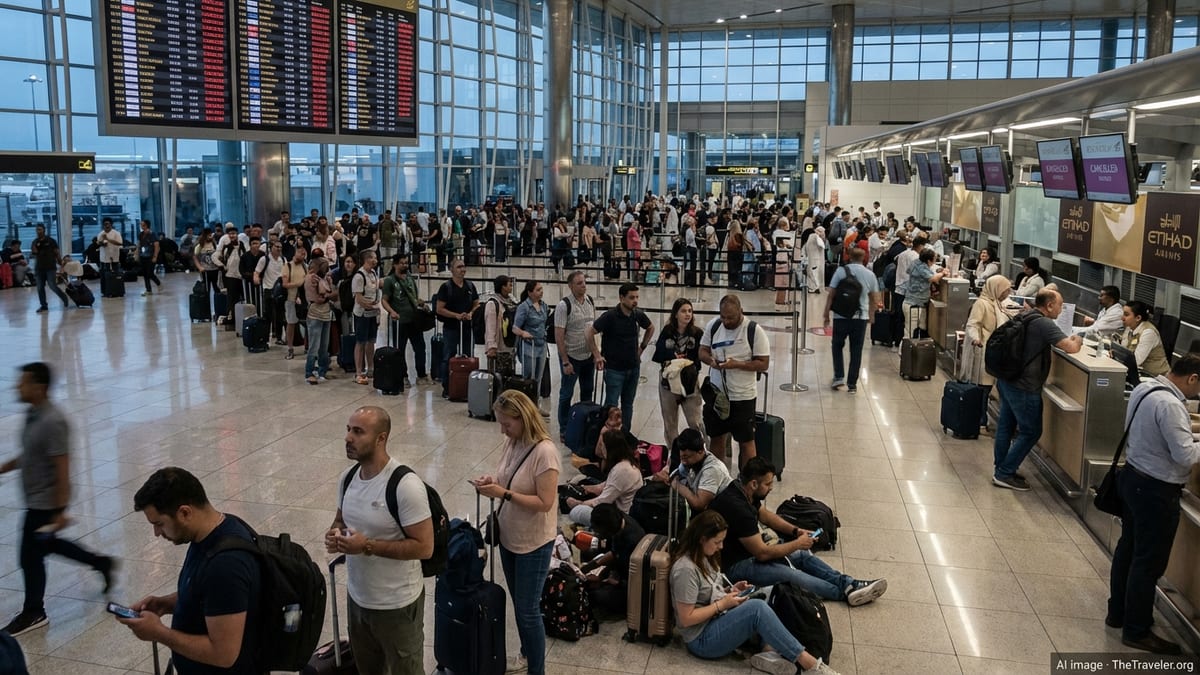
Regional airspace warnings and rerouting extend into September
Publicly available aviation notices and travel advisories indicate that airspace warnings affecting parts of the Gulf and surrounding region remain in place through at least the end of September 2026. Industry coverage highlights that some carriers operating from the UAE are routing westbound flights on longer tracks to avoid restricted zones, adding time to journeys and increasing the potential for knock-on delays across busy hubs in Dubai, Abu Dhabi and Sharjah.
Recent analyses of Emirates operations show that services to destinations such as Mumbai and Manila continue, but some flights are operating on modified routings, particularly where overflights of Iranian and Iraqi airspace would previously have been used. These changes can lengthen block times and compress turnaround windows, which in turn can affect on-time performance if schedules are already tight.
Similar dynamics are in play for other Gulf carriers, including Etihad and Air Arabia, which rely on efficient overflight corridors to support dense connection banks. According to sector commentary, these airlines have been adjusting timetables, altering departure times and, in some cases, trimming frequencies on select routes to reflect the operational reality of longer routings and evolving risk assessments.
Travel platforms tracking regional flight status note that while the majority of UAE departures are operating, passengers are more likely than usual to encounter minor delays, retimed services or aircraft swaps as airlines work within updated airspace guidance and traffic flow measures.
Jakarta closures and volcanic ash trigger specific route cancellations
Beyond geopolitical considerations, weather and geological factors have also affected UAE-linked operations. Emirates’ travel updates page details a series of cancellations and delays on the Dubai–Jakarta route after the temporary closure of Soekarno–Hatta International Airport due to volcanic ash from the Krakatau area in early September 2026. Multiple rotations between Dubai and Jakarta on 6, 7 and 8 September were listed as cancelled, underscoring how quickly a single airport closure can ripple through a long-haul network.
Etihad’s flight status information reflects similar impacts. One recent update shows Abu Dhabi–Jakarta services delayed as a direct result of the Jakarta airport closure linked to the volcanic eruption, while a Bali–Abu Dhabi service experienced a separate technical delay. These examples illustrate how unplanned events at destination airports can interact with already complex regional conditions to create additional disruption for UAE-based carriers.
Operational data and local media coverage further indicate that these route-specific issues have added to a broader pattern of irregular operations seen across Southeast Asia links, where intense seasonal weather and volcanic activity periodically force airlines to suspend or reroute flights at short notice.
Airlines are generally keeping their online status tools updated throughout the day, and passengers booked on affected services are being re-accommodated on later flights or alternative routings where capacity allows, according to publicly available guidance.
Reduced schedules and rolling adjustments at flydubai and Air Arabia
Among the region’s low-cost carriers, flydubai continues to publish a notice stating that it is operating with a reduced schedule across its network. The airline’s operational updates emphasize that flights remain on sale and services are running, but with fewer frequencies on some routes and longer flight times on certain sectors where airspace rerouting is in effect.
Flydubai has also announced targeted changes beyond the Gulf, including a temporary move of its Naples service to Salerno Costa d’Amalfi and Cilento Airport during planned maintenance at Naples International Airport in November 2026. While that shift is future-dated, it illustrates the extent to which the carrier is reshaping its operations around airport works, regulatory measures and demand trends over the coming seasons.
Air Arabia’s recent financial disclosures point to the operational impact of regional tensions and airspace restrictions earlier in 2026, including the need to reroute certain services and make schedule changes in response to regulatory directives. The group describes these steps as part of a wider adaptation to heightened geopolitical risk and higher fuel prices, both of which influence how aggressively airlines can add capacity or maintain marginal routes.
Local media monitoring of flight status at UAE airports this month shows Air Arabia among the carriers that have cancelled or delayed select services to nearby Gulf destinations such as Bahrain and Kuwait on individual days, reinforcing the view that low-cost operations are not immune to the broader disruption picture.
Etihad and Emirates tweak long-haul schedules for the summer season
For the current northern summer season, Etihad has been progressively filing changes to its long-haul schedule, particularly on North American routes. Network data compiled by specialist aviation outlets shows adjustments to frequencies and aircraft types on services from Abu Dhabi to Charlotte, Chicago and New York between June and October 2026, including a shift to Airbus A350-1000 aircraft on some transatlantic sectors.
These revisions are part of a broader capacity recalibration that began earlier in the year, with Etihad also extending a temporary reduction of A380 frequencies to London Heathrow into late June 2026 and making network-wide tweaks across Europe, Asia and the Middle East. While many of these changes are planned rather than reactive, they intersect with real-time disruptions when flights face congestion, rerouting or weather-related restrictions en route.
Emirates, meanwhile, continues to update customers through its travel alerts and flight status tools. The airline’s information pages stress the importance of checking flight status before heading to the airport and keeping contact details up to date so that any schedule changes or cancellations can be communicated promptly. Emirates is currently operating to more than 130 destinations, but individual routes such as Jakarta have seen temporary suspensions on specific days due to external factors.
Industry observers note that for both Etihad and Emirates, a combination of long-haul network complexity, high aircraft utilization and regional constraints increases the likelihood that disruptions on one route can cascade into minor timing changes elsewhere, even when most services continue to run close to schedule.
What UAE-bound travelers should expect in the coming weeks
Travel industry reports suggest that UAE airports are likely to remain busy through the late-summer and early-autumn period, with strong demand for both point-to-point and connecting travel. At the same time, continued airspace advisories, the possibility of further weather-related closures in parts of Asia and ongoing schedule optimization by airlines mean that passengers may see more last-minute changes than in earlier years.
Guidance published by Emirates, Etihad, flydubai and Air Arabia consistently emphasizes proactive preparation: travelers are encouraged to monitor flight status tools on airline websites or apps, complete online check-in where possible and arrive at the airport well in advance of departure. Several carriers also highlight the importance of ensuring that email and mobile contact details are current so that disruption alerts and rebooking options can be communicated quickly.
As network conditions evolve, analysts expect UAE airlines to continue fine-tuning capacity, trimming or adding frequencies and adjusting aircraft deployment to balance operational resilience with commercial demand. For passengers, that is likely to translate into a generally robust schedule, but one in which flexibility and real-time information remain essential to navigating day-of-travel surprises.
Recent coverage by regional outlets underscores that while nearly all flights are operating on any given day, a small but persistent share of services across Emirates, Etihad, Air Arabia and flydubai are delayed or cancelled, particularly on routes affected by airspace restrictions or local airport disruptions. Travelers planning trips to or through the UAE in September 2026 are therefore advised to build extra time into itineraries and stay closely informed about any changes to their specific flights.
Gulf News: UAE flight update today