


More news on this day
Passengers flying to and from the UAE this week are being urged to monitor flight status closely as Etihad, Emirates, flydubai and Air Arabia report scattered delays and a limited number of cancellations across key regional and international routes.
Get the latest news straight to your inbox!
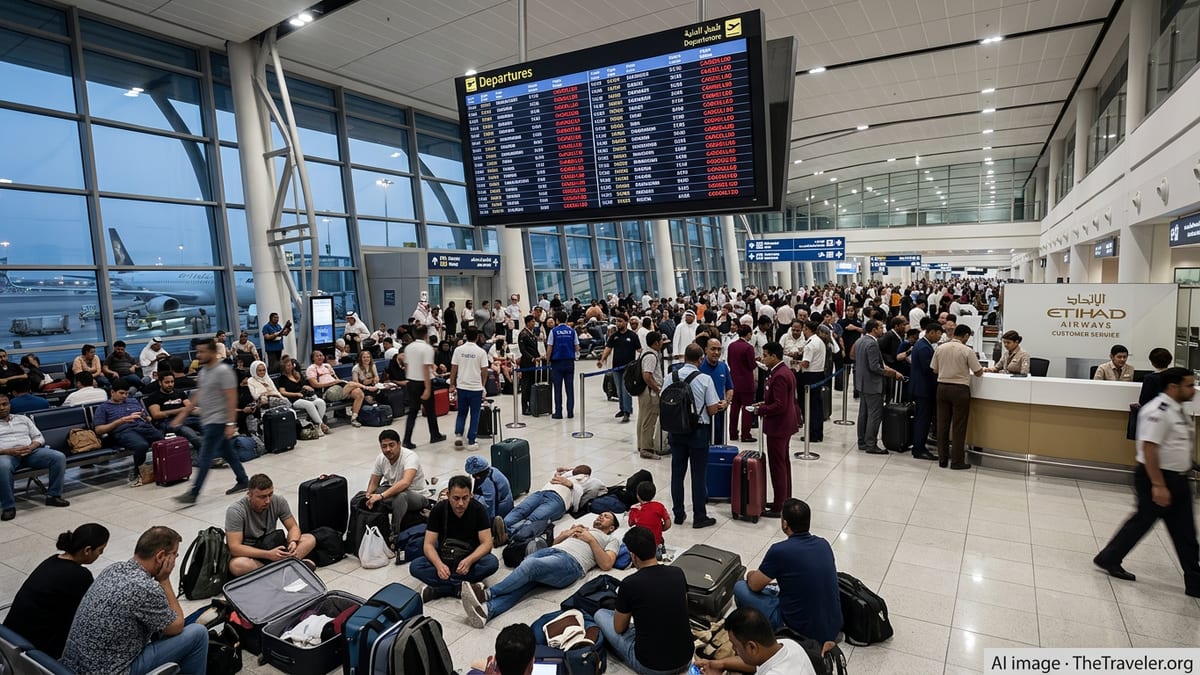
Mixed picture across Dubai and Abu Dhabi airports
Flight operations at Dubai International and Abu Dhabi’s Zayed International Airport remain broadly active, but with noticeable disruption on selected services. Recent coverage indicates that Etihad Airways has experienced delays on more than a dozen routes from Abu Dhabi to Europe, Asia and the Middle East, while some Abu Dhabi departures and arrivals have been pushed back or rescheduled at short notice.
In Dubai, published reports describe a similar pattern of disruption, with several Emirates and flydubai flights arriving later than scheduled and a small number of services cancelled or rerouted. Arrivals into Dubai from cities such as Manchester, London, Lisbon, Rome, Warsaw and Colombo have been listed with revised times, while at least one flydubai service from Entebbe was reported cancelled earlier this week.
Sharjah and Abu Dhabi based low cost carrier Air Arabia has also adjusted parts of its schedule. Data compiled from regional media show that some flights between Abu Dhabi and destinations including Kathmandu, Tashkent and Tbilisi were delayed, and that selected short haul Gulf services were cancelled or consolidated as demand and operating conditions shifted.
Despite these disruptions, airport advisories for both Dubai and Abu Dhabi continue to describe terminals as open and operational, with most services still running. Travellers are being advised to check real time flight status tools and airline channels before leaving for the airport, as late operational changes remain possible.
Regional security tensions and airspace constraints
The latest advisory environment reflects a broader regional backdrop of heightened security tensions and dynamic airspace conditions. Travel bulletins from several foreign ministries caution that airspace over parts of the Gulf could be restricted or rerouted at short notice, which can have a knock on effect on schedules at major hubs such as Dubai and Abu Dhabi.
Reporting from UAE based outlets links some of the recent timetable disruption to evolving security developments involving the United States and Iran, noting that airlines have adjusted routings and departure waves to align with risk assessments and overflight permissions. In some cases, this has resulted in extended flight times, altered departure slots and delayed aircraft rotations.
Operational updates from carriers in the region also point to a period of limited schedules and more conservative planning on selected routes. One major low cost operator has flagged a reduced timetable across parts of its network and warned that flight durations and transit times may be longer than usual because of temporary rerouting of some flight paths around sensitive airspace.
Travel advice published for the United Arab Emirates by international governments now routinely includes references to potential travel delays and the prospect that UAE airspace may open or close at short notice. These notices recommend that travellers allow additional time, maintain flexible plans and monitor airline communications for any rapid changes.
Operational challenges add to disruption
Beyond geopolitical factors, routine operational issues have added further pressure to schedules. Recent coverage from UAE outlets highlights delays linked to weather and technical constraints on specific routes, as well as congestion driven by peak travel demand at major hubs. In at least one instance, an Etihad service from Abu Dhabi to Jakarta was delayed in connection with volcanic activity in Indonesia, demonstrating how events far from the Gulf can still ripple through UAE networks.
The country’s role as a global transit hub means that aircraft and crew rotations are tightly sequenced. A delayed inbound long haul or regional flight can quickly affect onward departures, resulting in rolling delays across multiple destinations. Airlines have been working within these constraints by retiming certain flights, consolidating lower demand services and prioritising key trunk routes.
Despite scattered delays, publicly available performance data indicate that the majority of flights at Dubai International are still departing and arriving within a reasonable window of their scheduled times over a 30 day average. However, even a relatively small number of late or cancelled flights can significantly affect individual passengers, particularly those with tight connections or complex itineraries.
Carriers have reiterated through their public channels that safety and regulatory compliance take priority over punctuality. When airspace restrictions, weather or operational considerations require changes, schedules are updated across airline websites, mobile apps and airport displays, sometimes within short timeframes.
How Etihad, Emirates, flydubai and Air Arabia are responding
Etihad Airways continues to operate an expanded commercial schedule from Abu Dhabi, serving around 80 destinations worldwide, according to the emirate’s official travel advisory. While isolated flights have been delayed or, in earlier phases of the current situation, suspended on select routes, the airline’s booking channels still show a broad range of services available across North America, Europe, Asia and Africa.
Emirates has issued travel updates that focus on broader regulatory and health related advisories, while its Dubai hub remains one of the busiest international airports in the world by passenger volume. Recent reporting indicates that Emirates flights remain largely operational but subject to occasional delays and timing changes, particularly on services intersecting with heavily used regional corridors.
Flydubai has maintained a network wide travel advisory and operational updates page that underscores reduced schedules on parts of its route map and encourages passengers to check flight status before travel. The airline has also highlighted that temporary rerouting of some services may lengthen overall flight times and connection windows through Dubai.
Air Arabia, which operates from Sharjah as well as Abu Dhabi and Ras Al Khaimah, has adjusted some regional rotations in response to both demand patterns and external constraints. Recent compilations of flight status information show that certain services to Gulf destinations such as Kuwait and Bahrain, along with South Asian cities, have been cancelled or retimed in recent days.
What passengers should do before flying from the UAE
Travel advisories for Abu Dhabi and Dubai consistently recommend that passengers verify their flight status directly with airlines before heading to the airport. Given the potential for late changes linked to regional events or overseas disruptions, relying solely on printed itineraries or earlier confirmations is considered risky.
Airlines across the UAE encourage travellers to use online and mobile self service tools to manage bookings, rebook disrupted journeys or request refunds where eligible. Passengers who booked via travel agents are typically asked to coordinate changes through their original point of sale, as agency issued tickets may follow different rules from those booked directly with a carrier.
Government travel advice sites for the UAE also urge visitors and residents to build extra time into their airport journeys, particularly during peak periods. Longer queues at check in, security and immigration can be compounded by schedule changes, leaving less margin for error when connections are tight.
Travellers are also advised to monitor official foreign ministry advisories for their home country, as changes in threat levels or regional assessments can influence airline operations and insurance coverage. For now, published information suggests that the UAE’s major airports remain open and functioning, but that flight plans may continue to evolve with limited warning as conditions change.
UAE travel advisory: Flights delayed and cancelled at Dubai and Abu Dhabi airports
UAE travel update: Nearly 20 flights delayed or cancelled this week