


More news on this day
Checked baggage that did not make it onto departing aircraft has been reported on multiple flights out of Incheon International Airport this month, with published coverage pointing to screening delays and belt disruptions that prevented some bags from reaching the aircraft in time.
Get the latest news straight to your inbox!
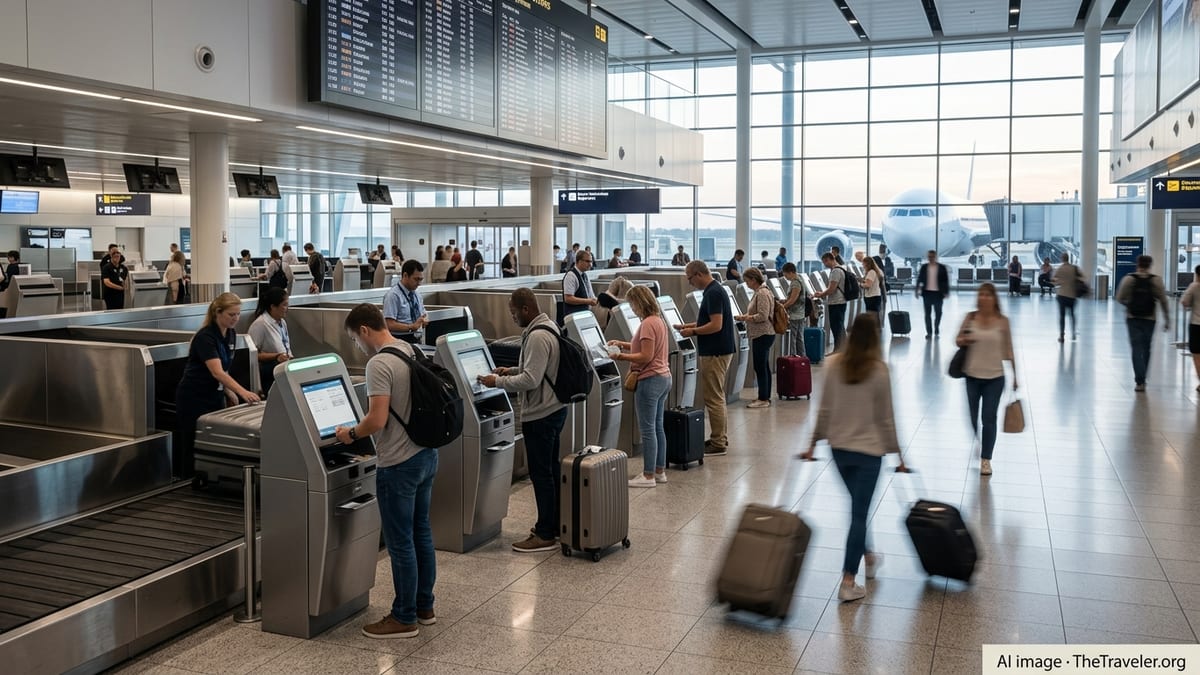
What happened on the affected departures
Published coverage in South Korea describes two clusters of mishandled checked baggage at Incheon’s Terminal 2 involving Jin Air flights operating on morning schedules, largely on routes to Japan. The reported incidents occurred on September 4, 2026 and again on September 10, 2026.
Across those two dates, reports describe a total of 26 checked bags that were not loaded onto nine flights: 16 bags left behind on four aircraft on September 4, followed by 10 bags on five aircraft on September 10. The flights were described as Japan-bound services, including routes to cities such as Tokyo and Fukuoka.
While 26 bags is small compared with the overall volume processed at a major hub, the repetition over a short period drew attention because Incheon is known for a highly automated baggage handling system that normally routes checked bags to the correct flight with minimal manual intervention.
Why bags can miss a flight at a highly automated airport
Incheon’s checked baggage process relies on an automated baggage handling system that transports and sorts bags by flight. Reports indicate the core issue in these cases was timing: delays in baggage screening meant some items did not clear the security-screening step quickly enough to reach the make-up area for loading before departure.
Published reporting also points to a related operational symptom at check-in: conveyor belts at check-in counters were described as not operating normally during the disruption window, an issue linked in coverage to the screening backlog and system flow constraints rather than a simple mis-tagging problem.
More broadly, baggage systems are designed around tight “connection windows” inside the airport. When a departure remains on schedule but an upstream step slows down (including X-ray screening of checked bags), bags can arrive too late to be loaded even if the passenger is already at the gate.
What travelers can do if their checked bag doesn’t arrive
In incidents like these, the practical reality for travelers is that the first, most productive step is usually at the arrival airport’s baggage service counter, where a delayed-baggage report can be created using the bag tag number issued at check-in. Incheon’s own airport guidance also directs passengers who discover missing bags after arriving at another airport to pursue the matter through the arrival side rather than trying to resolve it at the origin.
Travelers should keep key documents easily accessible while in transit: a photo of the bag tag, the baggage claim receipt, and a clear description of the bag. If the airline’s tracking tools support it, providing distinctive identifiers (brand, color, straps, stickers, or a luggage cover) can help distinguish similar-looking bags once they are located.
Because rules and timelines can vary by carrier and itinerary, travelers may also want to review the operating airline’s posted procedures for filing a delayed-baggage report, including any time limits for initiating a claim after arrival. Those requirements are often different for domestic, international, and interline itineraries.
Operational context as peak travel days approach
The reports arrive as Incheon heads into a period when passenger volumes typically rise around major holidays and long weekends. Published coverage in Korea has noted concerns that repeat disruptions could be more disruptive during high-throughput periods, when the airport’s screening and baggage systems operate closer to capacity.
Incheon publishes regular operational statistics that show the scale the airport handles in a typical month, spanning passenger and flight totals as well as cargo volumes. Even a small rate of baggage misses can translate into more customer impact when the baseline number of bags in the system surges.
For travelers with near-term departures from Terminal 2, the reports may reinforce a conservative planning approach: arrive early enough to check bags well ahead of departure, keep essentials and a change of clothing in carry-on when possible, and avoid packing critical medications or irreplaceable items in checked luggage.
What to watch next at Incheon and on specific routes
Published coverage has suggested the mishandled baggage events were concentrated in a particular terminal and time band, and involved a single carrier’s flights in the publicly detailed cases. Even so, broader reporting has also raised the possibility that other airlines operating in the same terminal experienced similar pressures during the same period, which could mean the issue is not limited to one airline’s internal processes.
Travelers flying on short-haul, high-frequency routes, including Japan services that often depart in morning banks, may be especially sensitive to any bottleneck because those flights can run with tight turn times and limited flexibility for late-loading baggage once the aircraft is preparing to push back.
In practical terms, the next signals to watch are whether similar reports appear on additional dates, whether delays recur in the same terminal and time window, and whether operational measures such as staffing adjustments or screening-flow changes are reflected in smoother baggage delivery performance for affected routes.