


More news on this day
UAE airlines are navigating another week of schedule changes and rerouted services after European regulators extended a conflict-zone warning for Gulf airspace, citing elevated security risks tied to ongoing US Iran tensions.
Get the latest news straight to your inbox!
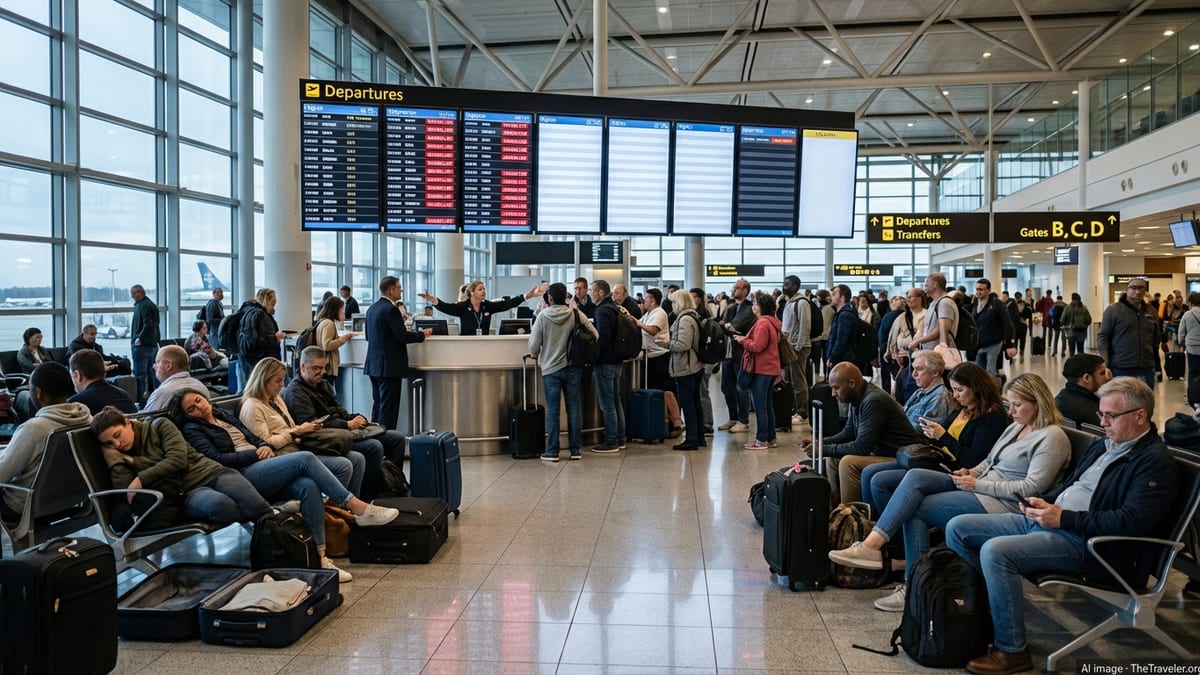
UAE carriers keep core networks operating
Publicly available flight information on Tuesday, 2 September, indicates that Emirates, Etihad Airways and Air Arabia continue to operate the bulk of their networks, while adjusting selected routes in response to airspace restrictions and changing demand. Gulf-based coverage notes that services to Kuwait and Bahrain remain under particular scrutiny, with a mix of on-time departures, delays and cancellations across the main UAE hubs in Dubai, Abu Dhabi and Sharjah.
According to recent schedules highlighted by regional aviation reports, Etihad has kept several Abu Dhabi to Bahrain and Kuwait rotations in operation, while advising passengers to monitor individual flight status closely due to short-notice changes. Emirates has maintained Dubai to Bahrain and Kuwait flights, even as some long-haul sectors, including services to Nairobi, São Paulo, Bali and certain European and North American cities, show delays or cancellations.
Low-cost operators are adjusting more aggressively. Air Arabia’s latest updates list a string of cancellations on routes from Sharjah and Abu Dhabi to Kuwait and Bahrain, reflecting both operational caution and softer demand on affected city pairs. Other carriers serving UAE airports, including regional and African airlines, also show scattered disruptions, with some Nairobi, Jeddah, Kirkuk and South Asian services either delayed or withdrawn from today’s departure boards.
Despite the rolling changes, there is no indication of a blanket suspension of flights to or from the UAE. Airport operations in Dubai, Abu Dhabi and Sharjah remain open, with reports emphasizing that passengers should arrive early, complete online check in where possible and rely on official airline channels for the latest information before travelling.
European safety bulletin extended for Gulf airspace
The current pattern of schedule adjustments is unfolding against the backdrop of a renewed conflict-zone advisory from the European Union Aviation Safety Agency. In late July and again in late August, EASA extended and refined its warnings covering parts of the Middle East, including the airspace of Bahrain, Kuwait, Qatar and the United Arab Emirates, as well as sections of the Gulf of Oman. The latest revision stretches the validity of the key Gulf bulletin through at least 30 September 2026, following an earlier extension through the end of August.
The active Conflict Zone Information Bulletin for the Persian Gulf and Gulf of Oman categorizes the risk to civil aviation in the region as high. The document cites the potential use of missiles, drones, combat aircraft and air defence systems, along with unpredictable military developments, as the main hazards to overflying traffic. In particular, the advisory identifies airspace managed by Bahrain, Kuwait, Qatar and the UAE, and waters in the Gulf of Oman west of longitude 58 degrees east, as areas where operators should either avoid routing or carefully limit exposure.
European aviation intelligence summaries explain that the latest action replaces an earlier, broader Middle East conflict-zone bulletin with more focused warnings and an information note. While a general advisory for the wider region was allowed to lapse in early July, EASA simultaneously activated dedicated bulletins for the Gulf, as well as separate high risk notices covering Iran, Iraq and Lebanon. The approach is designed to give airlines more granular guidance on where the highest risks lie, while still acknowledging medium level threats across neighbouring airspace.
Under the extended Gulf bulletin, EASA recommends that European and EASA authorised third country operators avoid affected Gulf airspace wherever possible, particularly for overflights that do not involve take off or landing in the region. Where routes into and out of Gulf airports remain essential, the agency urges carriers to rely on up to date risk assessments, robust contingency plans and continuous monitoring of official aeronautical publications.
Impact on routings between Europe and the Gulf
The European conflict-zone guidance is primarily aimed at route planning rather than day to day airport closures, and the practical impact for passengers is currently most visible in longer flight times and occasional rerouting. Network management assessments suggest that hundreds of flights per day have been affected by detours around restricted or high risk airspace since the broader Middle East crisis escalated last year, with operators frequently restructuring corridors to keep clear of Iranian, Iraqi, Jordanian, Lebanese and now targeted Gulf sectors.
Industry analyses indicate that airlines have several levers they can use to respond to the extended Gulf warning. Some carriers opt to avoid the most exposed flight information regions entirely, even at the cost of longer track miles and higher fuel burn. Others continue to use tightly defined corridors at specific altitudes judged to carry lower risk, in line with national authority guidance and their own internal assessments. For flights linking Europe with major Gulf hubs such as Dubai and Abu Dhabi, this can translate into modest schedule padding, altered routings over Saudi or Red Sea airspace, or switches in preferred gateways.
European leisure and business travellers headed to or transiting through the UAE may therefore experience indirect effects even when their own airline has not issued a prominent disruption notice. Longer great circle diversions can push aircraft and crew close to duty time limits, prompting last minute delays or aircraft swaps. In more acute cases, a carrier may temporarily suspend certain city pairs or reduce frequencies, a pattern already visible in some international timetables involving the wider Middle East.
Risk management specialists stress that these changes are part of a broader global trend in which carriers adapt quickly to evolving security assessments. For the moment, most European airlines continue to serve the UAE and neighbouring markets, but the precise routings between Europe and the Gulf remain subject to frequent adjustment as safety bulletins are updated.
What passengers flying via UAE hubs should expect
For travellers using Emirates, Etihad, Air Arabia and other carriers to or from the UAE, the most consistent message across airline and regulatory communications is to stay informed and flexible. Schedules remain broadly intact, yet operational data from the past several days show a non trivial number of delayed and cancelled flights, especially on short haul routes touching Kuwait and Bahrain and on select long haul services affected by rerouting.
Airlines are steering passengers toward digital tools as the primary source of truth on whether a flight is running as planned. Official websites and mobile apps display near real time status updates, often reflecting changes before airport departure boards are refreshed. Many carriers also allow free or reduced fee rebooking in cases where airspace restrictions or security considerations force schedule changes, although the exact terms vary by airline and ticket type.
Given the extended European Gulf airspace advisory through at least late September, travel experts advise allowing additional buffer time when connecting through Dubai, Abu Dhabi or Sharjah, particularly when combining tickets across different airlines. Travellers may also wish to avoid very tight connections on itineraries involving onward legs to or from conflict adjacent regions, where the likelihood of knock on disruptions is higher.
While the situation remains fluid, the current pattern suggests that UAE hubs will continue to operate as key global transit points, albeit with elevated operational complexity for airlines and a greater premium on timely communication with passengers.
Key dates and outlook for the coming weeks
The coming month will be shaped by two main timelines. The latest EASA extension for Gulf airspace runs until 30 September, while several related conflict-zone bulletins for Iran, Iraq and Lebanon hold separate expiry dates tied to ongoing assessments. In parallel, industry monitoring indicates that US Iran military tensions, which spiked again from late July, remain the underlying driver of risk calculations for civil aviation in the wider region.
European and Gulf based aviation analysts expect that, barring a durable de escalation, regulatory advisories are more likely to be rolled forward than withdrawn in the short term. However, past practice also shows that the details can change quickly, with altitude restrictions, routing corridors and affected sectors sometimes revised within weeks as the operational picture evolves.
For now, published information shows that UAE carriers are focused on maintaining connectivity while trimming or rerouting the most exposed flights. International airlines continue to weigh the commercial importance of Gulf markets against the additional risks and costs associated with the extended European warning. Passengers travelling in September are therefore being encouraged to pay closer attention than usual to pre departure emails, airline apps and airport notices.
As autumn travel demand builds and more residents return to the UAE from summer holidays, pressure on schedules at Dubai, Abu Dhabi and Sharjah is likely to grow. The ability of airlines and air traffic managers to balance safety driven constraints with robust capacity will shape how visible the current round of Gulf airspace advisories becomes for everyday travellers.
Gulf News: UAE flight update today and Gulf airspace warning
EASA: Airspace of the Persian Gulf and Gulf of Oman CZIB
Condé Nast Traveller Middle East: Europe extends Gulf airspace warning
Anadolu Agency: EASA extends flight warning for Gulf until September 30