


More news on this day
Passengers flying with Emirates and Etihad from Dubai and Abu Dhabi are facing fresh waves of delays and selective cancellations, as renewed tensions between the United States and Iran continue to disrupt flight schedules across the Gulf.
Get the latest news straight to your inbox!
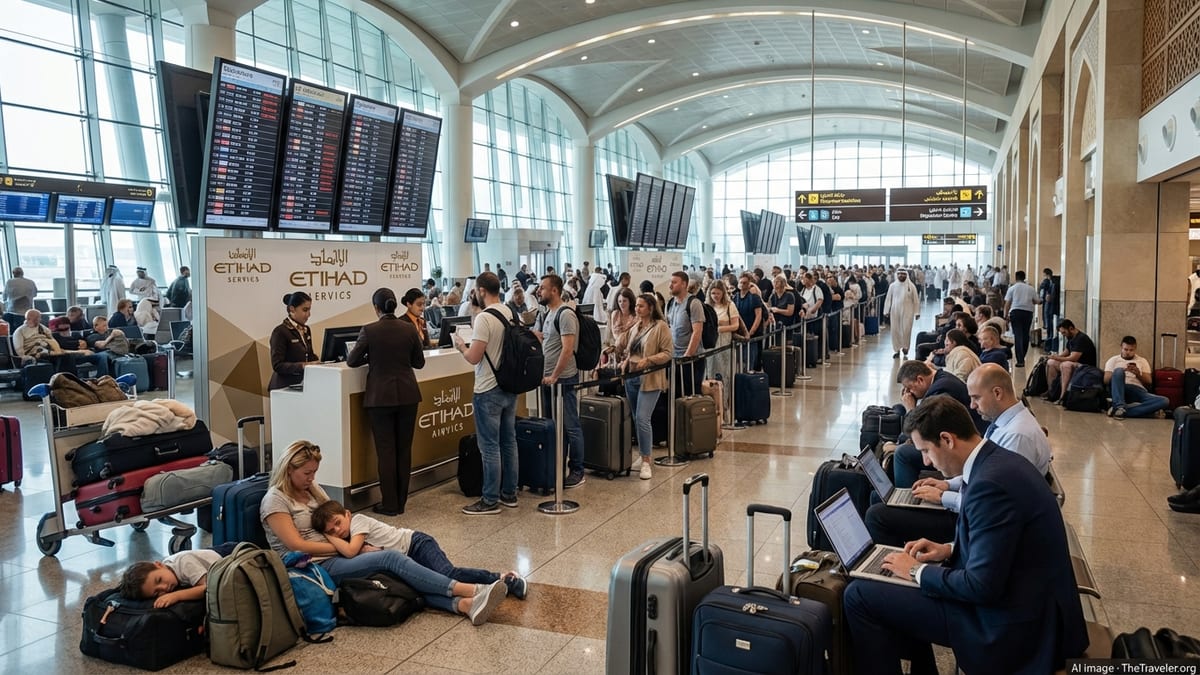
Mixed operations at UAE hubs as conflict flares
Flight data from Dubai International Airport and Abu Dhabi's Zayed International Airport indicates a patchwork of operating, delayed and cancelled services on September 4, with Emirates and Etihad maintaining most long haul routes while trimming or retiming select regional services. Reports from UAE media describe a “mixed picture” in which many flights are running close to schedule but a growing number face late departures, diversions or last minute cancellations as airlines respond to the evolving security situation in the Gulf airspace.
According to recent coverage, the latest disruption follows a renewed escalation between US and Iranian forces, including strikes on military targets and retaliatory attacks that have affected aviation infrastructure and airspace in parts of Bahrain, Kuwait and Jordan. In response, carriers are adjusting routings, building in additional buffer time and, in some cases, suspending flights to specific destinations while they assess risk and operational constraints.
While UAE airports remain open and broadly functional, travellers are being urged via airline and airport channels to check their flight status repeatedly before departure. Public information from both carriers and regulators stresses that schedules can change at short notice, even for flights that were previously confirmed and showing as operating normally earlier in the day.
Emirates delays into Dubai as European links feel strain
Emirates continues to operate an extensive network through Dubai, but arrivals from Europe and selected regional points are bearing the brunt of delay. Recent advisories compiled by local outlets list late arrivals into Dubai from key European cities including Manchester, London Gatwick, London Heathrow, Dublin, Amsterdam, Warsaw, Rome, Bologna, Lyon and Lisbon, with some services showing revised landing times significantly beyond their original schedules.
Operational updates also highlight specific Emirates services experiencing outbound delays from Dubai, including flights to Zurich and London Heathrow. Earlier this week, Emirates had already cancelled or retimed some rotations on the Dubai to Bahrain corridor in response to the evolving security picture and airspace management in the northern Gulf. These adjustments are in addition to routine weather and congestion related changes that major hubs such as Dubai experience at the end of the summer holiday period.
Despite the disruption, publicly available schedules suggest that Emirates is prioritising continuity on long haul trunk routes to Europe, North America and Asia, while using shorter regional sectors and off peak frequencies to absorb part of the operational shock. The airline continues to advise passengers to arrive at the airport with extra time to spare, given the likelihood of longer check in, security and boarding processes when flights and gates are reshuffled at short notice.
Etihad sees wider knock on delays from Abu Dhabi
Etihad Airways appears to be experiencing broader knock on effects across its network, with reports indicating delays on more than a dozen routes touching Europe, Asia and the wider Middle East. Recent summaries of flight data show late arrivals and departures on services linking Abu Dhabi with destinations such as Delhi, Rome, Bengaluru and several regional capitals, in some cases following earlier diversions or airspace flow restrictions.
In addition to same day delays, Etihad has periodically extended cancellations on specific routes in recent weeks as tensions have flared. Publicly reported examples include an extended suspension of certain Abu Dhabi to Kuwait and Abu Dhabi to Bahrain flights over parts of July and August, as well as the cancellation of a Tel Aviv to Abu Dhabi rotation after industrial action at Ben Gurion Airport compounded regional security pressures.
Air traffic bulletins and media coverage suggest that Abu Dhabi's Zayed International Airport has been handling waves of disruption concentrated in the early morning and late evening banks, when a high volume of connections amplify the impact of even minor delays. For connecting passengers, this has increased the risk of missed onward flights, especially where minimum connection times were already tight.
Regional airspace warnings and international suspensions
The disruption to Emirates and Etihad operations is unfolding against a broader backdrop of heightened caution around Gulf airspace. The European Union Aviation Safety Agency has extended a conflict zone information bulletin covering parts of the Gulf region until at least the end of September, citing continued risks linked to the US Iran confrontation and advising operators to carefully assess routes and flight levels.
Several international airlines have taken a more conservative stance than UAE based carriers, temporarily suspending services into the country or rerouting to avoid portions of regional airspace. Recent updates show Air France pausing its Dubai flights until at least September 4, while earlier in the summer a number of European carriers, including Lufthansa and Swiss, extended suspensions on services to and from Dubai and other Gulf destinations.
Within the region, the most acute operational impact has been felt on short haul links to Bahrain, Kuwait and certain Saudi and Jordanian airports, where missile and drone threats, temporary airport closures and air traffic flow restrictions have forced repeated schedule changes. UAE based airlines have responded with a mix of cancellations, route suspensions and day by day adjustments, leaving passengers on these regional corridors particularly exposed to last minute disruption.
What travellers on Emirates and Etihad should expect now
For passengers booked on Emirates or Etihad in the coming days, publicly available advisories and recent reporting point to a period of ongoing uncertainty rather than a complete halt to travel. Most long haul flights remain on the boards, but last minute delays, aircraft swaps and minor timing shifts are likely as airlines respond to new security information and manage knock on effects across their networks.
Travel industry guidance and foreign office advisories for the wider region recommend that travellers monitor both airline channels and local media for the latest developments, allow extra time at the airport and remain prepared for changes such as longer routings, missed connections or short notice rebookings. This advice applies particularly to those transiting through Dubai or Abu Dhabi on tight itineraries and to passengers booked on regional sectors to Bahrain, Kuwait, parts of Saudi Arabia and Jordan.
In the longer term, the extent of disruption to Emirates and Etihad schedules will depend on how the US Iran confrontation evolves and whether further strikes, retaliatory attacks or airspace closures occur. For now, the pattern emerging at UAE hubs is one of resilient but stressed operations, with airlines striving to keep core routes open while trimming the edges of their networks to navigate a volatile security landscape.
The National: Flights delayed and cancelled at Dubai and Abu Dhabi airports
Khaleej Times: Nearly 20 UAE flights delayed or cancelled after renewed US Iran attacks