


More news on this day
UAE airlines are operating close to normal on Sunday, July 26, 2026, but a series of targeted cancellations and schedule adjustments on Kuwait and Bahrain routes means passengers flying with Emirates, Etihad Airways, flydubai and Air Arabia are still being urged to check their flight status before leaving for the airport.
Get the latest news straight to your inbox!
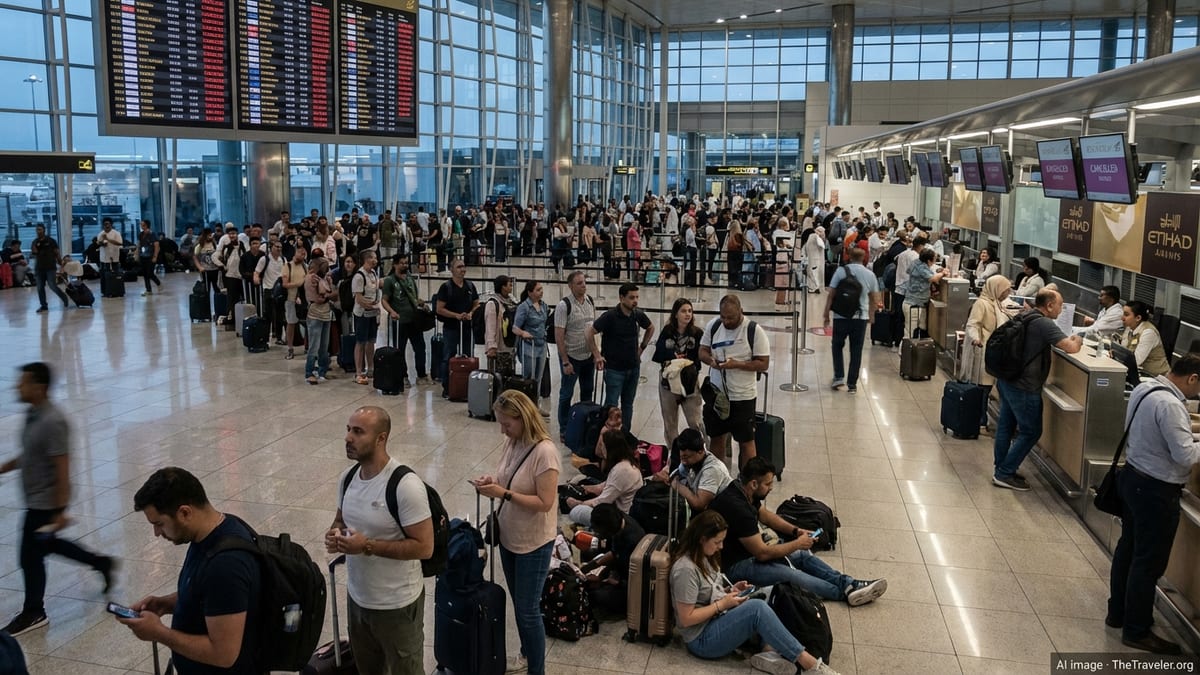
Operations stabilise after earlier Gulf airspace disruption
Publicly available information shows that air navigation across the United Arab Emirates has largely returned to regular patterns following several months of disruption linked to regional tensions and intermittent airspace restrictions. The UAE’s General Civil Aviation Authority recently indicated that air traffic operations in the country’s airspace have normalised after the lifting of temporary precautionary measures, setting the framework for airlines to rebuild their schedules.
Data from Dubai International Airport and Abu Dhabi’s Zayed International Airport suggests that core long haul services on flagship routes for Emirates and Etihad are running broadly as scheduled on July 26. Real time listings for key Emirates services such as EK163 from Dubai to Dublin, along with multiple Etihad departures from Abu Dhabi, show flights operating within planned windows, pointing to a period of relative stability after earlier widespread suspensions.
Even as overall operations improve, airlines are continuing to factor in flexible routings and extended flight times on some Middle East sectors to avoid sensitive airspace. Industry advisories issued in recent months have highlighted the need for carriers to adapt flight paths in response to evolving risk assessments, a trend that remains visible in today’s schedules where selected flights are operating with revised timings.
Sector wide analysis published in June on the impact of the crisis on Middle East carriers noted that UAE airlines have moved faster than many regional peers to restore frequencies and rebuild passenger volumes. That gradual recovery has now translated into fuller departure boards at Dubai, Abu Dhabi and Sharjah, albeit with pockets of disruption still affecting specific destinations.
Kuwait and Bahrain routes see continued cancellations
Despite the broader stabilisation, travellers on Kuwait and Bahrain routes continue to face cancellations and short notice changes. A series of updates from UAE based airlines over the past week indicates that select flights between the UAE and these two Gulf states remain suspended or reduced, directly affecting services operated by Emirates, Etihad, flydubai and Air Arabia.
Reports from regional media platforms in recent days have detailed how Etihad has extended cancellations on certain Abu Dhabi to Kuwait rotations through to late July, while also temporarily halting some Bahrain services earlier in the week. Similar adjustments appear on flydubai schedules, including the cancellation of at least one Dubai to Bahrain flight with an associated Emirates codeshare number, signalling a coordinated response across the two sister carriers.
Coverage focused on Kuwait and Bahrain connections also points to changes at Sharjah based Air Arabia, which has trimmed frequencies or cancelled isolated services where demand and operational considerations have been most affected by the recent instability. Emirates, meanwhile, has prioritised maintaining core trunk routes while using codeshare arrangements and rerouting to manage capacity on shorter Gulf sectors.
For passengers, the main implication is that travel to and from Kuwait City and Bahrain remains more vulnerable to last minute disruption than many other regional routes. Airlines are advising customers holding tickets on these sectors to monitor their booking closely on the day of travel, as additional cancellations or equipment changes remain possible if conditions shift.
What today’s schedules show for Emirates, Etihad, flydubai and Air Arabia
Snapshot checks of flight status tools and independent trackers on Sunday morning show Emirates operating a largely intact long haul network from Dubai, with Europe, North America, Asia and Australasia services mostly running as planned. Individual flights may still see minor delays as aircraft and crew rotations are realigned after previous days of disruption, but widespread cancellations are not in evidence on key intercontinental routes.
Etihad’s schedule from Abu Dhabi appears similarly robust, with long haul departures to Europe and Asia operating according to timetable and selective gaps visible primarily on routes affected by ongoing Gulf constraints. The carrier has been gradually rebuilding connectivity after earlier periods of suspension, and current listings suggest that strategy is now yielding more predictable operations for most passengers.
At Dubai International’s Terminal 2, flydubai’s network of short haul services across the Middle East, Central Asia and parts of Europe is showing a mix of on time departures and a small number of cancellations or extended delays, concentrated on destinations most exposed to regional airspace volatility. Some flights are operating with adjusted departure times compared with historical norms, indicating continued fine tuning in response to air traffic control requirements.
Sharjah’s Air Arabia, which focuses on point to point low cost services, is operating the majority of its scheduled flights on July 26, according to real time tracking platforms. However, isolated cancellations remain, especially on routes that have seen repeated disruptions since the start of the year. Passengers connecting from smaller regional cities into the UAE on Air Arabia services are therefore still being encouraged to build in additional buffer time for onward connections.
Airline policies: rebooking, refunds and travel flexibility
The recent months of uncertainty have pushed UAE carriers to refine their disruption management policies, and many of those provisions remain relevant for travellers flying today. Guidance circulated by travel management firms and regional business media outlines how Emirates, Etihad, flydubai and Air Arabia are handling rebooking, refunds and future travel credits when flights are cancelled for operational or security reasons.
Information shared in March and updated in subsequent advisories indicates that Emirates has been offering complimentary rebooking within a defined window from the original travel date, as well as refund options when a flight is fully cancelled. Etihad has followed a similar pattern, allowing passengers affected by suspensions on specific routes to move their journeys to alternative dates or destinations, subject to fare conditions and seat availability.
For flydubai and Air Arabia, which operate on lower cost models, recent reports have highlighted a heavier reliance on travel vouchers and credits in lieu of immediate cash refunds, especially when cancellations occur close to departure. Some passengers have described longer processing times for reimbursement, with refund periods stretching into several weeks in certain cases, underlining the importance of retaining confirmation emails and receipts.
Across all four airlines, publicly available guidance consistently stresses that any waivers or special conditions are typically limited to tickets issued before a published cut off date and for travel within a defined disruption window. Travellers booking new tickets after airlines have announced an operational issue may find that standard fare rules apply, meaning change fees and fare differences could still be charged for voluntary itinerary changes.
Practical advice for passengers flying from the UAE today
For passengers due to travel from Dubai, Abu Dhabi or Sharjah on July 26, 2026, the main recommendation from aviation advisories and airline notices is to rely on official flight status channels rather than generic timetables. Carriers are updating departure and arrival information in near real time, and that data may differ from what appears on older booking confirmations or third party itineraries.
Travel industry guidance compiled during the peak of the airspace closures remains applicable: passengers should avoid heading to the airport before checking whether their specific flight is confirmed to operate, has been retimed, or has been cancelled. Email notifications, mobile apps and airline websites are typically the first place where changes are published, often several hours before airport departure boards are updated.
For those flying on routes to Kuwait or Bahrain, or on itineraries involving multiple Gulf stops, it is especially important to monitor connections and allow additional time between flights. Where same day alternatives are limited, travel planners suggest considering flexible accommodation bookings and ensuring that travel insurance covers disruption arising from security related airspace measures.
Analysts following the region describe today’s operations as a transition phase, with UAE carriers largely back in the air but still adjusting to a more complex operating environment. For most passengers flying on July 26, journeys with Emirates, Etihad, flydubai and Air Arabia are likely to proceed as scheduled, provided they stay alert to last minute updates and are prepared to respond quickly if their flight status changes.