


More news on this day
The United Kingdom has strengthened its travel advice for Saudi Arabia, highlighting heightened regional tensions, emerging missile and drone threats, and growing disruption across the wider Gulf that could affect British travellers in the months ahead.
Get the latest news straight to your inbox!
Fresh updates reflect shifting regional risk
Recent changes to the Foreign, Commonwealth and Development Office travel advice for Saudi Arabia bring regional security concerns to the forefront, with stronger language on the potential for rapid escalation and its impact on visitors. The core guidance continues to advise against all travel to specific border areas and to urge increased caution across much of the country, but the framing of regional risk has sharpened.
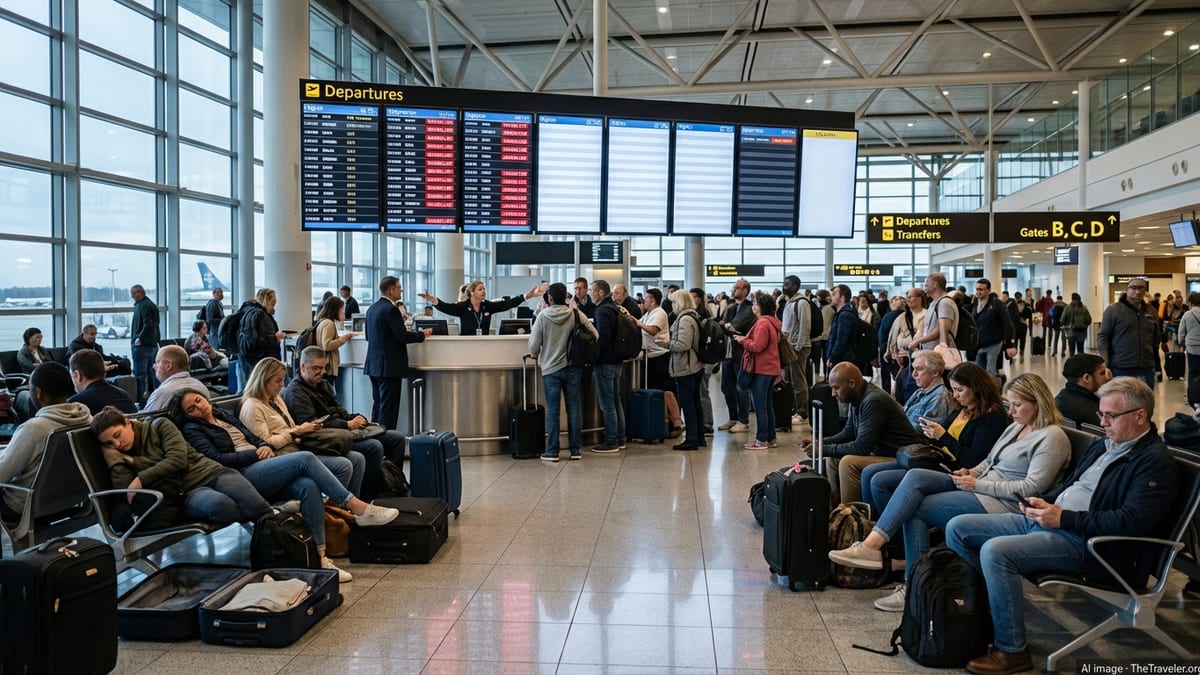
According to publicly available information on the official advisory, updates in the first half of 2026 have focused on the consequences of widening conflict involving Iran and its regional allies, including the possibility of strikes on infrastructure and transport routes. The guidance now links these developments to a higher likelihood of flight disruption, airspace closures and short-notice route changes for journeys that transit Saudi airspace or airports.
The advisory also underlines that travel insurance may be affected if travellers ignore official warnings. Policy wording typically allows insurers to refuse cover where journeys take place against government advice, meaning that medical evacuation, cancellation and disruption costs could fall directly on travellers who proceed regardless.
British nationals are encouraged to monitor the Saudi Arabia page of the UK foreign travel advice closely, as the text has been revised several times in recent months to reflect the evolving picture. The updates form part of a broader pattern of tightened government messaging on the Gulf region as a whole.
Emphasis on Saudi border regions and airspace vulnerabilities
A key focus of the latest guidance is the Saudi border with Yemen, long identified as an area of elevated risk. Publicly available maps and briefing material associated with the advisory continue to show large stretches of the frontier classified as zones where travel is strongly discouraged or advised against altogether, reflecting the potential for cross-border fire and sporadic clashes.
The regional risks section has been expanded to discuss the possibility of missile and drone activity targeting infrastructure inside Saudi Arabia, including airports and energy facilities. Recent online updates refer to strikes and attempted attacks linked to conflicts beyond Saudi territory but with direct implications for its security and airspace.
In practical terms, this means travellers may face last minute changes to flight paths, delays caused by temporary airspace restrictions and, in some scenarios, the diversion or cancellation of services. Long haul routes that overfly the Red Sea or the Gulf could also be re-routed at short notice if tensions spike, which may lengthen journey times and complicate connections.
The advisory further warns that public gatherings near security installations, government buildings and critical infrastructure are particularly sensitive. Visitors are urged to avoid these areas and to follow local announcements about closures or heightened alert states, even in cities that have not experienced direct attacks.
Broader Middle East tensions shape UK guidance
The tightening of UK advice on Saudi Arabia is taking place against the backdrop of a wider deterioration in regional security. Recent months have seen repeated flare ups between Iran and Western-aligned states, as well as incidents affecting shipping in the Red Sea and Gulf waters that are important to Saudi trade and aviation routes.
Coverage by international outlets notes that several Western governments have raised their own advisory levels for parts of the Middle East this year, particularly for locations judged vulnerable to spillover from conflict or retaliatory strikes. For Saudi Arabia, this has translated into calls for travellers to reassess non-essential trips, especially those involving overland movement near borders or itineraries that depend on multiple regional transit points.
Publicly available analysis from risk consultancies and insurers similarly highlights the potential for sudden changes in security conditions, including cyber incidents and infrastructure disruptions that can affect airports, ports and energy networks. While Saudi Arabia continues to market itself as a major tourism and business hub, such assessments suggest that visitors should be ready for contingency planning even in cities far from conflict zones.
The UK advisory reflects this by encouraging British nationals to have a personal emergency plan covering communications, access to funds and practical steps to leave the country or shelter in place if routes out are temporarily cut off. The guidance also stresses that government assistance may be limited during a fast-moving crisis, particularly if commercial options remain available.
Practical implications for British travellers
For those considering trips to Saudi Arabia, the updated advice translates into a call for more detailed preparation. Prospective visitors are urged to check not only the security and regional risks sections of the UK government page but also the entry requirements and health information, as these too can be adjusted in response to changing circumstances.
Travel specialists report that airlines and tour operators are monitoring the situation closely and may impose their own restrictions or schedule changes. Passengers are therefore advised to keep contact details up to date with carriers, sign up for operational alerts where available and allow extra time for security screening and potential disruption at departure and arrival airports.
Insurance considerations are also central. Policies that include war or terrorism-related cover often come with strict conditions, including adherence to official travel advice and timely notification of any incidents. Travellers are encouraged to scrutinise exclusions and to obtain written confirmation of coverage for their specific itinerary, particularly if transiting or staying in cities identified as higher risk.
Those who decide to proceed with essential travel are advised to keep electronic and paper copies of important documents, maintain regular contact with family or employers, and pay close attention to local news in both English and Arabic where possible. The FCDO’s general guidance on staying safe abroad recommends being aware of exit routes from accommodation and public venues, and avoiding predictable routines in higher risk environments.
Ongoing monitoring and the outlook for visits
Looking ahead, the trajectory of UK advice for Saudi Arabia is likely to depend on developments in the broader Gulf and Red Sea theatres, as well as on any incidents inside the kingdom itself. Analysts note that periods of heightened tension have alternated with relative calm in recent years, but that the current cycle of confrontation has already led to more disruptive events than many previous episodes.
Travel industry observers point out that Saudi Arabia’s ambitions to expand tourism and host major international events may come under pressure if security concerns persist. Large religious gatherings and high profile conferences, which draw significant numbers of foreign visitors, are particularly exposed to airspace restrictions and shifting threat assessments.
For now, the UK advisory continues to acknowledge that many visits to Saudi Arabia proceed without incident, especially in areas far from conflict-affected borders. However, the stepped up language on regional escalation, combined with more explicit references to missile and drone risks, signals that British travellers can no longer treat the country in isolation from wider Middle Eastern tensions.
With further updates to official travel advice considered likely as the situation evolves, prospective visitors are being encouraged to revisit their plans regularly in the weeks before departure and to remain prepared for rapid changes once on the ground.