


More news on this day
Passengers across the UK have described scenes of confusion and overcrowding at baggage reclaim after a major air traffic control IT failure triggered thousands of flight cancellations, leaving luggage systems overwhelmed and travel plans in disarray.
Get the latest news straight to your inbox!
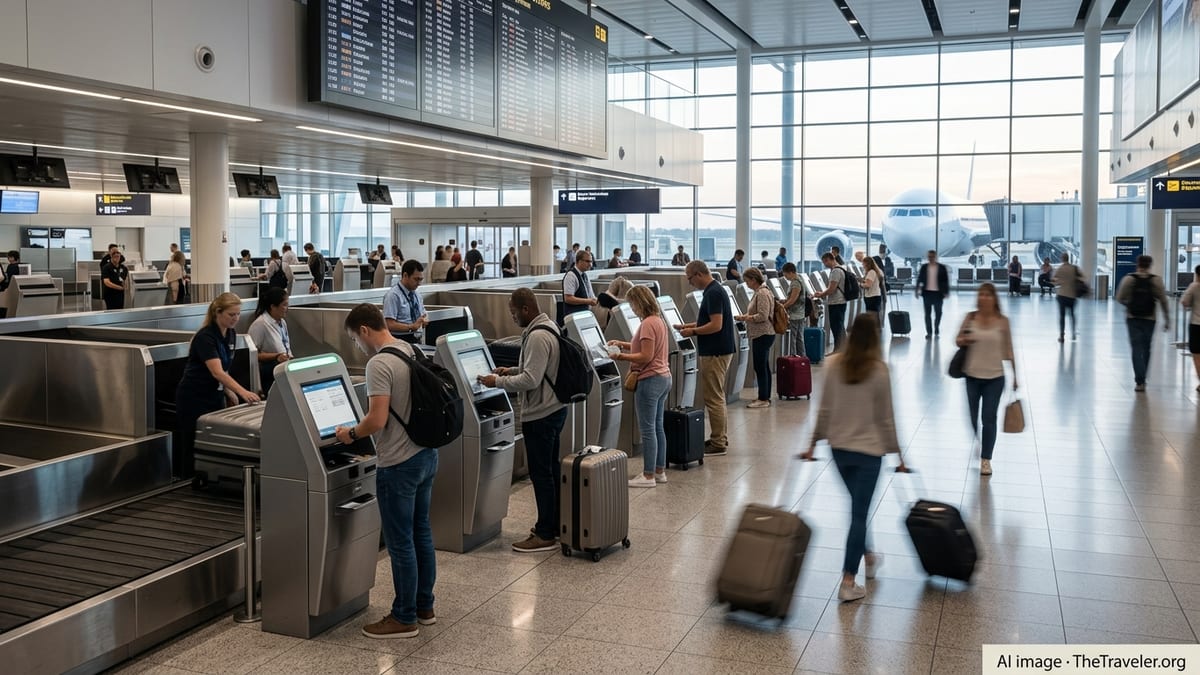
IT glitch triggers nationwide disruption
UK air travel has been severely disrupted since 8 September, when a technical issue in the National Air Traffic Services flight processing system led to widespread delays and cancellations at airports across the country. Publicly available data from aviation analytics firms indicates that close to 1,000 flights were affected on the first day alone, with the largest hubs, including Heathrow and Gatwick, among those hit hardest.
Follow-up reporting shows that more than 1,300 flights in total have now been cancelled, with tens of thousands of passengers either stranded abroad or forced to abandon journeys from UK airports. The disruption has not been confined to London, with airports such as Manchester, Birmingham, Edinburgh, Glasgow and Bristol all reporting knock-on delays as airlines struggled to reposition aircraft and crew.
National Air Traffic Services has said the failure was linked to its flight plan processing system, which supplies route information to controllers. While the precise cause remains under investigation, officials have publicly ruled out a cyber attack and described the incident as a “technical issue” that required a full system reset. The outage lasted only a few hours, but the impact cascaded through schedules for more than a day as airlines attempted to clear the backlog.
The incident has revived scrutiny of the resilience of the UK’s aviation IT infrastructure. Industry commentators have noted that this is the second major systems-related disruption in just over three years, following a separate failure during the August 2023 bank holiday that also caused widespread cancellations and delays.
Baggage reclaim under intense strain
While much of the early focus was on grounded flights and packed departure halls, accounts from travellers and staff have highlighted the strain on baggage reclaim areas as one of the most visible consequences of the IT failure. With hundreds of flights cancelled at short notice, aircraft arrived out of sequence or were diverted, leaving luggage stacks building up faster than airport teams could process them.
Coverage from national media outlets describes baggage halls at Heathrow and other major airports filling with unclaimed suitcases as passengers were rebooked onto alternative services or told to leave the airport without their bags. In some terminals, belts reportedly had to be stopped because there was no more space to unload luggage, forcing handlers to move trolleys of bags into cordoned-off areas while they waited for instructions from airlines.
Firsthand reports compiled by travel and news sites indicate that many travellers whose flights were cancelled never saw their bags reach the reclaim area at all. Some passengers have described waiting most of the day at airports such as Luton or Heathrow for suitcases to be offloaded after cancellations, only to be reunited with them late in the evening. Others were advised to file missing baggage claims and travel on without their belongings, adding further stress to disrupted journeys.
Airport and airline websites have directed customers to online baggage tracing portals and helplines, but social media posts and forum discussions suggest those systems also came under heavy pressure, with some passengers unable to log missing bag reports immediately because of volume and technical issues.
Stranded travellers recount disrupted journeys
Published coverage has featured multiple accounts from passengers whose journeys unravelled when the IT failure struck, many of whom described returning to arrival halls that they said felt overwhelmed. Travellers arriving into Heathrow reported long queues simply to reach baggage belts, followed by extended waits as staff attempted to sort luggage from flights that had landed out of their normal sequence.
On some diverted services, passengers landed at airports they had not expected to use and then had to decide whether to stay with their aircraft or disembark and try to retrieve bags locally. Reports from regional airports indicate that returning luggage for flights that never departed proved particularly difficult, because aircraft, crews and baggage were no longer in the same place once schedules began to unravel.
Accounts collated by national broadcasters and travel correspondents also describe passengers bedding down on terminal floors overnight, often without clear information on when they would fly or when they might see their bags again. In several cases highlighted in recent reporting, families said medication, car keys and work equipment were inside checked luggage that was not immediately accessible, compounding anxiety as they scrambled to reorganise plans.
Some travellers told media outlets that digital notifications from airlines lagged behind what they were seeing on departure boards, creating confusion over whether to remain airside or attempt to exit and seek accommodation. In that uncertainty, many opted to stay close to the baggage hall in the hope that their suitcases would eventually appear.
Questions over resilience of aviation systems
The latest failure has intensified calls from consumer groups and airline executives for a review of the robustness of the UK’s aviation IT infrastructure. Commentators have pointed to a series of recent technology-related problems affecting both air traffic control and airline systems, ranging from check-in outages to baggage handling breakdowns that have caused large backlogs of luggage at major hubs.
Reports drawing on regulatory documents note that the aviation regulator has previously urged National Air Traffic Services to strengthen contingency arrangements after the 2023 incident, when a malfunction in automatic flight plan processing also triggered mass disruption. The recurrence of large-scale problems, albeit from a different technical cause, has prompted questions about whether recommended upgrades and backup procedures have been fully implemented or adequately stress-tested.
At the airport level, service quality assessments already highlighted concerns about congestion, passenger communications and resilience in key areas such as security and baggage. Independent reviews of Heathrow, for example, have cited previous closures of parts of its baggage reclaim area and characterised the passenger experience at times as among the most stressful in Europe. The latest disruption is likely to sharpen debate over investment priorities in both physical infrastructure and underlying software systems.
Industry analysts quoted across several outlets argue that the complexity of modern air travel means even a short systems outage can take days to unwind, given tightly timed rotations of aircraft and crew. They say that as volumes recover and peak travel periods become busier, pressure on both air traffic control and airport IT will only increase unless additional capacity and redundancy are built in.
What passengers can do after the chaos
With disruption still rippling through schedules, airlines and airports have been updating guidance for passengers whose flights were cancelled or severely delayed. Publicly available information from carriers indicates that most are offering rebooking at no extra cost, subject to seat availability, and have set up dedicated webpages to manage claims for out-of-pocket expenses and compensation where applicable under UK or EU rules.
For travellers separated from their luggage, airline baggage tracing tools remain the main channel to locate and arrange delivery of delayed bags. Consumer advice published in recent days recommends keeping boarding passes and baggage tags, submitting claims as soon as portals are accessible, and retaining receipts for essential items purchased while waiting for luggage. Passengers whose bags do not reappear within a set number of days may ultimately be entitled to claim for lost belongings up to prescribed monetary limits.
Travel experts quoted in media reports also suggest that, given the scale of the current disruption, some passengers may face longer waits for compensation and baggage resolution than in more routine cases. They recommend checking airline websites regularly rather than relying solely on app notifications, which can lag during major systems incidents. Where possible, travellers are being advised to factor in additional time at the airport, understand their rebooking options, and consider travel insurance policies that may cover some of the costs arising from extended delays.
As investigations into the air traffic control failure continue, attention is likely to remain focused on how quickly disrupted passengers are reunited with their luggage and compensated for their losses, as well as on the broader question of how to prevent similar IT-related chaos from recurring in the UK’s airports and baggage halls.
Euronews: Technical glitch leads to more than 1,000 flight cancellations across UK