


More news on this day
The United Kingdom is stepping up its fight against rail fare evasion, with new government funding for station access gates aimed at tightening revenue protection while improving the passenger experience across the network.
Get the latest news straight to your inbox!
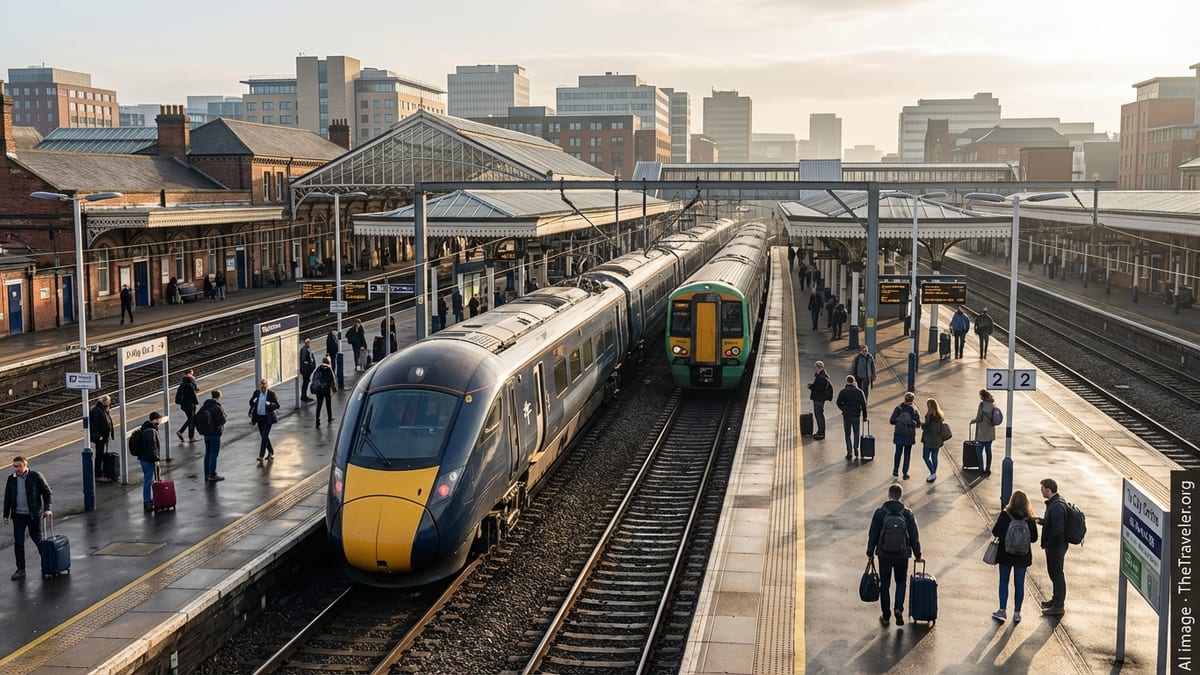
New funding targets fare‑dodging hotspots
Recent government announcements highlight a £33.4 million package dedicated to installing and upgrading ticket gates at stations in England that currently have little or no physical access control. Publicly available information shows that the investment forms part of a broader rail reform agenda, designed to make the network more financially sustainable and responsive to passenger needs.
The funding is due to support a mix of standard waist‑high gates and newer, taller barriers that are harder to jump or bypass. These are expected to be rolled out first at locations identified as fare‑dodging hotspots, where open platforms and ungated entrances have historically made enforcement difficult.
Government material states that fare evasion and ticket fraud are estimated to put hundreds of millions of pounds of rail revenue at risk each year. The new gates are presented as a visible deterrent at the point of entry and exit, reinforcing the principle that those who use the railway should pay for their journey.
Authorities have indicated that this is only the first phase of a wider programme, with the potential for future expansion across more of the United Kingdom’s rail network once initial results and revenue impacts are assessed.
From open platforms to controlled gate lines
Industry assessments from the Office of Rail and Road describe a clear link between station design and fare evasion patterns, noting that networks with fewer gates and less staffing tend to face higher levels of unpaid travel. Moving from open platforms to controlled gate lines is seen as one of the most direct ways to improve compliance.
The new investment is expected to accelerate that shift. Network Rail and train operating companies have already been using targeted funding pots for “revenue‑generating” projects, with gate installations prioritised at stations where the projected reduction in fare evasion outweighs capital and maintenance costs.
Recent parliamentary material indicates that operators such as Southeastern are focusing on installing gates at coastal and suburban stations that have long been identified as weak points in the system. Similar projects are under consideration on other commuter lines where passengers can currently start and end journeys without passing through a barrier.
While the primary goal is to secure revenue, planners also frame the move as a safety and security measure. Closed stations can make it easier to manage passenger flows, reduce anti‑social behaviour and provide clearer points of contact between staff and travellers.
London’s experience shapes national strategy
Developments in London are strongly influencing the national approach. Transport for London has reported that fare evasion across its services remains a significant challenge, but that a combination of data‑driven enforcement and improved gate technology has begun to reduce losses.
Public reports from the London Assembly and TfL outline a strategy that blends engineering, education and enforcement. As part of this, the authority is investing in enhancements to station gates, including improvements to wide‑aisle gates that are essential for passengers with mobility needs but are also frequently targeted by fare evaders.
TfL has set a long‑term aim to reduce its overall fare evasion rate to around 1.5 per cent by 2030, and business planning documents show that tighter gate management is central to that objective. Data from recent quarters points to incremental progress as new technology and targeted interventions take effect.
The national rail network is drawing on this experience as it considers how to design new access gates, where to locate them, and how best to integrate them with digital ticketing systems and back‑office revenue protection tools.
Balancing enforcement with passenger accessibility
Alongside investment in physical infrastructure, the United Kingdom is also reviewing the wider framework of rail revenue protection to reduce unintentional non‑compliance. An independent review commissioned by the government highlighted the need for clearer information on fares, more consistent practices across operators and a fairer balance between deterrence and customer support.
The government’s response to that review notes that future rail reforms are expected to make ticketing rules easier to understand and to present revenue protection policies more transparently through a unified website and app. The aim is to ensure that tougher gate lines and higher penalty fares are paired with clearer guidance, so that genuine mistakes are less likely.
Accessibility remains a central concern. New gate lines must accommodate passengers using wheelchairs, mobility aids, pushchairs or heavy luggage, while still resisting tactics such as tailgating and forced entry. Transport bodies indicate that updated wide‑aisle designs, better sensor technology and smarter monitoring are being tested to meet these dual objectives.
Passenger groups have consistently argued that any clampdown on fare evasion should not create additional barriers for those who rely on rail for essential travel. As plans move from policy statements to on‑the‑ground installations, campaigners are expected to scrutinise how well new gate layouts work for all types of users.
Implications for travellers and the wider rail network
For everyday passengers, the most visible change over the next few years is likely to be the disappearance of ungated exits and entrances at many local stations. Travellers who were accustomed to buying tickets on board or exiting via open side paths may find that journeys now start and end with a tap or a ticket scan at newly installed barriers.
Industry documents suggest that, if successful, the investment in gates could produce a reinforcing cycle: higher revenue, more funds available for service improvements and modernisation, and a stronger case for continued public and private investment in the rail network.
However, the upfront costs are substantial, and officials have acknowledged in public material that not every station can be gated in the short term. Decisions about where to install new barriers will continue to be driven by data on evasion rates, passenger volumes and wider regeneration plans.
As work progresses, the United Kingdom’s rail system is likely to move steadily closer to a fully gated model at major and medium‑sized stations, with access gates playing a central role in how the country balances financial sustainability, fairness and ease of travel.