


More news on this day
The United Kingdom has withdrawn its remaining diplomatic staff from Iran and tightened travel guidance across parts of the Middle East, as a renewed surge in regional tensions prompts fresh warnings for travelers and airlines.
Get the latest news straight to your inbox!
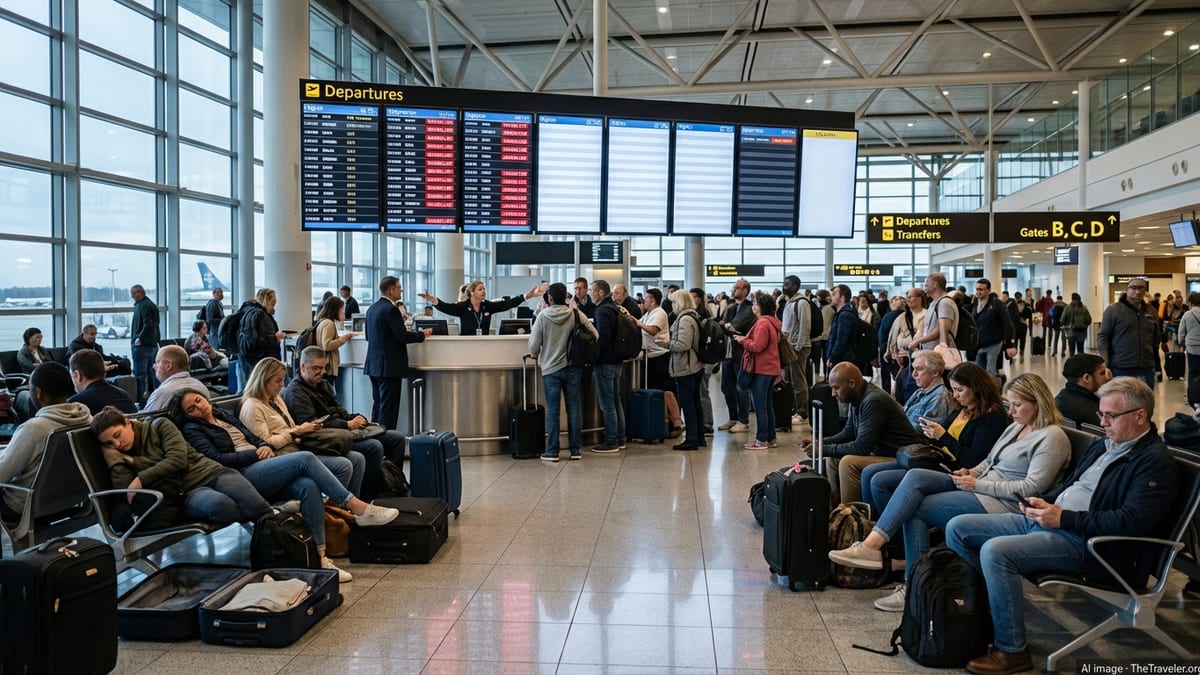
Embassy withdrawal underscores persistent Iran security risks
Publicly available information from the UK government indicates that all remaining UK staff have been temporarily withdrawn from Iran, with the British Embassy in Tehran no longer providing in-person consular services. The decision is presented as a security measure in response to the evolving situation in and around Iran, where the risk of further military activity and unrest remains elevated.
The official Iran travel advisory continues to warn against all travel for UK nationals, highlighting the danger of arbitrary arrest, detention and restrictions on consular access. The guidance stresses that, with staff withdrawn, the UK’s ability to offer direct assistance inside the country is extremely limited and that services are being handled remotely from outside Iran.
The updated advice also notes that any British nationals who nonetheless decide to travel to Iran are doing so against strong government recommendations. Travelers are urged to consider that commercial routes out of the country could be disrupted at short notice, leaving limited options for departure if the security situation worsens.
Entry requirements have become more complex for would-be visitors using a British passport, with information from Iranian consular channels relayed in the UK guidance indicating that travelers may need to be part of an organised tour or have a local sponsor in order to secure a visa.
Region-wide reassessments of Middle East travel
The UK’s Iran move comes as several governments review or recalibrate their travel advice across the wider Middle East. Recent updates from multiple foreign ministries reiterate that, despite ceasefire efforts and diplomatic agreements, the regional security picture remains fluid and can deteriorate quickly with little warning.
Publicly available summaries of other countries’ advisories show a similar pattern: most now distinguish between relatively lower-risk destinations on the Arabian Peninsula and the Gulf, and higher-risk states where active conflict or political instability persists. Iran, Iraq, Syria, Yemen and parts of Lebanon commonly remain under the strictest “do not travel” categories, while countries such as Jordan, Oman, Saudi Arabia and some Gulf states are rated at an intermediate caution level, often described as “reconsider your need to travel.”
Some governments had begun to ease restrictions for destinations including the United Arab Emirates, Qatar and Bahrain following announcements of de-escalation between the United States and Iran. However, the latest adjustments to UK guidance, particularly on Iran, underline that any improvement is seen as fragile and subject to rapid reversal if hostilities resume.
Travel industry observers note that this fragmented advisory landscape is shaping flight schedules, insurance coverage and tour operations across the region. While popular hubs such as Dubai and Doha have seen a gradual return of leisure demand, routes that overfly Iranian airspace or connect directly to conflict-affected states remain under close review.
Impact on air travel and route planning
International aviation bodies and national safety agencies have also reacted to the instability by advising carriers to avoid certain airspaces or to adopt more conservative routing across the Gulf and adjacent areas. Recent safety bulletins referenced in government travel platforms point to the potential for military activity at short notice, which can pose risks to civilian aircraft and lead to abrupt airspace closures.
As a result, airlines operating between Europe, Asia and Australasia have increasingly re-routed flights to steer clear of Iranian and neighbouring conflict-zone airspace. These changes can lengthen flight times, raise costs and create knock-on disruption for passengers, particularly during peak holiday periods when alternate capacity is limited.
Travelers connecting through major Middle Eastern hubs are advised in public guidance to pay close attention to airline notifications and to be prepared for last-minute schedule changes. In some cases, carriers may consolidate services, reroute via alternative hubs or suspend specific city pairs temporarily in response to new risk assessments.
Insurance implications are another consideration. Many standard travel insurance policies either exclude or heavily restrict coverage for destinations under “do not travel” advisories. With Iran firmly in that category for UK travelers and several neighbouring states subject to heightened warnings, prospective visitors are encouraged to check policy wording carefully before booking.
What the updated advice means for UK travelers
For UK nationals, the most immediate consequence of the staff withdrawal from Iran is the expectation of self-reliance should they choose to enter the country contrary to official advice. Government guidance notes that, with embassy operations handled remotely, assistance in emergencies, legal matters or hospitalisation may be delayed or, in some situations, impossible.
The broader set of Middle East advisories encourages travelers to register contact details where such services are offered, monitor local and international news, and keep flexible itineraries that can be altered quickly if tensions escalate. Public information highlights the importance of having contingency plans, such as alternative routes home and access to funds for unexpected accommodation or rebooking costs.
Those planning multi-country itineraries around the region are being urged to check each destination’s advisory status separately, as neighbouring states can have significantly different risk assessments. This is particularly relevant for overland travel or cruise itineraries that span multiple ports, where a change in the security outlook in one country can affect an entire route.
Industry analysts suggest that the pattern of frequent, incremental updates to government travel pages is likely to continue as the political and security situation evolves. For now, the withdrawal of UK staff from Iran and the reinforced warnings across parts of the Middle East serve as a clear signal that, despite recent diplomatic moves, the region remains highly sensitive for international travel.
Tourism outlook and planning in an uncertain environment
Despite the heightened caution, some Middle Eastern destinations continue to promote tourism, banking on their relative distance from active conflict zones and on long-standing reputations as secure transit hubs. Cities such as Dubai, Abu Dhabi and Doha remain central to global air networks, and industry reports indicate that visitors are still arriving, albeit with more detailed risk planning than in previous years.
Specialist tour operators focusing on cultural and adventure travel in the region report that demand is increasingly concentrated in destinations perceived as stable and well connected, while itineraries involving Iran, Iraq, Syria or Yemen are largely on hold. According to recent coverage in travel media, many operators have revised their programmes to emphasise flexible booking conditions and clear communication on security developments.
For independent travelers, the message from updated government advisories and industry responses is consistent: thorough preparation and real-time monitoring are now essential components of any trip involving the Middle East. While some routes and destinations remain open, the withdrawal of UK diplomatic staff from Iran underlines how quickly circumstances can change, and how closely travel plans are now tied to the shifting geopolitical environment.