


More news on this day
Rail passengers across parts of southern England faced severe disruption on Thursday 7 May 2026 after a failure in a key radio communication system forced widespread cancellations and delays on some of the country’s busiest routes.
Get the latest news straight to your inbox!
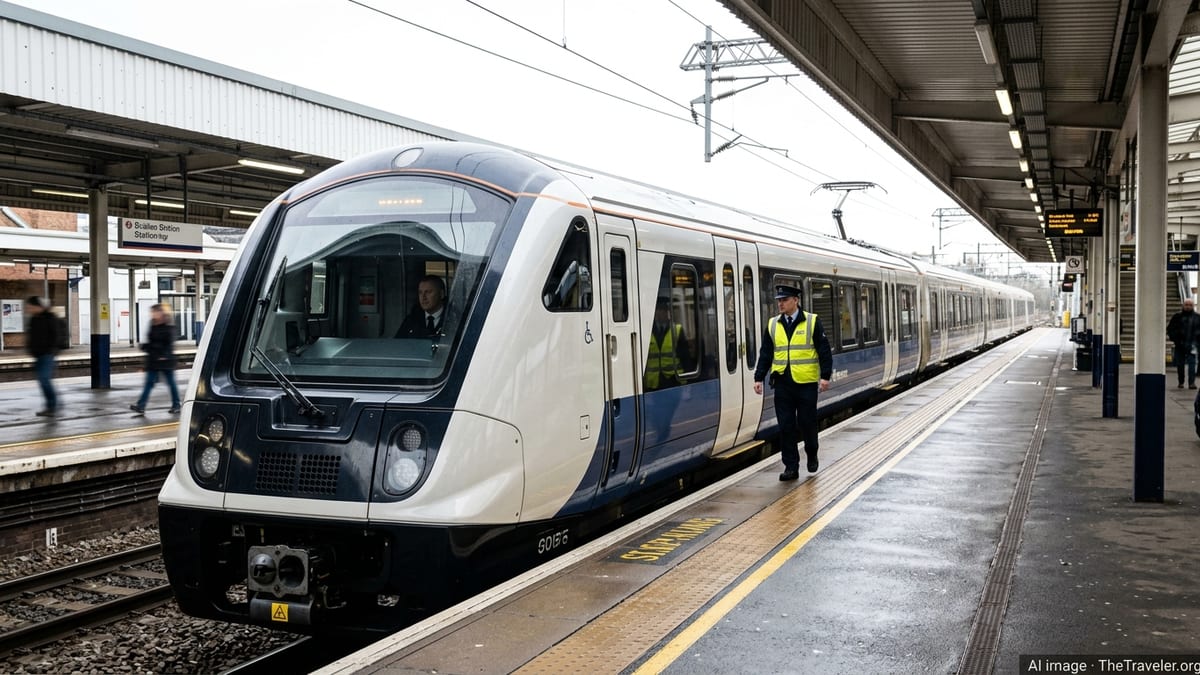
Key Radio Network Fault Halts Trains on Busy Southern Corridors
Reports indicate that a fault in the Global System for Mobile Communications Railway, known as GSM-R, triggered a large-scale interruption to rail services during the morning peak. The digital radio system enables secure communication between train drivers and signallers, and its failure meant many services were unable to operate safely until the issue was contained.
Coverage from UK news outlets describes services in southern England as particularly affected, with disruption concentrated on routes linking London with major commuter and regional destinations. The Wessex route, centred on London Waterloo and stretching towards the south and south west, was among those hit hardest, alongside other lines where GSM-R equipment is heavily relied upon.
National Rail’s disruption pages showed a major incident status for large parts of southern England through much of the day, with advice that services could be cancelled, heavily delayed or revised at short notice while the fault was investigated and systems were reset.
Publicly available information suggests the underlying technical issue was resolved by late morning, but operators continued to warn of significant knock-on disruption, with some services delayed by up to 90 minutes and residual cancellations expected well into the evening period.
Impact on Commuters and Key London Terminals
The failure came at one of the busiest times of the week for rail travel, leaving many commuters struggling to reach workplaces, schools and connecting services. London Waterloo, one of the UK’s highest-volume stations, experienced severe congestion as departure boards filled with delayed and cancelled trains serving Surrey, Hampshire, Dorset and beyond.
Passengers on other southern routes also reported disruption, with services towards the south coast and west of England subject to extended journey times, short-notice platform changes and occasional terminations short of their destination. According to journey planners and operator updates, alternative routes were quickly crowded as travellers attempted to divert around the affected sections of network.
Travel news reports indicate that operators introduced revised timetables for parts of the day, prioritising core commuter flows and interurban links where possible. In some areas, ticket acceptance arrangements were put in place with other train companies or alternative routes, although capacity constraints meant these options were often busy.
For many travellers, the incident added to a sense of uncertainty around rail reliability following a series of recent disruptions linked to signalling faults, overhead line problems and earlier communication issues. Social media posts described long queues, packed concourses and limited information in some locations as staff sought to manage crowding safely.
Understanding GSM-R and Why Its Failure Is So Disruptive
GSM-R forms the backbone of voice and data communication on much of the national rail network. It is a dedicated railway adaptation of the GSM mobile standard, designed to give drivers, signallers and control centres a secure and resilient channel to share safety-critical information.
According to technical explainers published by UK transport specialists, the system supports emergency calls, movement authorities and speed restrictions, and it underpins many of the protocols that ensure trains can run closely together without compromising safety. When parts of the GSM-R network fail, affected sections typically switch to conservative operating rules, limiting train movements or halting them altogether until robust communication is restored.
Travel industry coverage notes that a previous GSM-R issue in December 2024 caused widespread disruption for operators across Britain, prompting calls for enhanced resilience and backup arrangements. The latest fault is likely to renew scrutiny of how redundancy is built into communication systems and how quickly alternative procedures can be implemented during an outage.
Safety remains the overriding priority, and the response to the incident followed the principle of failing safe. Trains were prevented from entering sections of track where communication could not be guaranteed, significantly reducing the risk of more serious consequences at the expense of punctuality and capacity.
Network Recovery, Ongoing Knock-on Delays and Other Incidents
Once the core fault in the radio network was rectified, operators began the process of returning trains and staff to their planned diagrams. Industry updates highlight that this can take hours after a major interruption, as rolling stock and crews are often out of position and signalling capacity is constrained by a backlog of services.
National Rail’s incident summaries indicated that major disruption remained in place on several corridors until the end of service, with warnings that evening peak journeys could still be affected. Some trains were turned short of their destination to help restore frequency on the busiest inner-suburban sections, while others ran non-stop over parts of their route to make up lost time.
The communication system failure also coincided with separate localised issues on parts of the network, including signalling faults and an earlier emergency incident on the Portsmouth Direct Line. These unrelated events added pressure to already stretched operations, contributing to broader delays and alterations across multiple operators.
Passenger groups and rail commentators pointed out that, although the technical fault was resolved relatively quickly, the scale and timing of the disruption underlined how a single systems failure can cascade through a complex timetable, affecting journeys far from the original problem area.
Passenger Advice and Questions Over Future Resilience
Throughout the day, journey planners and operator channels advised passengers to check services before travel, allow additional time and consider postponing non-essential trips. Many rail users were encouraged to claim compensation where delays met the thresholds set out in existing Delay Repay schemes.
Travel analysts suggested that the incident is likely to prompt further examination of how communication infrastructure is maintained and upgraded, particularly as the network prepares for future digital signalling and increased traffic. Publicly available commentary has raised questions about backup systems, hardware renewal cycles and the visibility of technical risks within investment plans.
Advocacy groups continue to argue that clear, timely information is as important as engineering resilience during such events, urging operators and infrastructure managers to refine how disruption is communicated across apps, station announcements and on-board systems when rapid timetable changes are required.
For now, the GSM-R fault of 7 May 2026 joins a growing list of high-profile rail incidents that have shaped public perceptions of reliability. As services stabilise, attention is turning to formal reviews and to whether forthcoming upgrades can reduce the chances of another communication system failure bringing large parts of the UK rail network to a standstill.