


More news on this day
Rail passengers across southern England faced widespread cancellations and delays after a failure in a key radio communication system disrupted services on multiple UK routes, highlighting the rail network’s dependence on digital safety systems.
Get the latest news straight to your inbox!
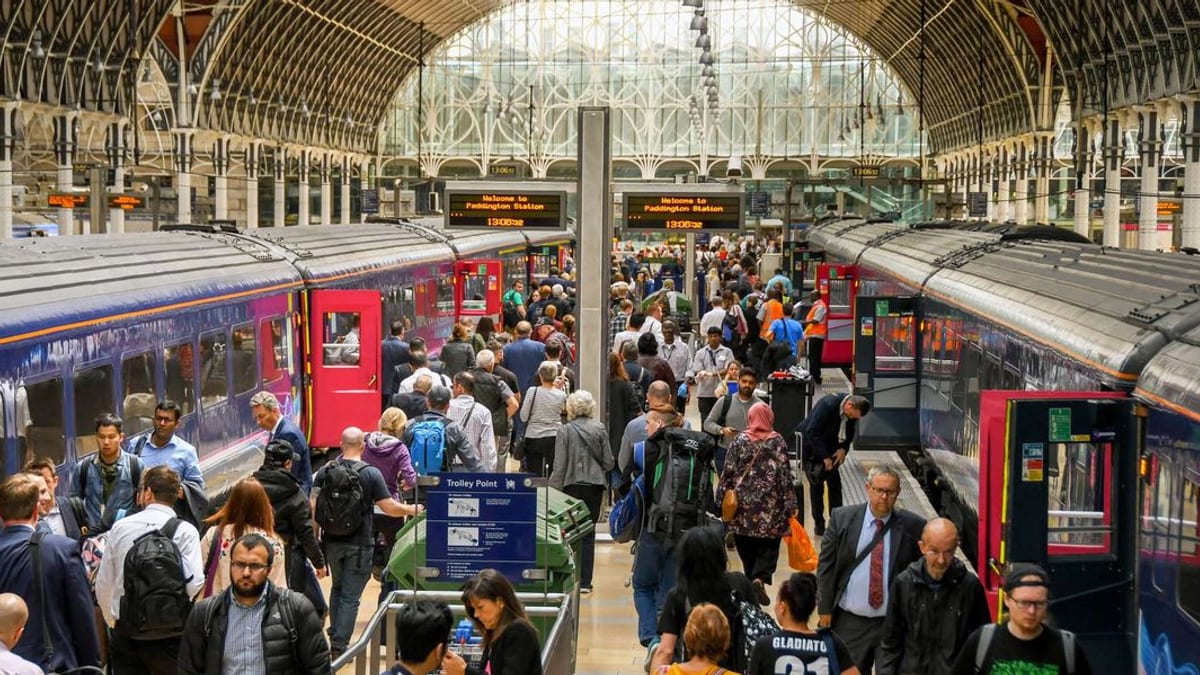
Fault in Driver–Signaller Radio Network Halts Trains
Reports indicate that a fault in the radio system used for communication between train drivers and signallers triggered significant disruption across parts of the UK rail network on Thursday 7 May 2026. The issue affected lines in southern England in particular, where dense commuter and intercity traffic relies on constant communication to keep services moving safely.
According to publicly available information, the problem was linked to the GSM-R radio network, a dedicated system that underpins voice contact and safety-critical messaging between the cab and control. Without reliable connectivity, standard operating rules require trains to slow down or be held in place until alternative procedures can be implemented, sharply reducing capacity on busy corridors.
National Rail service updates described a “fault with the radio system between the driver and the signaller,” with the disruption initially concentrated on routes serving London and the south of England. While technical teams moved to restore the network, operators imposed precautionary restrictions that quickly led to cancellations and heavy delays.
Network information later suggested that the core technical fault was brought under control by late morning, but the knock-on impact to train diagrams, rolling stock and staff positioning meant disruption continued well into the day, especially on commuter routes into London termini.
Multiple Train Operators Hit Across Southern England
Published coverage shows that the communication failure affected a broad range of operators, including South Western Railway, Great Western Railway, Southern, Thameslink, Gatwick Express, London Overground and CrossCountry. These companies share critical infrastructure in and out of London, so a single system failure cascaded across several brands and ticket types.
Services through key hubs such as London Waterloo and London Victoria were particularly hard hit, as trains were cancelled, turned short of their destinations or subject to severe delays. Passengers reported crowded concourses, busy replacement services and a shortage of clear real-time information as operators updated journey planners throughout the morning.
On South Western Railway’s network, which links the capital with Surrey, Hampshire, Dorset, Wiltshire and Devon, journey planners indicated that services could be cancelled or altered across the entire route map. Great Western Railway also reported disruption across much of its network, affecting links between London, the Thames Valley and the West Country.
The timing of the incident, shortly before the morning peak, meant many commuters were already en route when trains began holding at signals or being terminated early. Social media posts and rail-user forums described passengers being advised to seek alternative routes, delay travel or abandon journeys altogether.
Delays, Cancellations and “Do Not Travel” Warnings
National journey-planning portals and operator updates signalled extensive disruption, with delays of 45 to 90 minutes reported on some routes and widespread short-notice cancellations. In several areas, passengers were warned that major disruption was expected to continue until the end of the operating day, even after the immediate radio fault was addressed.
For many travellers, the most visible impact was the scale of residual delays, as trains and staff were out of position and timetables fell significantly behind schedule. Public information highlighted that even once services restarted, capacity would be reduced while operators attempted to rebuild regular patterns of movement.
Some passengers were encouraged to consider rerouting via alternative operators or London terminals where lines had reopened earlier. However, the interlinked nature of services around the capital restricted options, and many travellers opted to work remotely or postpone non-essential journeys after checking live updates.
Compensation rules for delayed or cancelled journeys remained in effect, with consumer groups highlighting the importance for passengers to keep records of disrupted travel. Rail user advocates pointed out that passengers on advance tickets or specific timed services were particularly affected when trains were withdrawn at short notice.
Technical Vulnerabilities Exposed in a Digital Railway
The incident has refocused attention on the digital systems that underpin modern rail operations in the UK. Industry analyses describe the GSM-R network as a cornerstone of main line safety, used for routine operational messages and urgent emergency calls that can bring all trains in an area to a stand if required.
Commentary from rail specialists notes that when such systems fail, even briefly, the network is designed to operate in a “safe by default” mode. That approach protects passengers and staff but also sharply restricts capacity, meaning a single fault can quickly lead to system-wide delays on busy corridors.
Recent reports and policy papers on UK rail resilience have already highlighted the growing dependence on complex communication, signalling and IT infrastructure. The latest disruption adds to a series of incidents involving signalling problems, power supply issues and infrastructure failures that have affected rail reliability in different parts of the country in 2026.
There is ongoing debate within the sector over the balance between sophisticated digital control systems and the need for robust fallback procedures. Industry observers suggest that as more routes move to modern signalling and traffic management, investment in redundancy and rapid-recovery capabilities will be central to limiting the impact of similar failures in future.
Advice for Affected Travellers and Future Journeys
Public guidance in the wake of the communication failure has emphasised the importance of checking live journey planners on the day of travel, even after the initial fault appears resolved. Residual delays, rolling stock changes and altered stopping patterns can persist for hours after a major incident, particularly in densely used commuter corridors.
Passengers holding advance or split tickets are advised to review operator-specific policies, as many train companies relax restrictions during significant disruption, allowing travel on earlier or later services, or via alternative routes. Information published by train operators also indicates that ticket acceptance arrangements are often put in place across neighbouring networks when a major issue affects a particular region.
For travellers planning upcoming trips, particularly during busy weekends and holiday periods that coincide with planned engineering work, the latest disruption underlines the value of allowing extra time and having contingency plans. Rail user organisations recommend building flexibility into itineraries, especially for time-critical connections such as flights or international departures.
While the radio fault has been treated as an isolated technical failure, the event has once again highlighted how dependent the UK’s rail network is on the smooth functioning of invisible digital systems. For passengers, the experience serves as a reminder that even routine journeys can be vulnerable to complex failures that ripple far beyond the initial point of impact.