


More news on this day
A United Express flight operating as United Airlines UA3609 between Milwaukee and Newark diverted to Pittsburgh in 2026, illustrating how regional carriers and hub airports absorb disruption when weather, congestion or operational issues affect the busy Northeast corridor.
Get the latest news straight to your inbox!
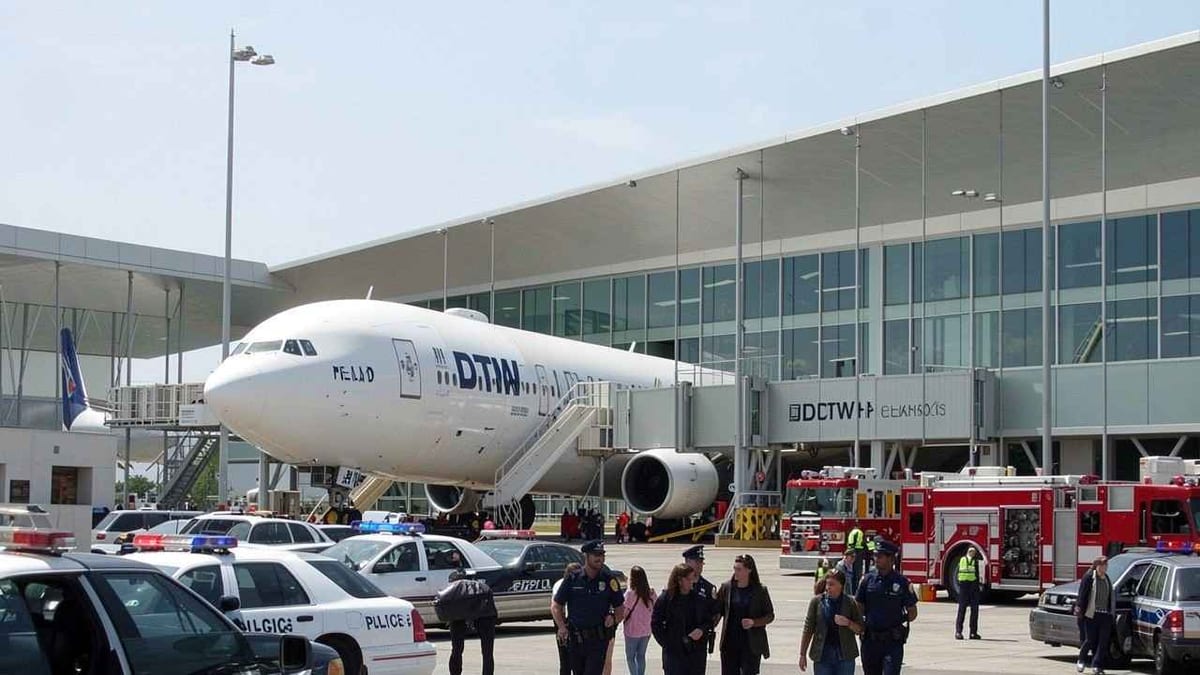
Regular Milwaukee–Newark Shuttle Takes Unusual Route
UA3609 is a regularly scheduled service on the Milwaukee to Newark route, typically operated by Republic Airways under the United Express brand with Embraer 175 regional jets. Publicly available schedules list the flight among roughly 20 weekly services linking Milwaukee’s General Mitchell International Airport and Newark Liberty International, reflecting steady demand between the Upper Midwest and the New York metropolitan area.
On the 2026 occasion in question, flight tracking data show the aircraft departing Milwaukee on a delayed afternoon schedule, climbing eastbound toward New Jersey before altering course and descending toward western Pennsylvania. The aircraft subsequently landed at Pittsburgh International Airport instead of continuing directly to Newark, a pattern consistent with an in-flight diversion.
Performance statistics for UA3609 around mid-2026 indicate a mix of on-time arrivals, moderate delays and a small number of cancellations on the Milwaukee–Newark route. The diversion to Pittsburgh appears as part of this broader operational picture, where tight timetables and congested airspace around New York can quickly amplify the impact of weather or air traffic control restrictions.
Republic Airways, which operates United Express services on behalf of United Airlines, typically uses its Embraer 175 fleet on dense regional sectors such as Milwaukee–Newark. The aircraft type offers flexibility to reroute and reposition quickly, which can be critical when crews must respond to unexpected constraints along the original flight path.
Weather, Congestion and the Logic of a Pittsburgh Diversion
While specific real-time dispatch records for this UA3609 flight are not publicly released, the decision to divert to Pittsburgh aligns with common operational responses to adverse conditions near Newark. Aviation forums and flight-tracking analyses for the same travel period show repeated diversions into alternate airports when storms, strong winds or low visibility developed along the New Jersey coastline and surrounding approach corridors.
Pittsburgh International functions as a practical alternate for flights bound to Newark from the Midwest and farther west. The airport sits close to the main eastbound jet routes, offers multiple instrument approaches and has available ramp space for regional jets. Flight schedules in July 2026 show regular United mainline and regional services between Pittsburgh and Newark, which makes it simpler to refuel, reassess route options and, if necessary, rebook travelers on onward connections.
Industry data on diversions across the United States consistently point to weather near destination airports and air traffic control flow programs as leading triggers. The dense concentration of flights into Newark, LaGuardia and John F. Kennedy means that thunderstorms or low clouds can quickly produce holding patterns, extended vectors or ground stops. In such circumstances, dispatch systems and cockpit crews often weigh remaining fuel, expected delay times and alternates along the route before selecting a diversion point.
Pittsburgh’s role as a secondary node in this network shows how former hubs and mid-sized airports continue to support large carriers during irregular operations. Even after major airlines have shifted much of their connecting traffic elsewhere, runways, gates and ground handling capacity at airports like Pittsburgh remain vital to keeping complex schedules functional when primary hubs experience overload.
Impact on Passengers and Network Operations
For passengers on UA3609, the diversion introduced an unplanned stop and likely additional delays before arriving in the New York area. Travelers on similar diverted services typically disembark while the aircraft refuels or awaits a new departure slot, though in some cases they remain on board if turnaround times are short and local procedures allow.
Operational data and customer accounts from comparable diversions to alternate airports indicate a range of subsequent outcomes. Some flights continue on to the original destination once conditions improve and new arrival slots open, while others cancel at the diversion point, requiring rebooking. In a best-case scenario, the diversion results in a modest delay but preserves onward connections; in more complex cases, passengers may face missed connections and overnight stays.
For the airline, a diversion can ripple through aircraft rotations, crew duty limits and gate usage across several airports. A regional jet operating multiple legs in a single day may arrive late into its next origin, prompting additional delays or adjustments. Networks constructed around tight turnaround times are particularly sensitive to such disruptions, and carriers rely on spare aircraft, reserve crews and flexible scheduling tools to restore normal operations.
The UA3609 diversion also underscores the role of code-share arrangements in managing irregular operations. As Republic Airways operates the flight on behalf of United, coordination between the regional carrier, the mainline brand and airport partners at Milwaukee, Pittsburgh and Newark is essential for handling passenger care, crew assignments and aircraft positioning.
Milwaukee–Newark Corridor Remains Resilient
Despite the disruption, the broader Milwaukee–Newark corridor retained a high level of service through mid-2026. Flight schedules for that period show United and its regional partners maintaining near-daily frequencies between the two cities, providing both point-to-point options and connections to United’s global network at Newark.
Historical performance records for UA3609 around the same timeframe list a majority of flights as completed with modest delays, suggesting that diversions such as the one to Pittsburgh remain relatively rare events rather than a consistent pattern. Cancellations and re-routings appear more closely tied to specific weather systems or temporary airspace constraints.
Air service updates from regional airports further indicate that Milwaukee and Pittsburgh continue to feature prominently in carriers’ strategies for feeding major hubs. Reports on route networks in 2026 highlight Milwaukee’s links to Newark through United and Pittsburgh’s multiple connections to East Coast and Midwestern cities via several airlines, reinforcing their roles as important spokes in a wider system.
The diverted UA3609 service therefore stands as one illustration of how North American regional aviation adapts in real time. Even when individual flights encounter unexpected obstacles, the combination of alternate airports, flexible regional fleets and dense hub schedules allows airlines to keep passengers moving, albeit with inconvenience and delay.
Growing Attention on Diversions and Passenger Communication
Broader industry discussion in 2026 has focused increasingly on how airlines communicate with passengers during diversions and extended delays. Travelers on affected flights commonly turn to real-time flight-tracking platforms and social media to understand changing routings, often comparing publicly visible radar information with gate or cabin announcements.
Consumer advocates and aviation analysts have noted that transparent and timely updates can greatly influence how passengers perceive a disruption. When diversions occur for safety-related reasons such as weather or technical concerns, clear explanations of the decision-making process and likely next steps tend to foster greater acceptance, even when the delay is lengthy.
At the same time, regulators and airport operators continue to emphasize contingency planning for periods of intense congestion around major hubs like Newark. Collaborative programs between airlines, air traffic control and airports aim to balance safety, efficiency and passenger welfare when diversions become necessary, including better use of alternate airports and more predictable recovery schedules.
Against this backdrop, the 2026 diversion of Republic Airways’ United Express Flight UA3609 from Milwaukee to Newark, rerouted through Pittsburgh, fits into a larger narrative about resilience in the U.S. regional airline network. While disruptive for those on board, such events highlight the layers of redundancy and operational flexibility built into modern commercial aviation.