


More news on this day
United Airlines flight 1255, a scheduled Boeing 737-800 service from Spokane to Denver on June 7, experienced an altered routing in the Rocky Mountain region, highlighting how fast-changing conditions can disrupt tightly timed domestic operations.
Get the latest news straight to your inbox!
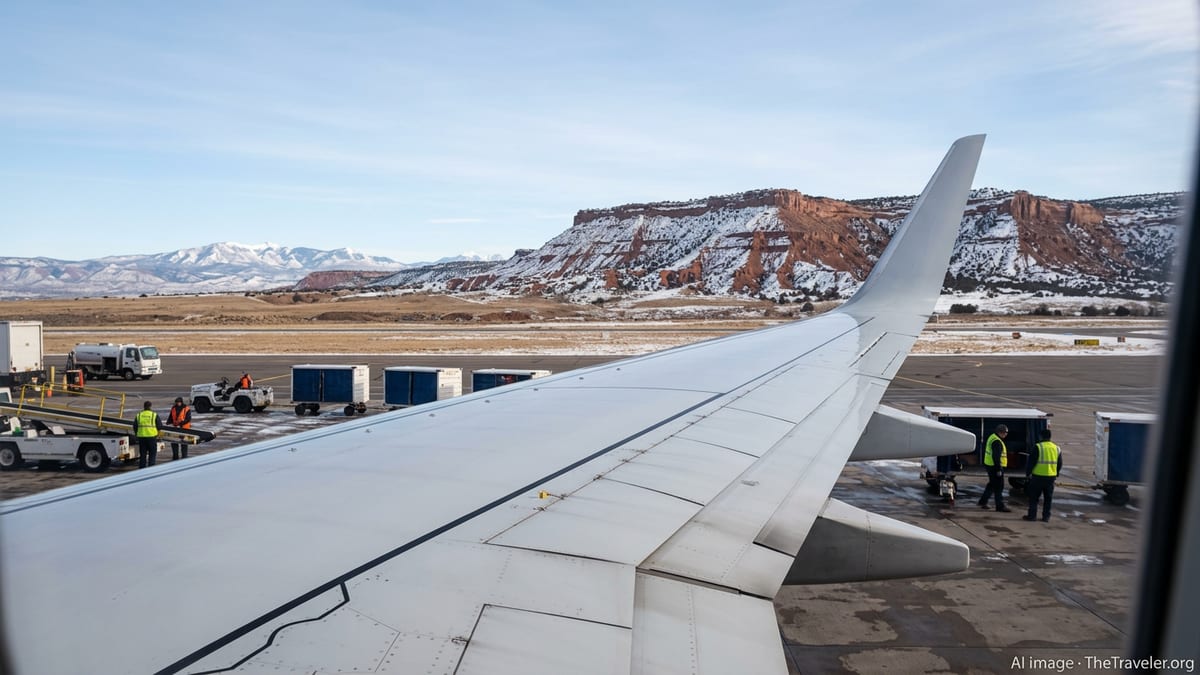
From Routine Spokane Departure to Off-Plan Stop
Publicly available flight listings show United Airlines flight 1255 as an afternoon departure from Spokane International Airport bound for Denver International Airport, operated by a Boeing 737-800 series aircraft. The flight is typically timetabled for a little over two hours, forming part of United’s broader network linking the Inland Northwest with its Denver hub.
On June 7, tracking data indicated that UA1255 departed Spokane broadly on schedule, consistent with its published mid-afternoon pushback and early evening arrival window in Denver. Under normal circumstances, the aircraft would follow a fairly direct southeasterly routing across the Rockies into Colorado.
Instead, reports from flight-tracking platforms and regional aviation observers point to an altered profile, with the service diverting toward western Colorado and ultimately reaching Grand Junction Regional Airport. The resulting change replaced a single, non-stop segment with a more complex routing that required a descent and landing well short of the planned Denver destination.
The equipment involved, a Boeing 737-824 variant, is a common workhorse in United’s domestic fleet, designed to operate comfortably at higher-elevation airfields. Nonetheless, rapidly evolving operational factors in the Denver area can prompt flight crews and airline operations teams to redirect aircraft to alternate airports.
Why Diversions Through Grand Junction Occur
Grand Junction Regional Airport plays an important role as an alternate for Denver-bound traffic, particularly in unsettled weather patterns or periods of airspace congestion over Colorado. Historical diversion activity into Grand Junction, reflected in airport board materials and passenger accounts, shows that the facility regularly receives flights that do not normally serve the market, especially during stormy stretches along the Front Range.
For carriers such as United, Grand Junction offers a combination of advantages: a long primary runway, airfield services capable of handling narrowbody mainline jets, and relative proximity to Denver by both air and ground. When traffic flows into Denver slow because of thunderstorms, low visibility, or runway constraints, placing an aircraft on the ground at Grand Junction can be preferable to extended airborne holding.
Passenger reports from past events into western Colorado and United’s Rocky Mountain network suggest that diversions are often tied to weather systems that move quickly across the plains and foothills. Even when an individual flight departs in clear conditions, deterioration near Denver can trigger rerouting decisions late in the cruise phase.
Operational data from recent seasons indicate that diversions into airports such as Grand Junction and Colorado Springs tend to spike on days when Denver manages heavy arrival banks alongside convective weather. In those situations, Grand Junction functions as a safety valve, absorbing aircraft that cannot be immediately accommodated at the hub.
Operational Impact on Travelers and Scheduling
When a flight diverts, the immediate priority is to bring the aircraft and occupants safely to a suitable airport. Once on the ground at Grand Junction, crews and airline operations teams typically reassess everything from fueling and crew duty limits to onward connections in Denver and beyond. For passengers, this can mean extended onboard waits, deplaning at the diversion airport, or rebooking onto later services.
Past Denver disruption events that funneled multiple flights into Grand Junction have led to congested gate areas, stretched local ground resources, and a surge of travelers needing updated itineraries. While each event differs, experiences shared by travelers in recent years describe long but orderly waits as airlines decide whether to continue to Denver once conditions improve or arrange alternative routings.
For UA1255’s June operation, the diversion adds complexity to an otherwise straightforward Spokane to Denver link. Downstream effects can ripple through the schedule, particularly if the aircraft was slated to operate a connecting leg later in the day. Even minor delays can cascade in a tightly programmed hub operation, and a diversion magnifies that effect.
Airline planning documents and flight-status guidance emphasize that diversions fall within the spectrum of irregular operations that carriers anticipate. While disruptive, such events are treated as managed exceptions rather than abnormal occurrences, especially in regions where summer convection and winter storms are common.
Grand Junction’s Growing Role in Diversion Strategy
Grand Junction Regional Airport’s traffic statistics in recent years highlight a notable contribution from diversion activity. Board reports from the airport authority reference elevated landing fee revenue associated with aircraft that do not typically serve the field, an indication that the airport has become a recurring alternate for several major airlines during irregular operations.
United’s pattern of service through Denver, including multiple daily departures to Grand Junction, has effectively integrated the western Colorado airport into its broader Rocky Mountain strategy. Even when UA1255 or similar flights are not scheduled to stop there, the infrastructure and familiarity gained through regular service make Grand Junction a logical choice when Denver becomes temporarily constrained.
For the local community, diversions bring a short-term influx of passengers and aircraft movements that can briefly transform the airport’s usual rhythm. However, they also underline the region’s importance within the national aviation system, reinforcing Grand Junction’s position as more than a purely regional outpost.
Industry analyses of hub-and-spoke networks point out that secondary airports like Grand Junction increasingly support operational resilience. As traffic volumes grow through major hubs such as Denver, alternates that can safely absorb unexpected arrivals become a core part of contingency planning.
What Travelers Can Expect After a Diversion
For passengers on services like United flight 1255, diversions often translate into uncertainty about connection times, missed meetings, and late-night arrivals. Airlines typically encourage travelers to monitor flight status tools and app notifications closely, particularly when flying into weather-prone hubs during peak seasons.
In recent years, traveler accounts of diversions into Grand Junction and other Colorado airports have described a full spectrum of experiences, from relatively brief refueling stops to extended waits while crews and aircraft are repositioned. Seating availability on later Denver departures, hotel capacity, and ground transportation options can all shape how difficult the onward journey becomes.
Guidance commonly shared by frequent fliers suggests that, once a diversion is announced, travelers should focus on confirming their updated itinerary as soon as connectivity allows, either through an airline’s mobile app or customer service channels. For those with tight onward connections in Denver, rebooking to a next-morning flight can sometimes prove more reliable than racing to make an already delayed same-day option.
Events such as the altered route of UA1255 illustrate the balance airlines must strike between maintaining schedule integrity and navigating the safety and capacity constraints of complex hub operations in challenging terrain. For travelers across the Spokane to Denver corridor, they are a reminder that flexibility remains an essential part of flying in and out of the Rocky Mountains.