


More news on this day
A United Airlines Boeing 737-924(ER) operating as Flight UAL2258 between Bozeman Yellowstone International Airport and Denver International Airport diverted to Colorado Springs Airport after weather and congestion disrupted arrivals into Denver, leading to extended delays and rebookings for passengers across the region.
Get the latest news straight to your inbox!
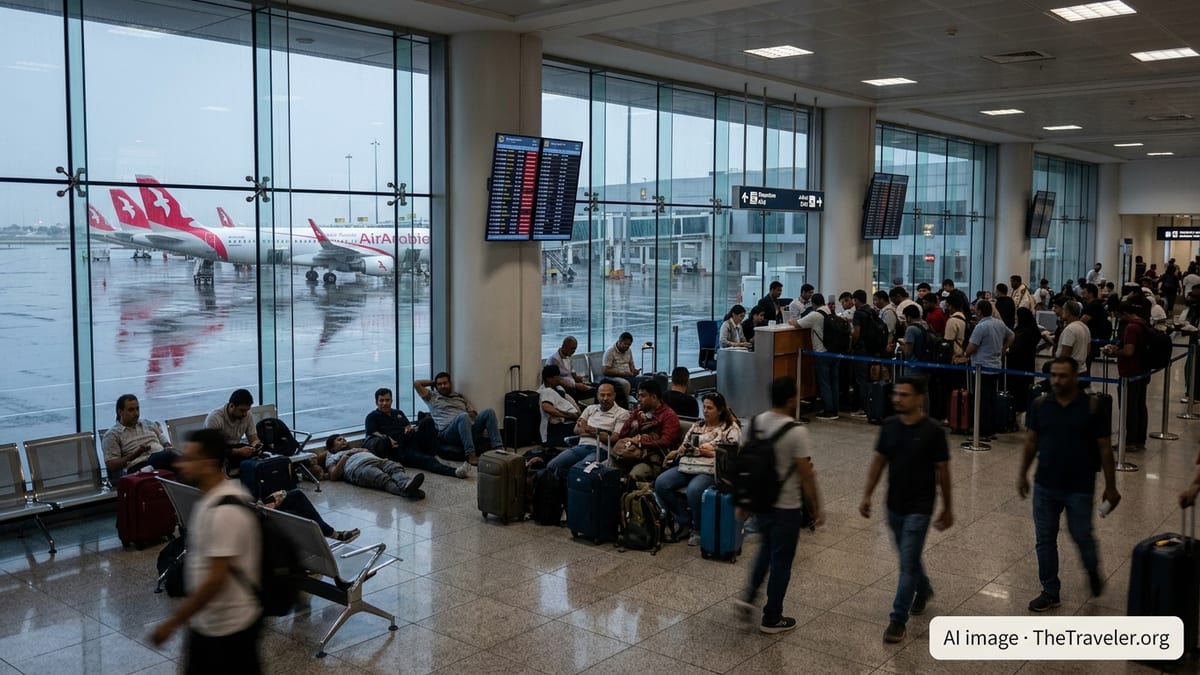
Mountain Weather Forces Reroute Away From Denver
Publicly available flight-tracking data indicates that the United service labeled UAL2258, typically scheduled between Bozeman, Montana, and Denver, departed Bozeman normally before holding patterns and arrival congestion developed in the Denver area. With storms and changing wind conditions affecting operations along the Front Range, aircraft arriving from multiple origins began diverting to alternates, including Colorado Springs.
Flight-tracking timelines and regional aviation reports show that Denver International Airport periodically restricts arrivals when thunderstorms form along approach corridors or when runway configurations change. In this case, aircraft approaching from the north and northwest faced building cells and air traffic management initiatives that slowed arrival rates. As holding times increased and fuel margins narrowed, routing UAL2258 to Colorado Springs emerged as a standard operational response.
Colorado Springs Airport, located roughly 70 miles south of Denver, frequently serves as a relief airport when Denver experiences convective weather, as documented by prior diversions in recent storm events affecting Front Range operations. The decision to divert, while disruptive for passengers, is a routine safety and fuel-management measure within airline and air traffic control procedures.
Boeing 737-924(ER) and Operational Considerations
The aircraft assigned to UAL2258 was listed as a Boeing 737-924(ER), a stretched, extended-range version of the 737-900 series commonly used by United on mid-continental routes. The type is configured for high-density domestic and transborder services, with performance suitable for operations into high-elevation airports such as Denver and Colorado Springs under normal conditions.
In diversion scenarios, the 737-924(ER) must retain sufficient fuel not only for the planned route and anticipated holding, but also for a designated alternate plus reserves. When developing weather, traffic metering, or runway constraints cause holding patterns to extend, crews can reach a point where continuing to wait for a Denver arrival slot is no longer operationally prudent, triggering a diversion decision even if conditions are expected to improve later.
Colorado Springs offers a long primary runway and instrument-approach infrastructure compatible with mainline jets like the 737-900 family. Recent operational records show United and other carriers periodically using the airport to absorb diversions during peak weather disruptions at Denver, supporting the view that UAL2258 followed a well-established contingency playbook rather than responding to a unique mechanical or safety emergency.
How the Diversion Led to Extended Delays
Once UAL2258 reached Colorado Springs, the disruption shifted from an in-flight operational issue to a ground logistics challenge. Aircraft and crews positioned at an unplanned airport often require new takeoff clearances, updated flight plans back to Denver, and alignment with gate and ramp availability at both airports. When many inbound flights divert simultaneously, these steps can create a cascading backlog.
Passenger accounts shared through social media and traveler forums during similar Denver weather events describe multi-hour waits on the ground at alternates while crews await updated fuel loads, flight releases, and clarity on when Denver will again accept arrivals at a normal rate. With UAL2258’s Boeing 737-924(ER) already tightly scheduled for later segments, delays at Colorado Springs likely rippled into subsequent flights, further complicating rebooking options.
Regional air traffic patterns around Denver suggest that once storms clear or shift, controllers prioritize a mix of diverted flights and aircraft already in holding, all funneled through limited arrival corridors. When incoming weather or operational constraints return, that recovery can stall, leaving some diverted flights, potentially including UAL2258, waiting longer than initial estimates indicated.
Impact on Travelers and Broader Network Effects
For travelers originating in Bozeman and connecting in Denver, the diversion of UAL2258 significantly increased misconnection risks. Denver functions as a major hub for United, and extended delays into the evening often mean that onward flights to smaller markets have no same-day alternatives. Passengers on diverted services around Denver routinely report overnight stays and rebookings onto next-day departures when weather-related disruptions occur late in the schedule.
Operational data on United’s systemwide performance show that weather-related diversions make up a small proportion of total flying but can have outsized effects on individual itineraries. Once a mainline jet such as the 737-924(ER) falls several hours behind schedule, aircraft rotations, crew duty-time limits, and airport curfews can force additional cancellations or aircraft swaps far from the original problem airport.
Colorado’s Front Range geography, with Denver’s large hub airport positioned near the foothills and Colorado Springs serving as a lower-traffic alternate to the south, means that flight diversions of this kind are likely to continue whenever intense convective storms line up along standard approach routes. For carriers, that reality reinforces the need for flexible fuel planning, crew scheduling, and passenger reaccommodation policies on routes like Bozeman to Denver that depend on a single major connecting point.
What the UAL2258 Diversion Reveals About Summer Flying
The experience of UAL2258 fits into a wider pattern of summer flying in the United States, particularly across the Rocky Mountain region. Seasonal thunderstorms, high traffic volumes, and airspace constraints can combine to create sudden and severe disruptions even on relatively short domestic routes. Flights that appear routine on the schedule can encounter significant delays once convective weather builds along their arrival path.
Reports from recent Denver weather events, which saw large numbers of flights diverted to airports such as Colorado Springs, underscore the importance of contingency planning for passengers. Travelers connecting through Denver are increasingly advised by travel analysts to leave generous buffer times for summer and early autumn itineraries, especially when onward connections involve the last flight of the day to smaller cities.
The diversion of UAL2258, operated by a Boeing 737-924(ER) between Bozeman and Denver, highlights how quickly changing conditions along the Front Range can transform a straightforward hop into a multi-stop journey. While safety-focused decisions like diversions are a standard part of airline operations, their knock-on effects reinforce the value of flexible travel plans and awareness of how weather and congestion shape air travel across the Colorado corridor.