


More news on this day
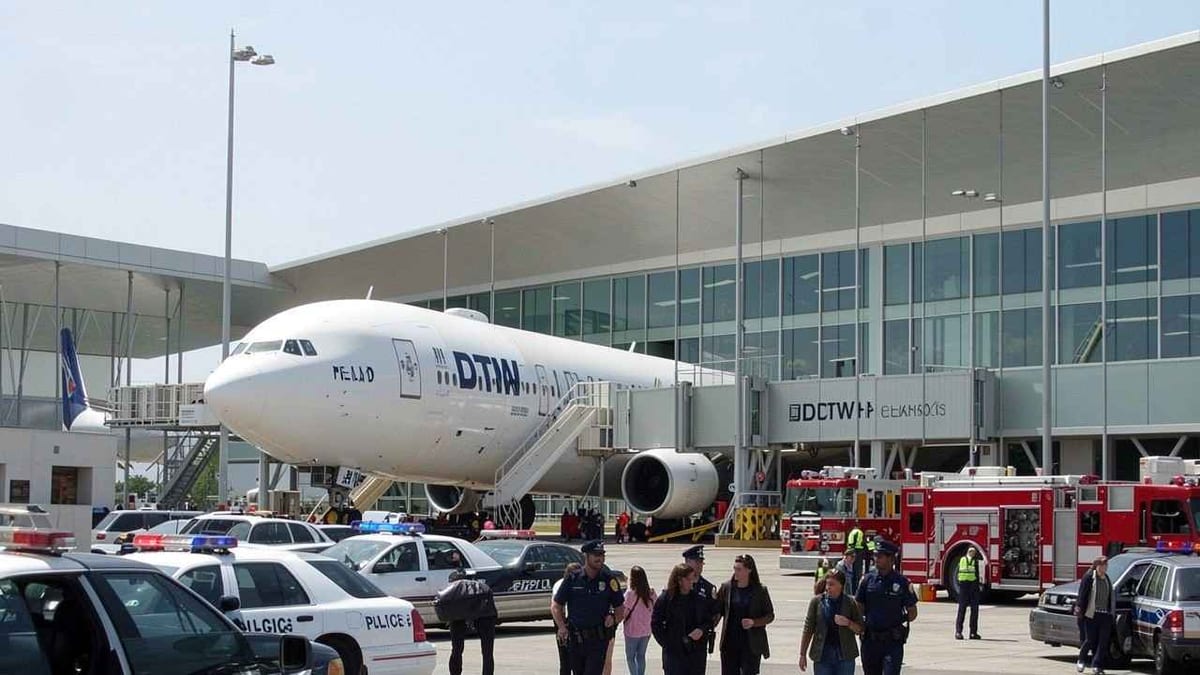
A United Airlines Boeing 737-900 operating as Flight UA1190 was forced to divert to Columbus, Ohio, after weather disruptions near Newark Liberty International Airport complicated its planned arrival, according to publicly available flight-tracking and air-traffic management information.
Get the latest news straight to your inbox!
Weather Turbulence Near Newark Triggers Diversion
Flight-tracking records for UA1190 in late July 2026 show a pattern of operations involving Newark Liberty International Airport at a time when summer thunderstorms and heat were already straining the New York area airspace. Publicly available Federal Aviation Administration advisories for June and July describe periodic arrival delays into Newark tied to storms, staffing and overall traffic volume, with multiple days of constrained arrival rates at the airport.
On the day of the diversion, reports indicate that convective weather and low ceilings developed in the vicinity of Newark and neighboring New York area airports, prompting air-traffic managers to meter arrivals and reroute traffic. As conditions deteriorated along the approach corridors into Newark, UA1190, a Boeing 737-900, was among the flights that could not be accommodated within the tightened arrival windows and was directed to divert to John Glenn Columbus International Airport.
Columbus serves as a common diversion and refueling point for eastbound flights facing congestion or weather around New York and New Jersey, in part because of its location along major transcontinental routes. Flight operations data for 2026 show United maintaining frequent service between Columbus and Newark, which makes the Ohio airport a practical alternative when aircraft must reposition for later recovery flights.
Initial information available through flight-tracking platforms suggests the diversion was precautionary and operational in nature, with the aircraft landing safely in Columbus. No injuries or onboard emergencies have been reported in connection with the event, and the Boeing 737-900 involved was expected to continue in regular service once crew duty times and routing allowed.
Impact on Passengers and Network Recovery
For travelers on UA1190, the diversion translated into extended travel times and missed connections at Newark, a key United hub for both domestic and international itineraries. Mid-route changes of destination typically require passengers to remain on board while ground staff coordinate refueling, crew planning and legal duty-time calculations before the aircraft can reposition, or until alternate onward travel is arranged.
In diversion scenarios such as this, onward options often include a later flight from the diversion airport to Newark, reaccommodation on another United service to a final destination, or overnight arrangements if crew duty limits are reached. Publicly available accounts from recent Newark disruption days describe passengers being rebooked through alternate hubs or on the following day when seat availability is constrained by widespread weather delays.
Network-wide, a diversion can ripple through airline operations. A narrowbody like the Boeing 737-900 typically operates several legs per day, so an unplanned stop in Columbus may delay subsequent flights scheduled to depart from Newark or another hub. Airlines often respond by swapping aircraft, consolidating lightly booked flights, or calling in reserve crews to restore the timetable once weather and airspace constraints ease.
For an already busy summer travel period in 2026, the UA1190 diversion added to the operational challenges carriers face in maintaining on-time performance. Public on-time statistics and traveler reports for July point to a pattern in which even short-lived thunderstorms near major hubs have outsized effects on delays and cancellations throughout the day.
Newark’s Seasonal Weather Challenges
Newark Liberty experiences recurring operational pressure during the peak summer months, when high temperatures, humidity and convective thunderstorm activity routinely affect the wider New York airspace. Air-traffic advisories for June and July 2026 highlight multiple days with structured arrival programs into Newark, limiting the number of aircraft that can land per hour to maintain safe separation in reduced-visibility or stormy conditions.
In parallel, automated tracking of United’s summer schedule shows a dense pattern of departures and arrivals tied to Newark, reflecting its role as one of the airline’s largest hubs. When storms roll through at peak times, flights inbound from across the country may be placed into holding patterns, rerouted along longer paths to avoid cells, or instructed to divert when fuel margins or airspace constraints leave insufficient room for extended airborne delays.
Recent weather-related travel waivers for New York and Newark, published across consumer and aviation channels, underline how frequently summer storms disrupt operations in the region. These waivers typically allow customers to change itineraries without additional fees when forecasts show heightened risk of thunderstorms during key travel windows. Events such as the UA1190 diversion illustrate how those forecast risks can translate into real-time operational adjustments once storms materialize.
Travelers connecting through Newark during mid-summer are often advised to build longer layovers into their itineraries to account for potential ground stops or reroutes. The combination of dense traffic, limited runway configuration and volatile weather has long made the airport particularly sensitive to even modest disruptions.
Role of Columbus as a Strategic Diversion Point
John Glenn Columbus International Airport, situated roughly midway between the East Coast and parts of the Midwest, has emerged as a practical diversion choice for carriers navigating weather and congestion around New York, Newark and Philadelphia. Airport planning documents and airline schedule data for 2026 show regular United service linking Columbus with Newark, Chicago and San Francisco, which supports repositioning of aircraft and crews when primary hubs are constrained.
For UA1190, diverting to Columbus offered several operational advantages. The airport’s runway system can readily accommodate a Boeing 737-900, and the field typically has fewer ground delays compared with coastal hubs during convective weather events. Once on the ground, airline operations teams can assess whether to send the aircraft onward to Newark when conditions improve or redeploy it into another part of the domestic network.
Columbus has invested in terminal and ramp capacity to support growing mainline and regional jet traffic, which can ease the process of handling unplanned arrivals. While diversions inevitably disrupt passengers’ plans, airports like Columbus are equipped to provide essential ground services, from refueling and catering to basic customer support during extended waits.
The UA1190 diversion also highlights the importance of robust regional networks. Because United already operates multiple daily flights between Columbus and Newark, there are built-in opportunities to reconnect passengers, either on the same aircraft once conditions permit or on regularly scheduled services later in the day or the following morning.
What the Diversion Signals for Summer 2026 Travel
The decision to divert UA1190 away from Newark adds to a broader picture of weather volatility shaping the 2026 summer travel season. Analyses of recent extreme weather events and their impact on U.S. air transportation underscore how localized thunderstorms or brief airspace restrictions can cascade into widespread delays, particularly at hub airports that already run at high utilization.
Operational data from multiple summers show that departure and arrival delays in the U.S. passenger aviation network are not distributed evenly, with large coastal hubs bearing a disproportionate share of weather-driven disruptions. Newark’s experience in June and July 2026, including multiple advisories for arrival delays and a series of travel waivers, aligns with these broader patterns.
For travelers, the UA1190 case serves as a reminder that even flights that depart on time can encounter mid-route disruptions when conditions deteriorate near destination airports. Building flexibility into itineraries, monitoring airline alerts and being prepared for diversions or extended ground holds remains a prudent strategy for those flying through weather-prone hubs at peak times.
From an industry perspective, the event reinforces the importance of real-time weather monitoring, flexible routing options and robust hub-and-spoke planning. As airlines and airports adapt to increasingly variable summer weather, diversions like that of United Flight UA1190 to Columbus are likely to remain a feature of high-density air travel around the New York region.