


More news on this day
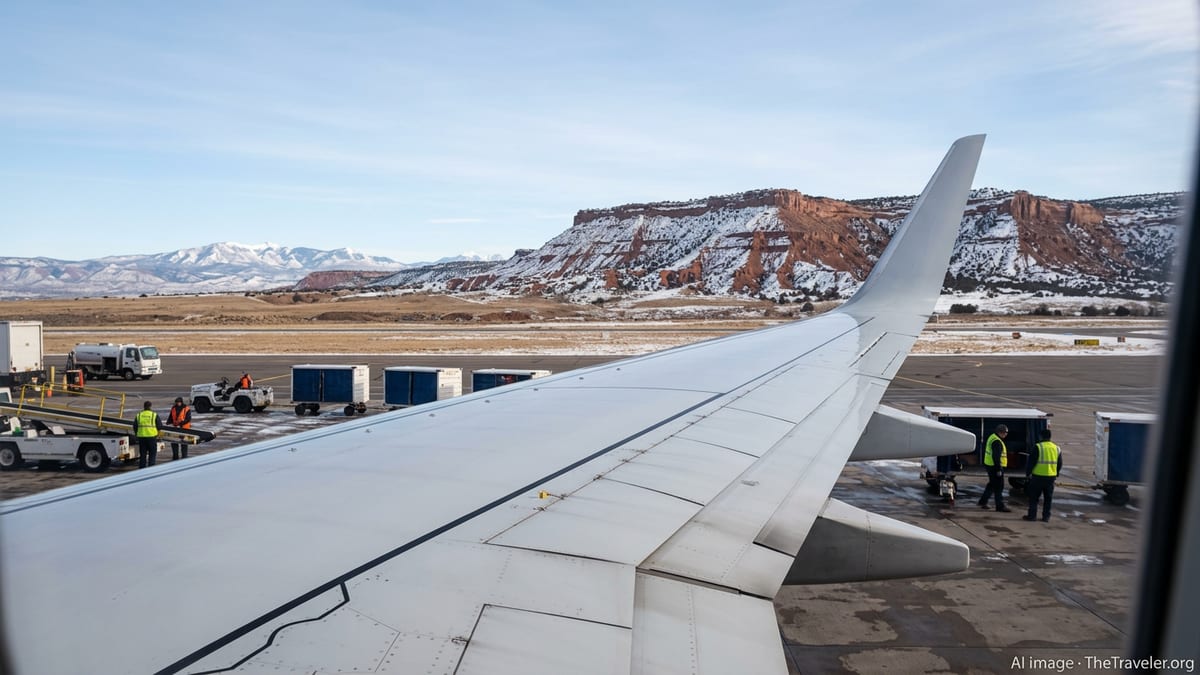
A United Airlines Boeing 737 operating as Flight UAL478 between Billings, Montana, and Denver, Colorado diverted to Grand Junction Regional Airport, highlighting how quickly routine regional hops across the Rockies can change when operational concerns arise.
Get the latest news straight to your inbox!
What Is Known About Flight UAL478 and the Diversion
Publicly available flight tracking and schedule data show United regularly operates narrowbody and regional aircraft on the Billings to Denver corridor, a route that crosses some of the most weather-sensitive airspace in the Mountain West. The flight identified as UAL478 on the Billings–Denver run was scheduled with a Boeing 737-800 series aircraft, listed under the 737-824 sub-variant that United uses widely on domestic routes.
On the day of the event, the aircraft departed Billings Logan International Airport en route to Denver International Airport before altering course and landing at Grand Junction Regional Airport in western Colorado instead of continuing to Denver. Available data indicate that the diversion occurred after the aircraft was already airborne and progressing south toward Colorado, consistent with a midflight operational change rather than a preplanned routing adjustment.
Initial coverage from aviation-tracking platforms and regional aviation watchers points to an unscheduled diversion rather than a routine technical stop. There have been no publicly reported injuries associated with the landing in Grand Junction, and services at the airport continued to operate normally, suggesting that the situation was contained to this specific flight.
As of the latest information, there has been no detailed public statement describing a precise cause such as a mechanical warning, medical situation, or weather-related constraint specific to the aircraft. In such cases, airlines typically classify the cause internally while passengers receive high-level explanations focusing on safety or operational constraints.
Why Airlines Divert Over the Rockies
Grand Junction Regional Airport is a well-established diversion option for flights routed into Denver from the north and northwest. Located along the Colorado River corridor on the western slope of the Rockies, the airport has a long runway and facilities capable of handling narrowbody jets like the Boeing 737 and regional jets serving mainline carriers. Historical data from United and its regional partners show that Grand Junction, along with Colorado Springs and other regional fields, regularly absorbs diversions when Denver operations are constrained.
During periods of convective storms, strong winds, low visibility, or air traffic flow restrictions in Denver’s busy airspace, arriving flights can face holding patterns, extended ground delays, or reroutes. When fuel reserves, crew duty limits, or onboard situations make prolonged holding impractical, a diversion to an alternate airport becomes the safer and more predictable option. Federal aviation data indicate that diversions represent a small fraction of total flights in the United States but are a recognized part of standard safety and operational planning.
A Boeing 737-824, like the aircraft used for UAL478, carries multiple redundant systems, and its standard procedures require crews to act conservatively in the face of any uncertainty. That can include diverting for emerging weather concerns ahead, technical indications that require inspection on the ground, or issues in the cabin such as passenger medical needs that call for the nearest suitable airport rather than the originally planned hub.
In mountainous regions, these decisions are shaped not only by distance but also by terrain and available approach paths. Airports such as Grand Junction provide a combination of runway length, instrument approach procedures, and airline support services that make them preferred alternates for Denver-bound flights when conditions deteriorate or when unplanned issues arise midflight.
What the Diversion Means for Affected Passengers
For travelers on UAL478, the diversion to Grand Junction likely produced a cascade of schedule changes, especially for those connecting onward from Denver. Under standard industry practice, when a flight lands at an alternate airport, the airline’s operations teams begin planning how to either reposition the aircraft once cleared or transfer passengers to other flights. Depending on the nature of the issue, that can mean a refueled continuation to Denver, a change of aircraft, or a mix of rebooked itineraries through later departures.
Passengers are typically rebooked automatically onto the next available flights to their final destination, with notifications sent through airline apps, email, and airport screens. In complex weather or air traffic events affecting a hub like Denver, rebookings can extend into the following day if seat availability is tight. Some travelers may be offered hotel and meal vouchers, particularly when overnight delays result, although specific entitlements can vary based on the cause of the disruption and applicable airline policies.
In many diversion cases, baggage remains on the original aircraft until it reaches the hub airport, which can mean a delay in retrieving checked luggage even if passengers are moved onto a different aircraft or itinerary. Airline guidance generally encourages travelers to keep essential medications, chargers, and critical items in carry-on bags for this reason, an approach that becomes particularly valuable when flights do not reach their planned destination on schedule.
Passengers stranded unexpectedly at smaller airports may also have limited ground transportation and accommodation options compared with major hubs. Grand Junction, while a significant regional facility, has a more compact range of nearby hotels and rental car outlets than Denver, so travelers often rely heavily on airline-arranged transportation and lodging when overnight stays become necessary after a diversion.
How Common Are Diversions and What Rights Do Travelers Have
Although diversions generate considerable anxiety and social media attention, federal statistics show that they account for a small portion of all U.S. airline operations. In a typical reporting period, diverted flights represent a fraction of one percent of total scheduled flights, far below the share attributed to straightforward delays or cancellations. Within that subset, weather, congestion, and operational issues are frequent factors, while more dramatic causes such as security concerns remain comparatively rare.
From a regulatory standpoint, U.S. rules emphasize that the primary duty of airlines is to operate flights safely, even when that results in substantial inconvenience. A diversion is treated as part of that safety-first framework. Passengers may not be entitled to cash compensation for diversions triggered by weather or air traffic conditions, but they can generally expect rebooking on the next available flight to their final destination and, in many cases, assistance with basic needs if they are left without options overnight.
Airline customer service plans, which are publicly posted as part of each carrier’s commitments to travelers, outline typical responses to major disruptions. These documents commonly describe how airlines handle hotel accommodations, meals, and rebooking in cases where the airline is responsible for the disruption compared with circumstances that are considered outside its control. Diversions related to weather or broader airspace management, for example, are often categorized differently from those linked to internal mechanical problems.
Travelers who experience a diversion similar to UAL478’s unscheduled stop in Grand Junction are advised to retain boarding passes and receipts for lodging, food, or alternative transportation purchased during the delay. These records support later reimbursement requests or mileage goodwill gestures if the airline offers them. Many passengers also find that using an airline’s mobile app or text notifications speeds rebooking and keeps them informed as operations teams determine how and when the aircraft or its customers will continue on to Denver.
What to Watch Next on the Billings–Denver Route
The Billings to Denver corridor remains a key regional link for United and its partners, with multiple daily frequencies listed in current schedules. The diversion of UAL478 into Grand Junction is unlikely to signal a long-term change for the route, but it underscores the sensitivity of northern Rockies operations to shifting conditions, particularly during periods of storm activity or when Denver’s hub experiences congestion.
Aviation analysts often note that diversions provide data points for refining airline and airport procedures. Once the circumstances around a specific event are fully reviewed, carriers may adjust fuel planning assumptions, alternate airport selections, or scheduling buffers to reduce the likelihood of similar disruptions. For a Boeing 737-824 based in Denver’s network, those adjustments might include reassessing typical holding patterns, runway configurations, or sequences of flights assigned to a particular aircraft during high-risk weather seasons.
For travelers, the main takeaway from an event like the diversion of United Flight UAL478 is that such changes, while disruptive, are built into the safety architecture of modern air travel. The decision to land in Grand Junction rather than press on to Denver reflects conservative risk management in an environment where terrain, weather, and heavy traffic converge.
In the days ahead, observers will continue to monitor on-time performance and routing patterns on the Billings–Denver link and other regional connections feeding Denver. For most passengers, however, the expectation remains that the route will continue operating as a routine short-haul service, with diversions like UAL478’s remaining the rare exception rather than the rule.