


More news on this day
American Airlines flight AAL555, an Airbus A320-232 service from Pittsburgh to Chicago, diverted back to Pittsburgh International Airport shortly after departure, with public flight-tracking data showing a mid-route turn and safe return to the origin airport.
Get the latest news straight to your inbox!
What Is Known About Flight AAL555’s Diversion
Publicly available tracking information for AAL555 on the Pittsburgh to Chicago route shows the Airbus A320-232 departing Pittsburgh International Airport and beginning its westbound climb toward Chicago O’Hare before reversing course partway into the journey. The recorded track indicates a turn back toward western Pennsylvania rather than a continuation along the usual routing over Ohio.
The data suggests that the aircraft leveled off below typical cruising altitude for this short-haul segment and then began a controlled return to Pittsburgh. The nature of the maneuver, with a steady track and speed profile, points to a precautionary diversion rather than an abrupt emergency event observable from the ground.
Arrival logs and route overviews for Pittsburgh to Chicago services show that AAL555 is one of several regularly scheduled American Airlines flights linking the two airports, typically operating into Chicago O’Hare. On this occasion, the flight pattern diverged from the norm, ending back at Pittsburgh instead of continuing west to Illinois.
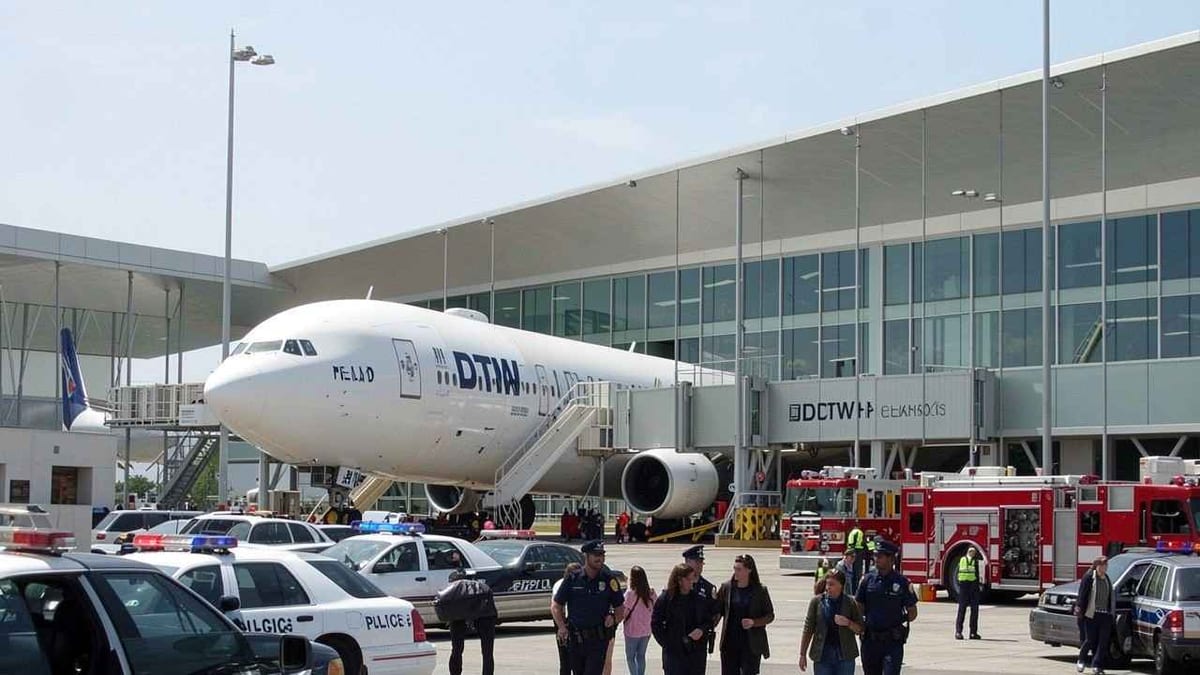
Reports emerging after the incident indicate that the aircraft landed safely back at Pittsburgh International, with no immediate indication of injuries. As is standard in such circumstances, further operational details remain limited in the first hours following the diversion.
Pittsburgh–Chicago: A Busy Corridor Disrupted
The Pittsburgh to Chicago route is among the busier short-haul corridors from western Pennsylvania, with multiple daily departures operated by both American Airlines and United Airlines, among others. Schedule data shows a mix of early-morning, midday, and evening departures connecting Pittsburgh International with Chicago O’Hare, underscoring the importance of this link for business and connecting traffic across the Midwest.
Within American Airlines’ network from Pittsburgh, Chicago functions as a major connecting hub, funneling travelers onward to destinations across the United States and internationally. Flights such as AAL555 provide not only point-to-point connectivity but also feed longer-haul services onward from O’Hare.
On ordinary days, AAL555 appears on route listings as one of several numbered American services between Pittsburgh and Chicago, often accompanied by additional American-branded regional flights operated by partner carriers. The diversion therefore represents a notable disruption in an otherwise routine and highly structured schedule between the two cities.
For travelers booked on this service and on onward connections from O’Hare, the return to Pittsburgh is likely to have prompted rebooking and schedule adjustments. Such knock-on effects are common on hub-feeding routes when any single leg experiences an interruption.
Standard Procedures When Flights Return to Origin
Although each case is unique, diversions and returns to the departure airport generally follow well-established airline and airport procedures designed to prioritize safety and orderly handling. When a flight returns to its origin, airport operations typically coordinate with the carrier to assign a gate or remote stand, manage ground support, and allow passengers to disembark once the aircraft is secured.
Publicly available aviation safety guidance notes that a decision to divert or return often results from a combination of technical indications, operational considerations, or onboard circumstances that make continuing to the destination less desirable than landing at a nearby airport. Returning to the origin airport can offer advantages such as access to the airline’s own maintenance facilities or more robust support resources.
In the case of AAL555, the controlled track back to Pittsburgh aligns with this risk-averse approach. The aircraft type involved, the Airbus A320-232, is a widely used narrow-body jet on short and medium-haul routes in North America, and diversions involving such aircraft are relatively infrequent in proportion to the number of daily flights operated.
Once passengers are back at the gate area after a return, airlines typically review rebooking options, including placing affected travelers on later flights along the same route or rerouting through alternate hubs. Depending on the timing and cause of the disruption, some passengers may also opt to delay or cancel their trips.
Pittsburgh International’s Role as a Diversion and Connection Point
Pittsburgh International Airport has seen its traffic grow in recent years, with passenger volumes climbing back toward mid-2000s levels. The airport serves as a key regional gateway, with regular connections to major hubs such as Chicago O’Hare, Charlotte, Dallas–Fort Worth, and others. Chicago ranks among Pittsburgh’s busiest destinations by passenger volume, underscoring the strategic role of flights like AAL555.
Historically, Pittsburgh has also functioned as a useful diversion point for flights across the eastern United States, benefiting from its runway length, airfield capacity, and geographic position. Weather systems sweeping across the Midwest and Northeast, as well as occasional technical or medical events, have periodically led flights to divert into Pittsburgh when conditions warrant.
Against that backdrop, the return of AAL555 to Pittsburgh fits within a broader pattern in which the airport absorbs irregular operations while maintaining day-to-day connectivity for the region. While unusual for the passengers involved, such events are part of a wider operational framework that airports and airlines handle on a regular basis.
Public information about the diversion reinforces this context, highlighting that the flight segment, though short and normally uneventful, remains subject to the same safety-first decision-making that governs longer-haul operations.
What Travelers Can Expect After a Diversion
When a routine flight such as AAL555 is disrupted by a diversion or return to origin, travelers typically face a mix of logistical and timing challenges. Airline policies, aircraft availability, and the time of day all influence how quickly passengers can be accommodated on alternative services. On a relatively well-served route like Pittsburgh to Chicago, later same-day options are often available, although they may involve re-routing through other hubs.
Publicly accessible passenger-rights guidance in the United States distinguishes between weather-related disruptions and issues originating within an airline’s control, such as certain technical or operational problems. While specific outcomes vary, travelers are commonly encouraged to monitor airline notifications, use mobile apps or airport kiosks for rebooking, and verify the status of their onward connections before leaving the gate area.
Events like the AAL555 diversion also underscore the value of real-time flight-tracking tools, which allow friends, family members, and connecting travelers to see when aircraft deviate from their planned routes. In this instance, the visible mid-route turn back toward Pittsburgh offered an early indication that the flight would not continue to Chicago as scheduled.
As more information about the specific circumstances of AAL555’s return becomes available through public channels and updated coverage, the focus for most travelers remains on the core takeaway: the flight landed safely back at Pittsburgh International, demonstrating once again how precautionary decisions and established procedures help manage unexpected events in modern air travel.