


More news on this day
Heightened security alerts in the Gulf and Jordan in mid 2026 have prompted the United States to move in step with Australia, Canada and the United Kingdom, as new advisories warn travelers about disrupted flights, volatile airspace and a shifting risk landscape across key Middle East hubs.
Get the latest news straight to your inbox!
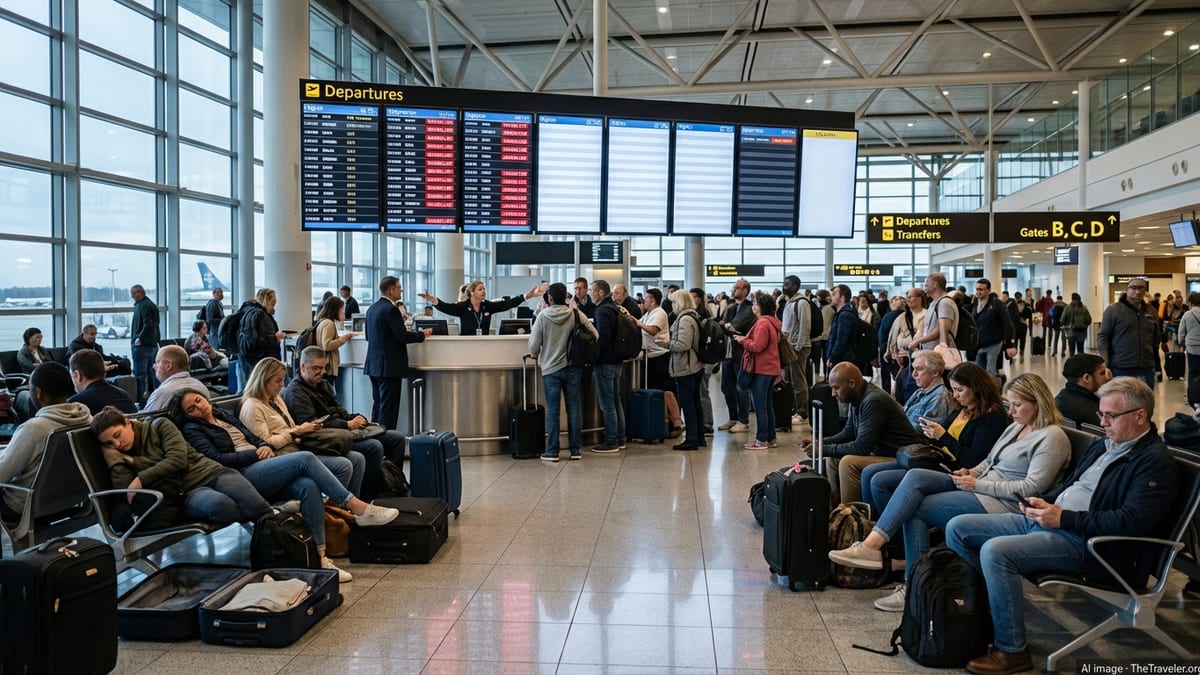
Aligned Warnings as Middle East Tensions Flare Again
Publicly available information shows that the United States has updated its worldwide guidance for citizens in the Middle East, emphasizing a complex and unpredictable security environment following renewed hostilities linked to the 2026 Iran conflict. The revised messaging, issued in July, highlights persistent risks for travelers in and around the Gulf, including the United Arab Emirates, Kuwait, Bahrain and Jordan.
Travel advisory data from the US Department of State indicates that Bahrain remains at Level 3, Reconsider Travel, with non‑emergency personnel ordered to depart earlier in the year, citing the threat of missile and drone activity and ongoing disruption to commercial aviation. Jordan, which was raised to Level 3 in May after an ordered departure of some staff, remains under heightened scrutiny, particularly around the Red Sea port and airport at Aqaba.
According to regional coverage, the latest alerts build on a broader security notice issued in June that urged US citizens across the Middle East to exercise increased caution due to the potential for renewed hostilities and rapid escalation. That notice maintained Level 3 recommendations for several Gulf and neighboring states, including Kuwait and the United Arab Emirates, underscoring a regional rather than country‑specific concern.
The recalibrated posture places Washington in closer alignment with partners such as Australia, Canada and the United Kingdom, which have progressively tightened their own assessments for Gulf destinations since the start of the year. Collectively, the four countries are steering leisure and business travelers toward more conservative routing and contingency planning when transiting the region.
Australia, Canada and the UK Track Similar Risk Patterns
Australia’s official Smartraveller platform has recently reiterated strong cautions for Bahrain and surrounding Gulf airspace, noting that the European Union Aviation Safety Agency has advised operators to avoid key corridors across the region until at least late July 2026. The Australian guidance points to the possibility of further missile and drone activity, as well as debris risks for civil aviation, even where airports remain open.
Canada has also moved several Gulf and Levant destinations into higher‑risk categories over recent months. Government of Canada advisories now recommend avoiding non‑essential travel to Bahrain and Jordan, with additional regional warnings tied to the wider Middle East conflict and the potential for sudden airspace changes. Separate Canadian notices for the United Arab Emirates, updated in mid July, reference recent projectile strikes and stress that the broader environment remains volatile for travelers.
In the United Kingdom, the Foreign, Commonwealth and Development Office has repeatedly refreshed its Middle East pages in 2026 as the situation evolved. Recent updates for Kuwait describe a security climate shaped by previous attacks, infrastructure damage and modified airport operations, with terminal closures and constrained capacity at Kuwait International Airport. UK travel advice continues to flag the possibility of short‑notice flight cancellations and diversions affecting Kuwait, Bahrain, Jordan and nearby hubs.
The convergence of advice across these four countries, while not identical in language or legal weight, creates a de facto shared stance on risk in the Gulf. Travelers holding multiple nationalities, or relying on consular support from one country while residing in another, are being urged through public guidance to monitor advisories for all relevant passports and transit points.
Flight Cancellations, Reroutings and Strained Gulf Hubs
Airlines operating across the Gulf have already faced repeated periods of disruption in 2026. Industry and media reports describe waves of cancellations, schedule cuts and diversions in and out of Kuwait and Bahrain following missile and drone activity linked to the Iran conflict earlier in the year. At various points, national carriers in the region temporarily halted services to high‑risk destinations or suspended entire route groupings across the Gulf.
On July 20, regional outlets reported that leading Middle East airlines, including carriers based in the United Arab Emirates, had briefly suspended or adjusted flights to Kuwait and Bahrain in response to renewed fighting and temporary airspace restrictions. Although services have gradually resumed, operations are described as fragile, with airlines cautioning that schedules may change with little notice if new security alerts are issued.
Jordan has emerged as another focal point. Publicly available information notes that the US mission in Amman issued a security alert advising citizens to avoid travel to Aqaba’s King Hussein International Airport and seaport after what was described as a specific and credible threat. While Jordanian airspace remains open, port and airport advisories highlight the potential for targeted disruptions, especially in the south of the country along key Red Sea trade and travel routes.
Beyond direct closures, the broader pattern of rerouting is placing added strain on remaining corridors. Reports on regional aviation in 2026 outline how long‑haul carriers from Europe and Asia have reshaped routings to avoid sections of Gulf airspace, shifting traffic onto alternative paths over Saudi Arabia or further west and south. This has increased flight times and raised operational costs, effects that are likely to filter down to passengers through higher fares and tighter capacity.
Airspace Risk Assessments Raise Stakes for Overflights
The latest round of European and national aviation safety notices has widened the focus from point‑to‑point travel into the Gulf to include overflights that previously only transited the region. Guidance from the European Union Aviation Safety Agency in mid July advises airlines to avoid overflying the airspace of Bahrain, Kuwait, Qatar and the United Arab Emirates, citing a high risk to civil aviation from renewed regional tensions.
Risk assessments referenced in travel and aviation briefings emphasize that even where airports are functioning, missile and drone activity, along with the use of air defense systems, could present hazards to aircraft at cruising altitude. The danger is not limited to direct hits but extends to shrapnel and debris from intercepts, as well as misidentification in crowded skies where military and civilian traffic may intersect.
Industry advisories issued earlier in 2026 described a period when airspace across much of the Gulf was partially or fully closed, prompting a sharp reduction in scheduled services and cargo operations. Although some of that capacity has come back online, recent bulletins show that several Gulf and Red Sea corridors remain subject to enhanced risk management, including altitude restrictions, route deviations and time‑of‑day limitations.
For travelers, the main impact is increased uncertainty: flights that remain technically scheduled can still face day‑of‑departure rerouting or last‑minute diversions, leading to missed connections and overnight stays. Travel insurers and corporate security providers are already adjusting their own risk models to factor in the likelihood of rolling disruptions through the second half of 2026.
What Travelers Should Watch in the Second Half of 2026
Public guidance from the United States, Australia, Canada and the United Kingdom converges on several practical themes for anyone with Gulf or Jordan itineraries in 2026. First, travelers are urged to consult the latest advisories not only for their final destination but also for all transit points, particularly major hubs in the United Arab Emirates, Kuwait and Bahrain that might be subject to rapid operational changes.
Second, passengers are encouraged to maintain flexible bookings and build in additional time for connections, given the potential for rerouting around closed or high‑risk airspace. Reports on recent disruptions show that some airlines have operated with significantly extended flight times, while others have temporarily withdrawn services on certain routes, leaving limited alternatives on short notice.
Third, those traveling for business, events or cruise departures tied to specific dates in the Gulf or Jordan may wish to reassess the viability of plans in light of the evolving security picture. Government advisories for Bahrain and Jordan, in particular, stress that the potential for further missile and drone incidents cannot be excluded, and that local curfews, airport screening changes or port restrictions could be introduced with little advance warning.
Finally, travelers are being reminded through public communications that the situation remains fluid. While the Gulf’s major hubs continue to function and many flights are still operating, the alignment of stricter advisories by the United States and its partners signals a cautious outlook for the remainder of 2026, with the possibility of further adjustments if tensions in and around the Gulf escalate again.