


More news on this day
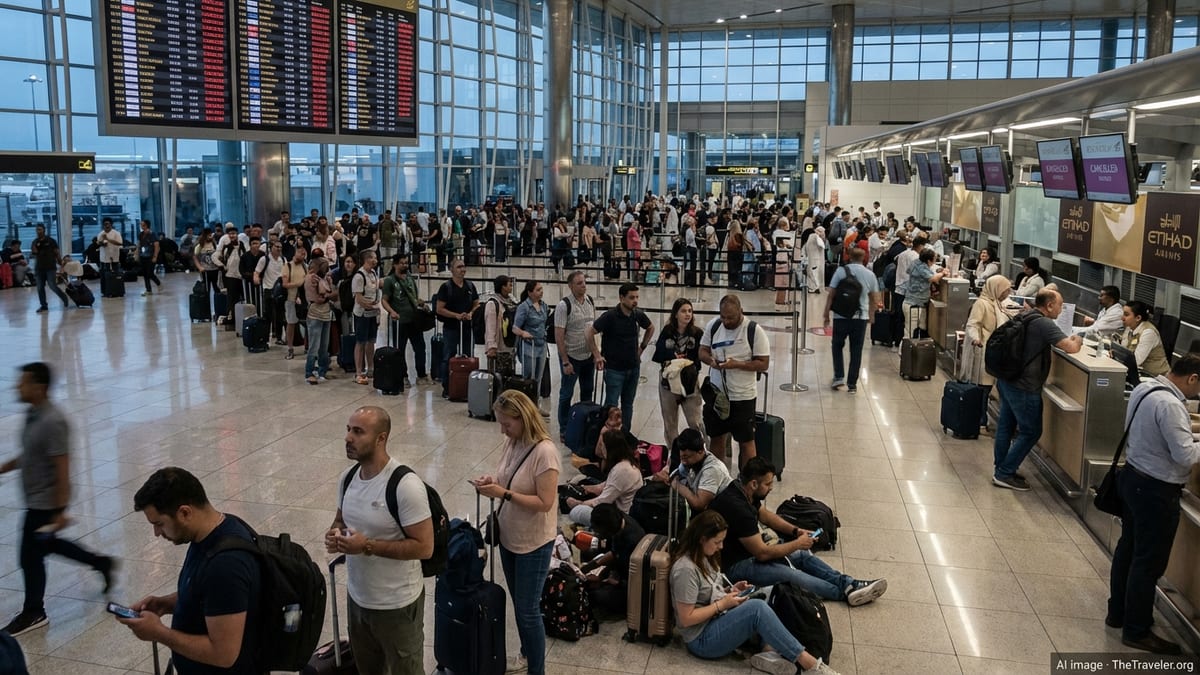
Fresh escalation between the United States and Iran is rippling across global aviation, raising renewed concerns over airspace safety, route closures and potential flight disruptions for travelers transiting key hubs in Türkiye, the United Arab Emirates, Qatar and Saudi Arabia.
Get the latest news straight to your inbox!
Worldwide Caution and a Region on Edge
Recent hostilities linked to the 2026 Iran conflict have reignited security concerns along vital air corridors in the Gulf and wider Middle East. Publicly available information from international organizations and media coverage indicates that renewed attacks in and around the Strait of Hormuz have unsettled energy markets and sharpened focus on commercial aviation risks, given the tight clustering of military and civil traffic in the region.
These developments coincide with heightened government travel warnings. The United States continues to advise against travel to Iran and urges caution across the broader region, while several European governments have refreshed advisories noting the risk of missile and drone activity and the possibility of sudden airspace or airport closures. The result is a climate of uncertainty that extends well beyond conflict zones, affecting passengers whose journeys merely overfly the region.
The Middle East’s importance to global connectivity magnifies the stakes. Before the latest escalation, Gulf and Turkish hubs together handled a significant share of long haul transfers between Europe, Asia, Africa and Australasia. Any renewed disruption to their operations, or to the airspace that connects them, quickly spills over into schedules and route planning worldwide.
Airspace Warnings Tighten Over Gulf States
In response to the deteriorating security environment, the European Union Aviation Safety Agency has recently reinforced its conflict zone guidance for the Middle East. Updated bulletins advise operators to avoid at least parts of the airspace of Bahrain, Kuwait, Qatar and the United Arab Emirates, as well as the western Gulf of Oman, due to the risk of Iranian missile and drone activity and the potential for misidentification of civil aircraft in a crowded military theater.
Industry briefings show that previous iterations of this guidance were more limited, urging enhanced caution rather than broad avoidance. The latest wording marks a return to more restrictive recommendations similar to those seen at earlier peaks of the 2026 Iran war, when airspace closures across several Gulf states prompted mass reroutings and large scale schedule reductions. While the new bulletins do not themselves close airspace, they strongly influence how European and other international airlines assess risk and plan routings.
Local aviation authorities in the Gulf have kept core airspace technically open after the most recent round of strikes, but carriers are adopting varying approaches. Some airlines are maintaining services with adjusted routings and higher cruising levels where permitted, while others have trimmed frequencies or temporarily suspended operations to particular airports viewed as higher risk. Travelers connecting through the region are being urged by airlines and travel agents to monitor bookings closely, as flight times and routings remain subject to rapid change.
Türkiye’s Strategic Role and Rerouting Pressures
As operators look for alternatives to heavily constrained Gulf corridors, Türkiye’s airspace has again become a key strategic route between Europe and Asia. Aviation analyses published in recent months highlight that, as portions of Iranian and neighboring airspace have become unusable or restricted, many long haul services have shifted to more northerly paths skirting the Caspian region, the Caucasus and Türkiye.
This diversion trend brings both opportunity and strain. Istanbul’s major airports, already among the busiest global transfer hubs, are absorbing additional connecting traffic that might previously have routed via Doha, Dubai or Abu Dhabi. At the same time, carriers must balance capacity against longer flight times, higher fuel burn and congested waypoints as more airlines compete for the same limited safe corridors around the Middle East conflict zone.
Risk assessments still factor in proximity to areas of potential spillover from the US Iran confrontation. However, reports from specialist aviation trackers indicate that Türkiye’s airspace remains open and structurally important to global traffic flows, with no broad conflict related restrictions in effect. That status makes the country central to contingency planning as airlines map out sustainable alternatives to traditional Gulf corridors for the rest of the summer travel season.
UAE, Qatar and Saudi Arabia Confront Operational Uncertainty
The Gulf’s flagship hubs in the United Arab Emirates, Qatar and Saudi Arabia continue to navigate a delicate operational environment shaped by the wider confrontation with Iran. Earlier phases of the 2026 conflict saw temporary closures of airspace over several Gulf states and suspended operations at key airports, triggering thousands of cancellations and significant backlogs for passengers. While operations have since resumed at most major hubs, the experience has underscored the vulnerability of tightly concentrated transfer networks.
Recent coverage from regional outlets shows that carriers based in the UAE and Qatar have reinstated much of their long haul schedule, yet remain exposed to any renewed wave of missile or drone attacks or further tightening of international safety advisories. Network planners are keeping contingency routings in place that divert flights around the most sensitive areas, often adding flight time and cost but maintaining service continuity on critical intercontinental links.
Saudi Arabia has emerged as a crucial southern corridor for flights seeking to avoid more heavily restricted Gulf and Iranian airspace. Industry safety platforms describe Saudi airspace as open but under elevated risk, particularly in the south where missile and drone incidents linked to Yemen have periodically forced temporary airport closures. This balancing act illustrates the region wide challenge: keeping airspace and hubs open enough to support global travel while remaining responsive to fast moving security threats.
Global Travelers Face Longer Routes and Persistent Volatility
The reverberations of the US Iran escalation are being felt far beyond the Middle East. Economic assessments of the 2026 Iran war highlight that earlier waves of airspace closures forced airlines to add hours to some Europe Asia and Africa Asia routes, raising fuel costs and compressing fleet and crew utilization. While the current situation has not yet produced the same level of wholesale shutdowns, many of the same structural pressures are reappearing as operators pre emptively shift routes and build in additional buffers.
For passengers, this translates into a more volatile travel environment. Even where flights are operating normally, itineraries may be subject to last minute time changes, extended flight durations, and unplanned technical stops for refueling on ultra long sectors that can no longer use direct Gulf or Iranian shortcuts. Travel insurance providers and consumer advocates are advising long haul passengers to leave more time for connections and to pay close attention to rebooking and compensation policies in case renewed hostilities force sudden schedule changes.
Analysts note that the Middle East’s centrality to global air traffic means that any prolonged disruption linked to the US Iran confrontation will have cascading effects on capacity and pricing across multiple regions. With conflict dynamics and diplomatic efforts in flux, aviation planners are preparing for a protracted period in which airspace access, routing options and operational risk assessments may shift with little notice, keeping Türkiye, the UAE, Qatar and Saudi Arabia at the heart of an evolving global travel challenge.