


More news on this day
Escalating confrontation between the United States and Iran is reverberating across global aviation, with Türkiye, the United Arab Emirates, Qatar and Saudi Arabia increasingly exposed to travel uncertainty, shifting airspace guidance and the risk of rapid, short-notice disruption for passengers and airlines alike.
Get the latest news straight to your inbox!
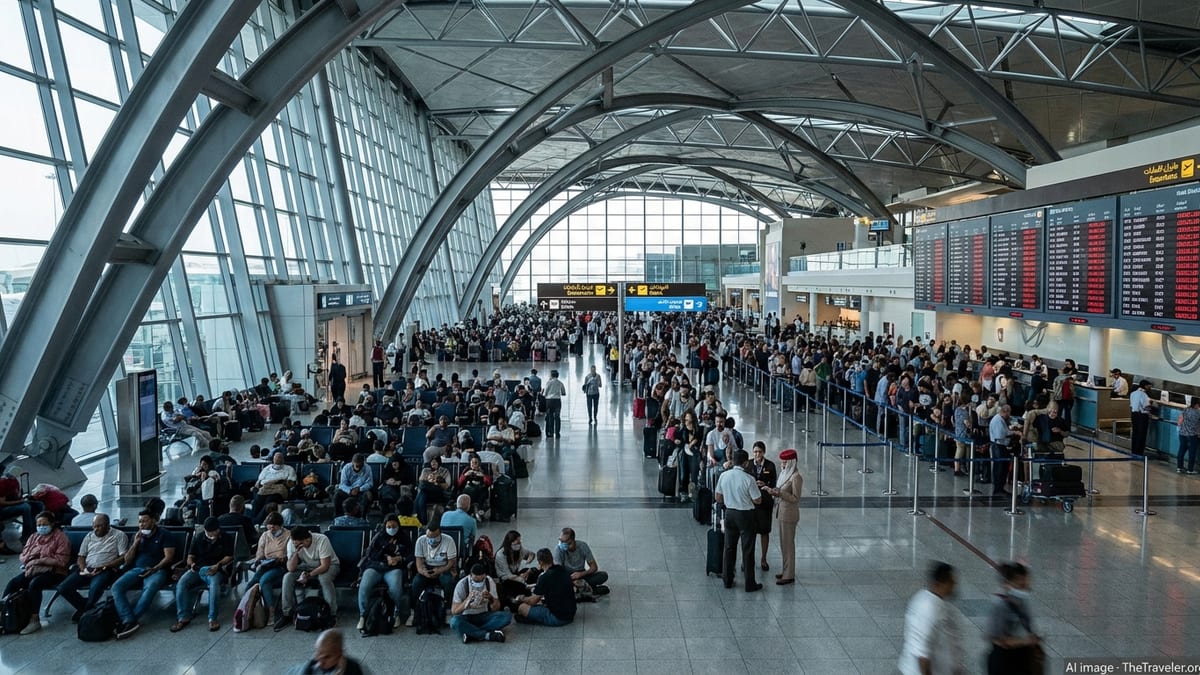
Worldwide alerts and conflict-zone warnings reshape trip planning
Recent military escalation around Iran and the Strait of Hormuz has sharpened long-standing safety concerns for civilian air traffic in the wider Middle East. Publicly available information from international organizations and major news outlets indicates that renewed attacks on shipping and military targets have unsettled energy markets and revived fears of a broader regional conflict that could spill into key air corridors.
In parallel, government travel advisory systems are highlighting elevated risks. The United States maintains a global caution for travelers and continues to classify Iran as a destination to avoid, citing a combination of security threats and geopolitical tensions. While Türkiye, the United Arab Emirates, Qatar and Saudi Arabia are not subject to blanket “do not travel” notices, trip-planning guidance increasingly stresses the possibility of sudden airspace changes, flight delays and reroutings linked to the confrontation.
For leisure and business travelers, the practical impact is a growing emphasis on flexibility. Airlines and travel intermediaries are encouraging passengers to monitor bookings closely, allow extra time for connections and be prepared for last-minute schedule shifts if conflict dynamics intensify or spread.
Airspace advisories tighten across the Gulf and beyond
A key development for regional hubs has been a series of updated conflict-zone advisories from aviation safety regulators. The European Union Aviation Safety Agency has recently reinforced recommendations that operators avoid several Gulf-region airspaces, including portions of the United Arab Emirates, Qatar and neighboring states, due to the assessed risk from missiles, drones and military air-defense activity. Sector analysis notes that such advisories are precautionary safety recommendations and do not in themselves close airspace but can substantially alter airline routing choices.
Industry bulletins circulated in mid-July describe a renewed phase of “airspace avoidance” rather than a complete shutdown of Gulf skies. Reports aimed at travel and aviation professionals explain that the latest guidance applies at least into late July for the airspace of the UAE, Qatar, Bahrain, Kuwait and the Gulf of Oman, with operators urged to carry out detailed risk assessments before entering affected areas. That framework leaves room for carefully managed overflights at higher altitudes but pushes many carriers to consider alternative routings over Saudi Arabia, Egypt, the eastern Mediterranean or more northerly corridors.
Türkiye’s role as a bridge between Europe and Asia gives it particular importance in this rerouting puzzle. While Turkish airspace remains open, logistics and aviation analyses from the spring and early summer describe a more congested regional picture, with traffic flows diverted away from parts of the Gulf and Iraq and funneled through safer corridors. This dynamic adds complexity for carriers operating via Istanbul and other Turkish gateways, which may need to absorb additional overflight demand if the Gulf situation worsens.
Mixed operational picture for UAE, Qatar and Saudi gateways
On the ground, major airport hubs in the United Arab Emirates, Qatar and Saudi Arabia are striving to keep operations as close to normal as conditions allow, even as they navigate a fluid security environment. Coverage from regional outlets indicates that airports in Dubai and Abu Dhabi remain open, with commercial flights largely operating but subject to sporadic cancellations and diversions when missile incidents or drone activity are detected in surrounding regions.
Reports from the Gulf also highlight selective suspensions by individual airlines. Carriers such as Air Astana and Jazeera Airways have temporarily halted or adjusted services into the UAE or around the northern Gulf, citing the evolving situation. Travel trade bulletins describe a “safety-first but operational” stance in hubs like Dubai, Doha and Riyadh, where authorities and airport operators are maintaining regular schedules while warning that short-notice changes remain possible.
In Qatar, the legacy of this year’s earlier airspace closures following Iranian strikes continues to shape contingency planning. Publicly available summaries of that disruption note that the temporary shutdown of Qatari airspace in late February forced large-scale cancellations and diversions, before a limited reopening under emergency conditions. Although traffic through Doha has since resumed, aviation analysts consider the episode a reminder of how quickly a new round of United States–Iran escalation could again restrict access to one of the region’s most important transit hubs.
Türkiye and Saudi Arabia navigate overflight, tourism and cargo risks
Türkiye and Saudi Arabia, both central to global east–west connectivity, face a different but related set of pressures as the confrontation reverberates through energy markets and logistics chains. Economic assessments of the 2026 Iran conflict point to a broader reduction in available airspace across the Middle East, compressing flight paths between Africa, Asia and Europe and raising costs for airlines that are forced to take longer routes to avoid sensitive areas.
For Türkiye, which has invested heavily in positioning Istanbul as a premier connecting hub, any sustained shift away from Gulf corridors could bring a short-term uptick in overflight and transfer traffic but also higher operating expenses. Longer routings increase fuel burn and crew time, and demand careful coordination with neighboring air navigation regions to prevent congestion. Tourism flows into Turkish coastal and city destinations remain robust for now, according to regional tourism and aviation intelligence, but the sector is alert to the possibility that a more severe regional escalation could dampen demand or prompt new government advisories.
Saudi Arabia, meanwhile, continues to present itself as a growing tourism and investment market, while balancing the realities of its geographic proximity to conflict flashpoints. Supply-chain and logistics updates published in late June describe Saudi airports as operational but subject to route adjustments and occasional delays as carriers navigate conflict-affected air corridors. The kingdom’s aspiration to attract tens of millions of visitors annually places added importance on maintaining predictable air access amid shifting security dynamics.
Global travelers weigh alternatives as uncertainty persists
From the perspective of travelers in North America, Europe and Asia, the latest phase of United States–Iran escalation reinforces a trend toward greater route diversification. Travel advisories, airline updates and discussion forums show more passengers actively weighing whether to connect via Gulf mega-hubs or instead choose routings through Türkiye, southern Europe or Central Asia, even when that means longer journeys or higher fares.
Airline and tour operator briefings circulated to trade partners in July emphasize three main themes: the absence of widespread airport closures in the Gulf at present, the continued risk of rapid changes to specific routes or corridors, and the likelihood of longer flight times on services that avoid the most sensitive airspace. Industry groups advise travelers to register contact details with airlines, enable notifications in carrier apps and consider travel insurance policies that explicitly cover disruption linked to airspace closures or regional conflict.
For now, the impact on point-to-point tourism to countries such as Türkiye, the UAE, Qatar and Saudi Arabia remains uneven and closely tied to perceptions of risk in key source markets. However, with conflict dynamics still unfolding and global regulators focused on potential threats to civil aviation, the region’s role at the center of global air traffic ensures that any further escalation between the United States and Iran will be felt quickly in flight schedules, fares and the broader travel experience.