


More news on this day
The United States has renewed an urgent security alert for the Middle East, warning American citizens that heightened regional tensions and the risk of “unforeseen escalation” could trigger sudden airspace closures, flight cancellations and widespread travel disruptions across key transit hubs.
Get the latest news straight to your inbox!
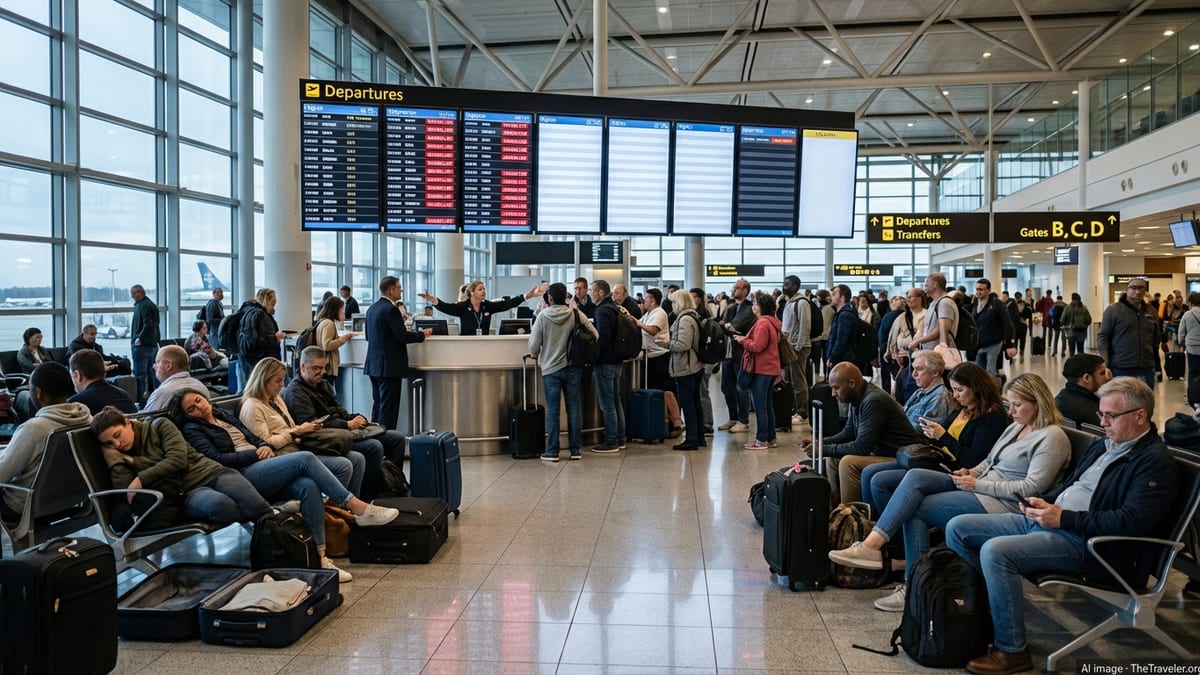
Region-wide alert cites risk of rapid escalation
Publicly available advisories published between July and early September 2026 show that US officials have moved from localized warnings to a broad, region-wide caution that specifically references the Middle East. A global alert dated July 22 noted that the security environment remained complex due to heightened tensions in the region and highlighted the potential for unforeseen escalation affecting American travelers worldwide.
On September 1 and 2, the language was reinforced through renewed security alerts directed at US citizens in multiple Middle Eastern countries. According to published coverage, the notices emphasize that the situation can change quickly and that even areas distant from active fronts may experience knock-on effects ranging from airport disruptions to stricter security measures at locations associated with the United States.
Live-blog and agency reporting indicate that the latest alert follows a fresh round of strikes and counterstrikes involving the United States, Iran and regional partners. Hostilities have periodically flared since late February 2026, when broader conflict re-emerged and prompted a series of updates to country-level travel advisories across the region.
Regional risk assessments from both government and private-sector analysts describe the current environment as fluid, with a low threshold for further escalation and limited warning time for travelers if new airspace or border restrictions are imposed.
Warnings highlight flight cancellations and airspace closures
The new security messaging is notable for its focus on practical travel impacts rather than only on conventional security threats. The July 22 global alert, hosted on the US State Department’s travel advisory portal, explicitly warns that Americans in the Middle East should be prepared for flight cancellations, periodic airspace closures and broader travel disruptions. The same language has since appeared in country-specific alerts circulated by US missions in Israel, the United Arab Emirates, Jordan and other states.
Recent media reports on embassy advisories stress that even travelers passing through regional hubs on connecting itineraries could be affected by last-minute changes to airline schedules. Some carriers have reportedly postponed efforts to restore pre-crisis frequencies, while others have adjusted routings or paused selected services in response to shifting security assessments and airspace restrictions.
Risk bulletins produced by travel-security consultancies throughout 2026 describe a pattern in which airspace and airport operations can tighten rapidly following new military activity or missile and drone alerts. In several previous episodes this year, passengers have faced delays, missed onward connections or the need to reroute via alternative hubs when corridors over parts of the Gulf or eastern Mediterranean were temporarily restricted.
Travel industry analyses suggest that this start-and-stop pattern could continue as long as tensions remain elevated, complicating planning for both leisure and corporate travelers with itineraries involving major Gulf and Levant gateways.
Country advisories reinforce “reconsider travel” guidance
Alongside the latest alert, updated country pages on the US State Department’s website underline that several popular destinations in the Middle East remain at “Level 3: Reconsider Travel.” Advisories for the United Arab Emirates and Jordan, both revised in late August 2026, link the elevated risk level to the broader armed conflict involving the United States and Iran, as well as ongoing threats of terrorism and drone or missile activity.
These country-specific notices point out that while daily life in some cities appears relatively normal, the strategic importance of energy infrastructure, military facilities and transport hubs means they could become focal points if hostilities intensify. The guidance also notes restrictions on the movement of US government personnel within certain states, highlighting sensitive border areas and zones near critical infrastructure where official travel is limited.
Travelers are encouraged in public documents to pay close attention to the advisory level for each intended stop rather than assuming uniform conditions across the region. Risk commentators cited in open-source analyses argue that there can be a significant difference between business centers far from active fronts and areas closer to conflict lines or contested borders, even when both fall under the same headline advisory level.
For many destinations, the primary concern remains the secondary effects of conflict, such as sporadic security alerts, demonstrations, or disruptions to air and maritime traffic, rather than day-to-day violence in tourist or commercial districts.
Implications for travelers planning Middle East itineraries
Public-facing security briefings produced by governments and private firms throughout 2026 recommend that travelers with essential reasons to visit or transit the Middle East adopt a more conservative approach to planning. Suggestions commonly include building extra flexibility into itineraries, avoiding tight connections through regional hubs and considering the possibility of overnight layovers if flights are rescheduled at short notice.
Travelers are also advised to monitor airline communications closely, maintain up-to-date contact details with carriers and booking platforms, and watch for changes to insurance coverage that may relate to conflict or political-violence exclusions. Some advisory documents recommend confirming that passports and residence permits are valid for several months, keeping key documents accessible and ensuring that dependents have the legal ability to depart quickly if circumstances deteriorate.
Security guidance circulated earlier in the year for individuals already based in the region highlights the value of maintaining a modest reserve of essential supplies, such as medication and basic provisions, in case transport links are temporarily disrupted. Recommendations also reference the importance of having multiple communication channels available and pre-identifying alternate routes to airports or land borders where feasible.
Analysts note that while many international visitors may opt to postpone discretionary trips until the situation stabilizes, essential business, diplomatic and aid travel is expected to continue. For these travelers, regularly checking official advisory pages and reputable travel-risk intelligence sources is considered critical to staying ahead of sudden changes.
How travelers can track evolving guidance
The July 22 worldwide alert and subsequent regional notices point US citizens toward established information channels designed to provide real-time updates. These include the central travel advisory website, country-specific pages and email or text-based alert systems for those who choose to enroll. Social media feeds affiliated with consulates and embassies in the Middle East have also been used to amplify security messages and link back to detailed guidance.
Internationally, partners such as Australia and Canada maintain their own Middle East travel advisories, many of which currently echo concerns about the risk of further attacks, sudden escalation and disruptions to air and maritime corridors. Cross-referencing multiple national advisories can provide travelers with a broader view of how governments are assessing the same set of risks at any given time.
Security assessments produced by commercial intelligence providers add another layer of context by examining scenarios such as extended airspace closures, concentrated attacks on energy or transport infrastructure and their potential knock-on effects for global supply chains and tourism flows. These reports generally conclude that volatility is likely to persist, even if periods of relative calm return between major incidents.
For travelers and travel planners, the emerging consensus across public advisories and private analysis is that the Middle East’s security environment in late 2026 will remain unpredictable. Those who choose to proceed with trips are widely encouraged to remain flexible, stay informed and be prepared to adjust plans quickly should the “unforeseen escalation” highlighted in the latest US alert begin to materialize.
US Department of State Worldwide Caution – Security Alert
Indian Express coverage of US Middle East security alert
Times of Israel report on renewed US alert