


More news on this day
The United States has renewed urgent security alerts across the Middle East, warning American citizens that a tense and rapidly shifting security environment could trigger “unforeseen escalation,” airspace closures, flight cancellations and significant travel disruptions across the region.
Get the latest news straight to your inbox!
Region-wide alerts as tensions with Iran drive instability
Publicly available notices from the U.S. State Department and multiple American embassies across the Middle East describe a complex and volatile security environment linked to ongoing hostilities involving Iran and U.S.-aligned forces. Recent reporting indicates that heightened tensions since late February 2026, including reciprocal strikes between the United States, Israel and Iran, have led to repeated spikes in regional risk and targeted threats against military and infrastructure sites.
According to published coverage, U.S. embassies in Israel, Jordan, Qatar, Bahrain, Saudi Arabia, the United Arab Emirates and other locations have circulated near-identical security alerts over recent days. These advisories state that, due to tensions in the Middle East, the security situation “remains complex with the potential for unforeseen escalation,” and urge Americans in the region to review personal security plans and monitor local developments closely.
The renewed messaging follows a broader worldwide caution issued in July 2026, in which the State Department highlighted the possibility that Middle East instability could trigger incidents or disruptions far beyond the immediate conflict zones. That earlier notice similarly warned that sudden changes on the ground could affect U.S. citizens transiting through key global hubs that connect via Gulf and Levantine airports.
Regional risk assessments from independent security analysts describe a landscape shaped by missile and drone attacks, maritime incidents in the Strait of Hormuz and periodic surges in cross-border violence. These dynamics, combined with dense air traffic corridors and limited alternative routes, have turned the Middle East into a focal point of global aviation and shipping uncertainty.
Practical impact on flights, airspace and border crossings
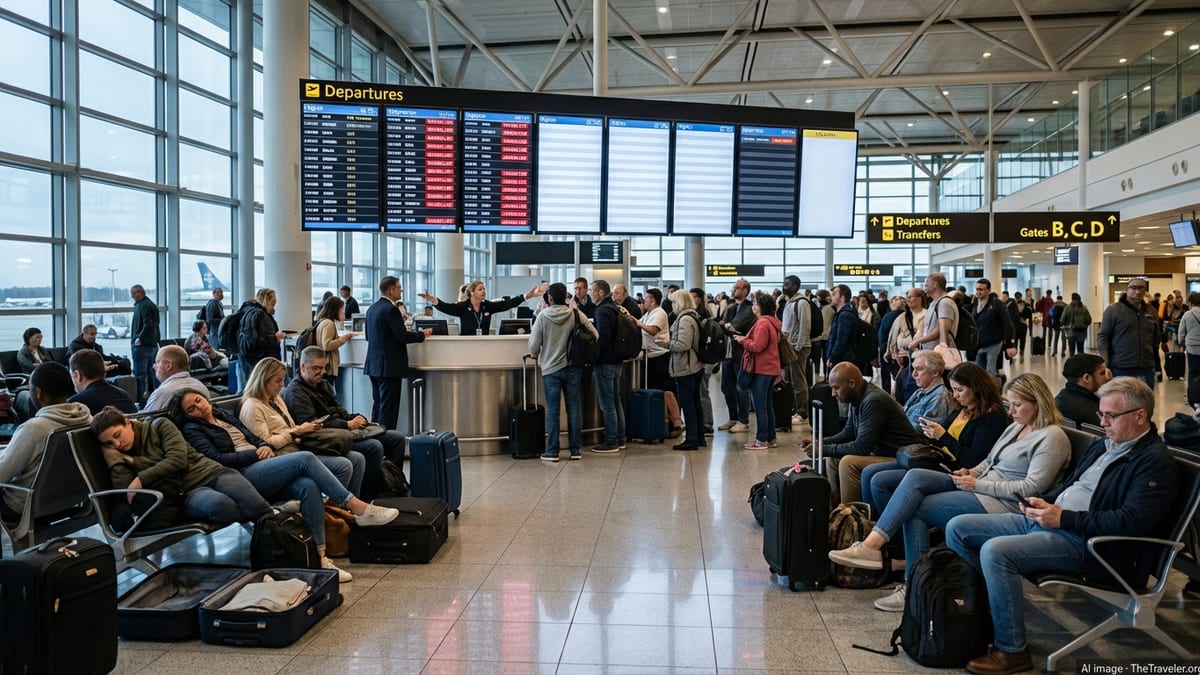
Recent embassy alerts emphasize that Americans in the Middle East should be prepared for “flight cancellations, periodic airspace closures, and potential travel disruptions.” Reports from regional carriers and travel-industry bulletins indicate that reroutings, extended layovers and short-notice schedule changes have already become more common on routes that cross contested air corridors.
Public information from governments and security consultancies notes that national authorities in several states have, at times, restricted or temporarily closed segments of airspace in response to missile launches or military activity. In practice, this can force airlines to divert around conflict-affected skies, lengthening flight times between Europe, Asia and Africa and increasing the risk of missed connections for travelers.
Advisories focused on countries such as Jordan, Israel and Gulf states refer to a pattern of intermittent disruption since early 2026, linked to the broader confrontation with Iran. Travelers have been urged to verify flight status directly with airlines, allow extra time for security screening and remain flexible about routing, particularly when itineraries involve tight connections through major hubs like Doha, Dubai or Abu Dhabi.
Land borders and maritime routes are also described as vulnerable to sudden policy shifts. Security briefings for corporate and humanitarian travelers highlight contingency plans for road movements, the possibility of port closures or delays, and the importance of maintaining updated documentation in case evacuation or relocation becomes necessary.
Heightened vigilance for residents, business travelers and tourists
The latest alerts are not limited to short-term visitors. Publicly available information shows that U.S. guidance is directed equally at long-term residents, students and business travelers who live and work in the region, many of whom regularly cross borders or rely on regional hubs for onward travel.
Security advisories encourage Americans to maintain a “low profile,” avoid large gatherings and areas where demonstrations or political events might occur, and stay alert at locations associated with Western interests, such as international hotels and commercial districts. While the specific threat level can vary significantly from one country to another, the shared messaging stresses that conditions can change quickly and with limited warning.
Corporate travel managers have been reminded in industry assessments to reassess duty-of-care obligations, track staff movements more closely and ensure that employees have clear communication channels during trips. Recommended measures include establishing check-in protocols, confirming that mobile devices will function across borders, and verifying that insurance policies explicitly cover political violence and war-related disruption.
For independent travelers, the alerts underscore the value of basic preparedness. Guidance commonly references keeping essential medications on hand, maintaining access to cash and digital payment options, and ensuring passports and residency permits are valid and easily accessible in case rapid departure becomes necessary.
What the alert means for future trips to the Middle East
Despite the strong language about “unforeseen escalation,” current travel advisories do not constitute a blanket ban on tourism or business travel to the entire Middle East. Instead, they highlight significant differences between destinations, with some countries under “reconsider travel” guidance and others remaining open but subject to elevated caution. Prospective visitors are encouraged, via public travel-advice portals, to consult both country-specific advisories and airline notices before booking.
Travel-industry analysis suggests that demand to certain destinations may soften if security concerns persist, while other markets could see travelers re-route through alternative hubs outside the main conflict-affected corridors. Airlines and tour operators are continuing to adjust capacity and routing in response to fuel costs, airspace restrictions and insurance considerations.
Experts in risk and mobility note that travelers willing to proceed with Middle East itineraries should build additional resilience into their plans. This can include choosing fully flexible or refundable tickets where possible, arranging accommodations with lenient cancellation policies, and considering travel insurance that explicitly covers trip interruption due to security-related events.
Public advisories further recommend that travelers register contact details with consular authorities through available enrollment systems, enabling governments to disseminate targeted updates or evacuation information if conditions deteriorate. Travelers are also urged to monitor reputable international news outlets and official travel websites regularly in the days leading up to departure and throughout their journey.
Key steps for Americans currently in the region
For U.S. citizens already in the Middle East, the renewed alerts serve as a prompt to review contingency planning. Security guidance disseminated online encourages individuals and families to identify more than one exit route from their host country, whether by air, land or sea, and to consider how quickly they could relocate if commercial flights were reduced or halted.
Recommendations shared in public forums and advisory documents include maintaining a small reserve of essential supplies, ensuring that identity documents for all family members are current, and confirming that dependents have the legal right to depart on short notice. Those in higher-risk locations are encouraged to assess whether their housing, workplace and daily routines allow for rapid movement if local authorities declare curfews or restrict internal travel.
In parallel, many governments and large organizations continue to update their own evacuation and business-continuity plans, drawing on lessons from earlier rounds of airspace closures and mass flight cancellations in 2026. Analysts suggest that further deterioration in the security environment could prompt charter evacuations, prioritized seats on commercial services or phased departure plans targeting the most vulnerable citizens and staff.
While the timing and scale of any future escalation remains uncertain, the language of the latest U.S. alerts underscores that Americans in the Middle East should treat the current environment as fluid rather than stable, and plan travel accordingly.
U.S. State Department Worldwide Caution
Anadolu Agency: US warns citizens in Middle East