


More news on this day
As peak summer travel ramps up, confusing rules on passport validity and blank pages are quietly derailing trips for United States travelers, with airlines increasingly refusing boarding before passengers ever leave their home airport.
Get the latest news straight to your inbox!
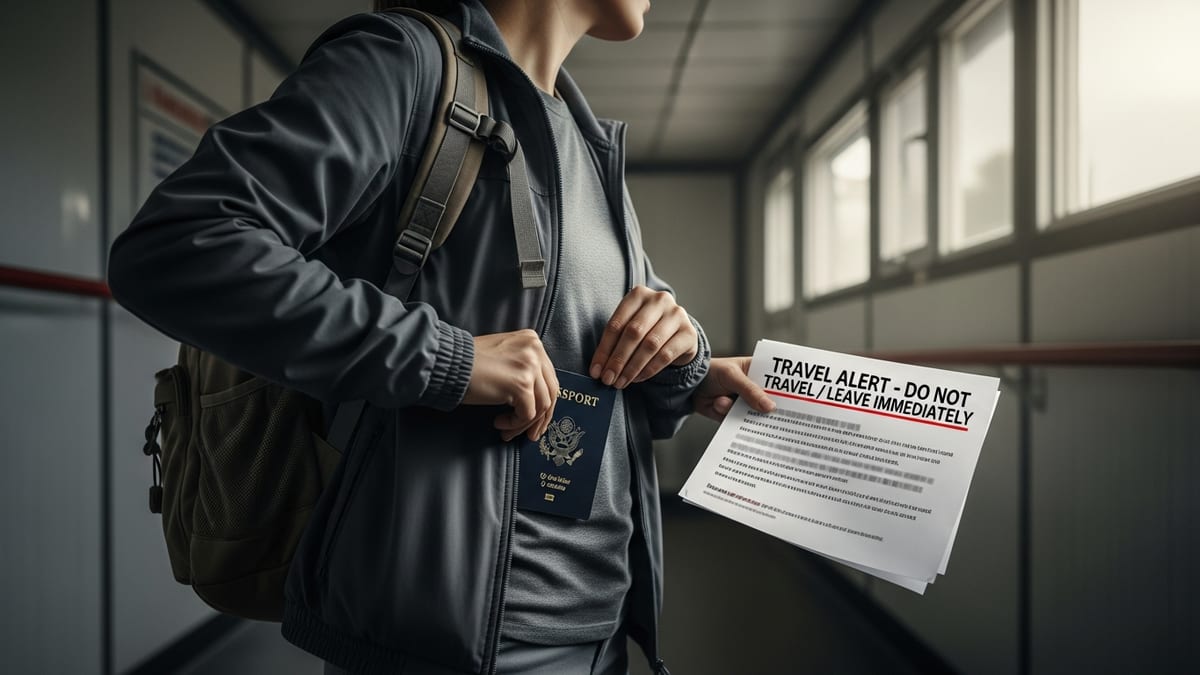
Old Passports, New Scrutiny at the Check In Desk
For many Americans, a passport that has not yet expired still looks perfectly serviceable. Yet airline staff using automated immigration databases are flagging documents with too few blank visa pages or insufficient remaining validity, resulting in sudden denied boardings for trips that were booked months in advance. Travel law resources and airline guidance emphasize that carriers can be fined if they transport someone who is later refused entry, so the practical border is now often the check in counter rather than the arrival hall.
Recent explanatory pieces from visa and mobility specialists describe how the traditional focus on the printed expiry date is no longer enough. A growing number of destinations require six months of validity beyond the intended stay, while Europe’s Schengen Area applies a three month rule combined with a strict limit that a passport must be less than ten years old on the day of entry. Parallel to those time limits, many countries and visa centers now expect at least two fully blank visa pages, sometimes consecutive, for visas and stamps.
Airline and travel industry case studies show that errors tend to surface at the last possible moment. A traveler may complete online check in, clear security, and only be stopped at the gate when a final document scan indicates that a destination insists on two or more blank visa pages or more remaining validity than the passport has. In such instances, the ticket itself is usually nonrefundable, and consumer forums indicate that passengers often absorb both the cost of the missed flight and rush renewal fees.
Practical guidance sites advise that these denials are rarely discretionary. Once an airline’s system returns a warning that a passenger may be inadmissible at the far end, staff typically lack authority to override the block. As a result, more travelers are being told to renew otherwise valid passports before they can rebook, a development that has fueled perceptions of a sudden, stricter regime ahead of the 2026 summer season.
The Hidden Rule: Blank Pages Can Matter More Than Expiry Dates
While well publicized validity rules attract attention, blank page requirements are emerging as an underappreciated trigger for ruined vacations. Recent overviews from passport advisory services note that South Africa, Namibia, Botswana and several other African destinations typically require at least two facing blank visa pages. China, Japan and some Gulf states are also described as expecting multiple empty pages that are clearly designated for visas, not just miscellaneous endorsement pages at the back of the book.
Specialist travel law coverage published this spring highlights that what counts as a “blank page” is not always intuitive. Some immigration authorities reportedly disregard pages marked for endorsements or amendments and insist on standard visa pages only. In practice, this can leave frequent travelers in an awkward gray zone where their passport appears half full, yet none of the remaining space meets the destination’s legal criteria for entry or visa placement.
Advisory articles aimed at US travelers warn that a refusal for lack of blank pages is treated much like a refusal for an expired document. Once a check in system determines that the requirement is not met, the outcome is generally a denied boarding notation. Because the issue is categorized as passenger responsibility rather than airline error, reimbursement rights that might apply in oversold flight scenarios typically do not help.
Some universities and study abroad programs have begun flagging page rules prominently in their 2024 and 2025 guidance, instructing students to ensure at least two consecutive blank visa pages plus an additional page before applying for long stay visas. Similar language is appearing in corporate travel policies that advise employees to renew early if a passport is heavily stamped, even when several years of formal validity remain.
US Travelers Caught Between Multiple Sets of Rules
The United States itself maintains a list of nationalities that are exempt from its version of the six month passport validity rule, but American citizens outbound for tourism are subject to foreign requirements that vary widely by region. Legal analysis published in 2026 stresses that even a short connection through a third country can activate stricter rules, meaning a two hour layover in a hub that imposes a six month validity requirement may invalidate an entire itinerary.
European rules are a frequent source of confusion. Updated commentary on Schengen border regulations notes that US passport holders must comply with both the three month post departure validity standard and the ten year document age limit. The nuances can produce counterintuitive results, such as a passport that technically runs until early 2027 but is treated as noncompliant for a late 2026 trip because it was issued in 2016 and crosses the ten year threshold during the journey.
Travel risk bulletins circulated to airlines illustrate how these overlapping regimes play out at the counter. According to summaries of carrier liaison programs, airlines are expected to consult official databases or government advisories before boarding, and to err on the side of caution when calculating dates and page counts. If a country is listed as requiring two blank pages, check in staff generally cannot accept an argument that one and a half will suffice, even if the traveler has previously entered the same destination without issue.
Industry facing explainers also underline that rules are periodically updated. Recent revisions to passport validity exemptions and entry conditions are published through government channels, but may be first noticed by travelers only when an itinerary that worked last year suddenly generates a warning this summer. This dynamic contributes to the sense of unpredictability that many vacationers describe when recounting abrupt gate rejections.
Denied Boarding Data and Growing Consumer Frustration
Official statistics from the US Department of Transportation track denied boardings primarily in the context of oversold flights, where passengers may be bumped because there are more ticketed travelers than seats. Recent reports show involuntary denied boardings in that category at historically low levels relative to total passengers carried. However, those figures do not capture document related refusals, which consumer advocates describe as a separate and less visible phenomenon.
Blog posts, legal help sites and travel incident logs compiled in 2025 and 2026 point to a rise in complaints from passengers who insist that their tickets were valid but who were blocked over alleged documentation gaps. Many of the publicly shared stories revolve around missing visas or insufficient passport validity, but a notable subset concern blank page disputes. Travelers recount arriving at the airport confident their documents were acceptable, only to be told at the gate that they lacked enough clean space for entry stamps or the destination’s sticker style visa.
Claims specialists explain that these cases fall into a complex area of contract and consumer law. If an airline correctly applies a destination’s requirements, the refusal is usually considered passenger caused, and standard denied boarding compensation frameworks do not apply. Only when a carrier misreads a rule or enforces a non existent condition do travelers have a stronger argument for reimbursement or re routing at the airline’s expense, something that often requires detailed evidence drawn from official entry guidelines.
The apparent rise in such incidents has, in turn, sharpened public debate about transparency. Some commentators argue that airlines should be obligated to display clear, route specific warnings about blank page and validity rules at the time of booking, not days before departure. Others note that requirements can change between purchase and travel, making it difficult for carriers to guarantee that information presented months in advance will remain accurate by the time a passenger reaches the airport.
How Travelers Can Check Their Passports Before Summer Trips
Advisory pieces targeting US tourists now recommend a three step check long before tickets are purchased: confirm validity, confirm blank pages and confirm destination specific rules. Legal and consular information sites generally suggest treating six months of remaining validity as a minimum for most long haul trips, even when a country officially requires less, and planning to renew any passport that will cross the ten year mark during an upcoming journey to Europe.
On blank pages, travel documentation specialists urge travelers to physically count clean visa pages rather than relying on memory or recent stamp patterns. Frequent flyers who have accumulated multiple long term visas or densely packed border stamps may discover that only one or two truly blank pages remain, particularly in older 28 page US passport books. In such situations, guidance commonly favors renewing early instead of gambling that border officers will accept partially used space.
Publicly available information from the US government notes that passport processing times fluctuate seasonally, and that expedited service involves additional fees. With peak summer traffic approaching, commentators are advising travelers to build potential renewal delays into their planning, especially if a trip involves multiple countries with differing standards for validity and page counts.
For those already holding tickets, consumer guidance suggests using official embassy and consulate resources of each destination, as well as carrier travel document tools, to reconfirm requirements a few weeks before departure. While no set of precautions can eliminate the risk of last minute changes or individual misinterpretations, specialists argue that early checks on blank pages and validity remain the most effective way for US travelers to avoid being turned back at the airport just as summer holidays begin.