


More news on this day
The United States has renewed its call for Americans to reconsider travel to Israel, updating its travel advisory to highlight heightened risks of terrorism and unrest in Israel, the West Bank, and Gaza as regional tensions remain volatile.
Get the latest news straight to your inbox!
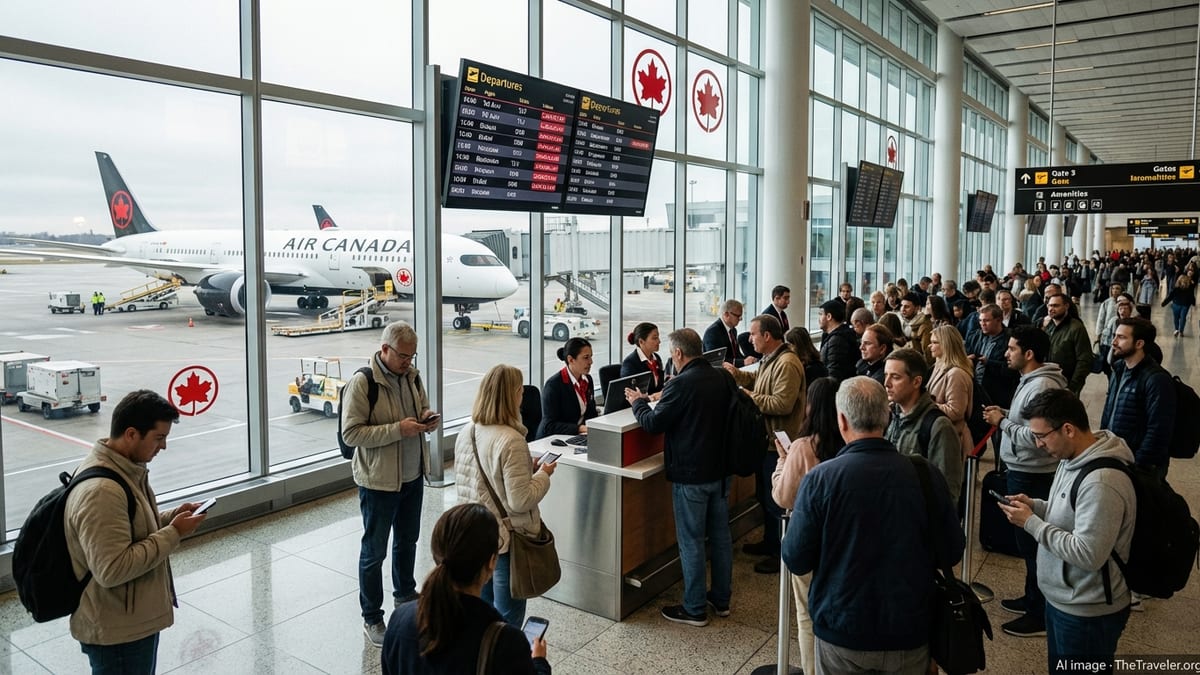
Advisory Raised to Level 3: Reconsider Travel
According to the latest update on the U.S. Department of State’s travel advisory pages, Israel is currently listed at Level 3, which urges travelers to reconsider travel due to terrorism and unrest. Separate but related advisories classify the West Bank as Level 3 and Gaza as Level 4, the highest warning level that advises against all travel because of terrorism, unrest, and severely limited health infrastructure.
The most recent comprehensive advisory for “Israel, the West Bank, and Gaza,” updated on August 26, 2026, underscores that terrorist groups, lone-actor attackers, and other violent extremists continue to plot possible attacks. Publicly available information notes that potential targets include tourist locations, transportation hubs, markets, shopping centers, and local government facilities, and that such incidents may occur with little or no warning.
The advisory emphasizes that the security environment is complex and can change rapidly. Periods of escalation in the broader Middle East have previously led airlines to cancel or restrict flights into and out of Israel, which can leave travelers facing last-minute disruptions and limited options for departure.
Specific No-Travel Zones and Movement Limits
The updated guidance breaks down risk levels by geography and sets out explicit no-travel areas. For Israel, the State Department advises against travel to areas north of Route 85 across to Route 90 and Route 87 because of armed conflict. Travel is also discouraged within 11.3 kilometers, or roughly 7 miles, of the Gaza Strip, where exchanges of fire and rocket activity have been recurrent.
Additional restrictions apply along the Israel-Egypt border. The advisory states that travelers should avoid being within 2.4 kilometers, or about 1.5 miles, of this frontier, except in the immediate area of the Taba (Menachem Begin) crossing, which remains an authorized point of transit. These areas are characterized in public guidance as vulnerable to sudden flare-ups and military activity, creating significant safety risks for civilians.
For Gaza, the advisory reiterates a long-standing position that Americans should not travel to the territory at all. U.S. government employees are prohibited from entering Gaza, and public information notes that the United States is unable to provide routine or emergency consular services there. Combined with frequent closures of crossings, this can leave visitors with no reliable way out in a crisis.
Heightened Terror Risk in Israel and the West Bank
In its country summaries, the State Department notes that Israel and the West Bank face an ongoing risk of terrorist violence, including shootings, stabbings, vehicle rammings, rocket fire, and other forms of attack. The advisory text explains that violent incidents may occur without warning in urban centers, religious sites, and areas with a heavy security presence, as well as near checkpoints and along key roadways.
The West Bank is highlighted as a particular concern. The dedicated West Bank advisory, also at Level 3, references the possibility of terrorist attacks and other violence and points to periodic closures and security operations that can disrupt road access. It notes that demonstrations and clashes can arise quickly and may become violent, sometimes drawing in nearby bystanders.
Public information on U.S. government employee travel underscores these risks. Personnel must obtain special authorization for official trips into the West Bank and are barred from most personal travel there, except for limited routes such as key highways and restricted visits to Jericho and Bethlehem during specified hours. These limitations are described as subject to change with little notice in response to security developments.
Global Warnings and Regional Spillover
The sharpened language on Israel is being issued alongside broader regional alerts. A recent worldwide caution and related security messages highlighted the potential for hostilities and advised U.S. citizens to exercise increased caution when traveling in or through the Middle East. Israel is listed among several regional destinations at Level 3, a category that also includes neighboring Jordan in light of terrorism and unrest concerns.
These documents reflect official assessments that instability in one part of the region can have a cascading effect. Heightened tensions can prompt airspace restrictions, cross-border exchanges of fire, and demonstrations in multiple countries at once. Travelers passing through major regional hubs en route to Israel could therefore encounter additional screening, delays, or short-notice schedule changes even if they do not leave the airport.
Travel analysts note that such advisories often influence group tours, study-abroad programs, and faith-based trips, many of which must weigh safety guidance, insurance requirements, and institutional risk policies before proceeding. Recent coverage has highlighted cases of organizations postponing or rerouting their Israel itineraries following previous advisory changes.
What Travelers Are Urged to Consider
Publicly available guidance recommends that any American still planning travel to Israel closely monitor official alerts, maintain a high level of situational awareness, and have an independent plan for departure that does not rely on U.S. government assistance. Travelers are advised to familiarize themselves with nearby bomb shelters or hardened structures and to consider downloading local alert applications that provide real-time warnings of rocket or drone threats while in Israel.
The State Department also urges prospective visitors to review specialized information on travel to high-risk areas and to obtain robust travel insurance, including medical evacuation coverage. In conflict-affected regions, medical facilities may come under strain, and transport out of danger zones can be limited or unavailable during periods of intense fighting.
For many travelers, these advisories do not constitute a legal ban but rather a strong signal to reassess whether their trip is essential at this time. U.S. officials consistently caution that situations on the ground can change quickly, and once violence escalates, options for safe movement may narrow dramatically for residents and visitors alike.
U.S. Department of State: Israel, the West Bank and Gaza Country Information
U.S. Department of State: Israel Travel Advisory