


More news on this day
The United States is urging its citizens to “seriously reconsider” trips to and through the Middle East, as an evolving confrontation with Iran and allied groups raises security threats and disrupts air travel across the region.
Get the latest news straight to your inbox!
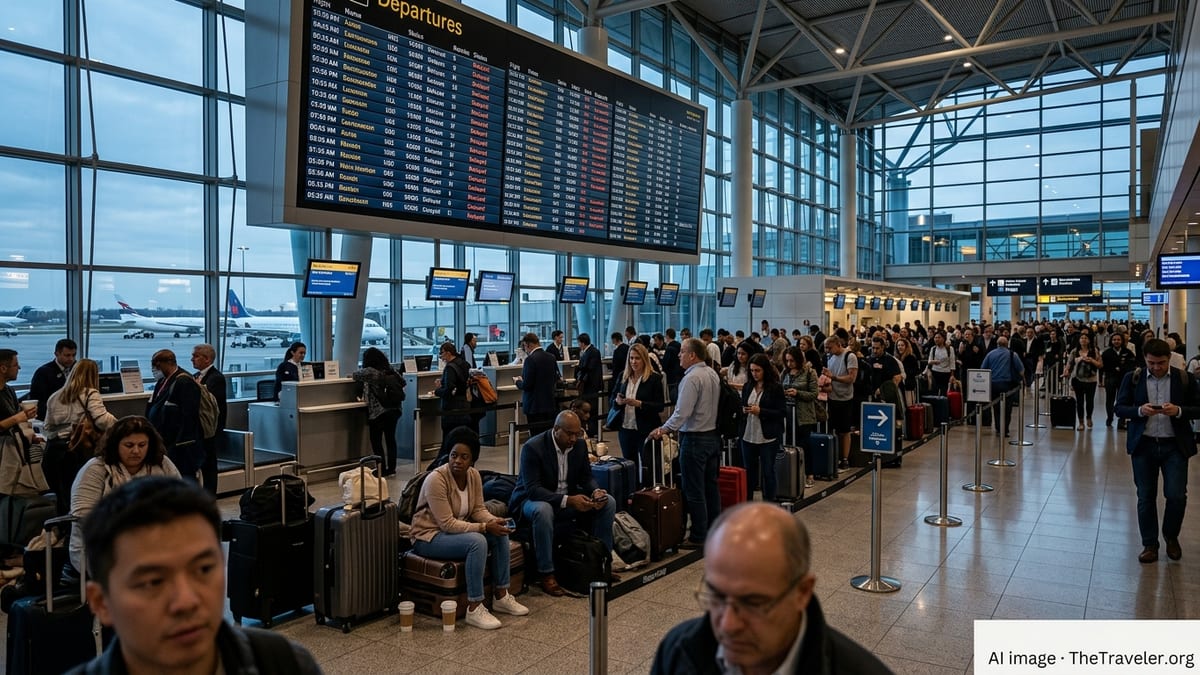
New regional alert urges travelers to pause or reroute plans
According to recent public alerts, the latest message targets Americans who are currently outside the Middle East but planning to transit through or visit the region in the coming weeks. The guidance advises these travelers to reassess their itineraries in light of a fluid security environment and the possibility of sudden escalation.
Coverage from travel and general news outlets in August and September 2026 indicates that this notice builds on a broader advisory first circulated in July, which warned that conflict involving Iran and armed groups aligned with it could affect major hubs in the Gulf and neighboring states. The language has since sharpened, with the most recent alerts urging travelers to be ready to change or abandon plans at short notice.
Reports describe the security concern as regional rather than confined to a single country, highlighting the potential for risks to extend across busy air corridors and popular stopover points. Americans are being encouraged to pay close attention to local developments, including any expansion of hostilities or additional targeting of infrastructure.
Flight disruptions and airspace closures heighten uncertainty
Publicly available aviation and government travel information shows that commercial flights in parts of the Middle East have already experienced significant disruption in 2026 as tensions with Iran have intensified. Advisories for countries such as Saudi Arabia, the United Arab Emirates, Kuwait and Jordan reference the onset of hostilities between the United States and Iran on February 28, 2026, as a key turning point for regional air travel.
The updated messaging warns that rising tensions could lead to further flight cancellations, diversions or delays, as well as temporary airspace closures. Travelers are advised to consider how a sudden suspension of services through major hubs could affect their ability to reach onward destinations, particularly when connections are tightly timed or involve multiple carriers.
Industry reporting in August and September notes that some passengers have already begun rerouting journeys away from Gulf hubs, shifting to itineraries that connect through Europe or parts of Asia instead. Travel consultants cited in that coverage point to a growing preference among risk‑averse travelers for routes that avoid potential flashpoints, even when alternatives are longer or more expensive.
Country advisories across the region move to higher alert levels
The latest country‑specific advisories on official travel pages show elevated risk levels for a swath of Middle Eastern destinations. Saudi Arabia, the United Arab Emirates, Kuwait and Jordan are currently listed at Level 3, a category that calls on Americans to reconsider travel due to factors such as terrorism, armed conflict and the threat of drone or missile attacks.
Some advisories highlight additional constraints, including restrictions on where US government personnel may travel within certain countries and references to limited capacity to assist citizens in high‑risk areas. In several cases, summaries explicitly mention the danger of Iranian drone and missile targeting of locations associated with US interests and note that commercial aviation has been seriously disrupted at times.
Other destinations in the wider region, including Iran and Yemen, remain under Level 4 designations that urge Americans not to travel due to risks such as unrest, kidnapping and wrongful detention. Although the new alert focuses on travelers outside the region contemplating trips in, it is framed against this backdrop of already heightened country‑level warnings.
Guidance for Americans already in the Middle East
The regional notice does not advise an immediate mass departure, but publicly available information indicates that Americans currently in the Middle East are being urged to maintain a high level of situational awareness and to think through contingency plans. Travelers are encouraged to be prepared to depart if conditions deteriorate or if commercial options begin to narrow.
Official consular pages for the region emphasize the importance of enrolling in alert systems to receive security updates by email or messaging apps, and of monitoring local media for signs of unrest or transport disruption. The guidance also notes that individuals should have an emergency plan that does not rely solely on US government assistance, reflecting concerns that rapid escalation could limit on‑the‑ground support.
Travel industry coverage suggests that tour operators and airlines are closely watching developments, with some itineraries adjusted away from border areas or conflict‑sensitive regions. However, many routes and packages remain on sale, leaving individual travelers to weigh the evolving risk profile against personal and professional reasons for travel.
What the advisory means for future travel planning
For Americans considering new trips that involve the Middle East, the strongest message from the latest alert is the need to build flexibility into any itinerary. Public guidance encourages travelers to look carefully at routing options, refund and change policies, and the potential consequences of a last‑minute reroute if transit hubs are affected by conflict‑related restrictions.
Travel reports note that some travelers are responding by choosing tickets with more generous change conditions, or by avoiding complex multi‑stop journeys that depend on a single regional gateway. Others are delaying nonessential travel altogether in hopes that the situation will stabilize or that advisories will eventually ease.
As of late September 2026, there is no clear timetable for when the heightened alerts might be revised. The regional advisory is framed as a response to an evolving security environment, and public information stresses that the situation could change quickly. For now, Americans weighing a trip to or through the Middle East are being asked to factor a higher level of uncertainty and potential disruption into their plans.