


More news on this day
The United States is urging its citizens to leave Iran immediately, while warning that commercial travel could be disrupted with little notice amid escalating regional tensions and the risk of sudden airspace and flight interruptions.
Get the latest news straight to your inbox!
What the new US warning says
Published coverage over the past several days describes a renewed US message emphasizing that Americans should not travel to Iran and that those already in the country should depart as soon as they can do so safely, using available commercial options. The guidance also highlights the possibility of rapid deterioration in the security environment.
The warning reinforces the State Department’s long-standing top-tier assessment for Iran, which remains at “Level 4: Do Not Travel.” That advisory highlights concerns including wrongful detention risks, terrorism, civil unrest, kidnapping, and limited US ability to provide routine or emergency consular assistance inside Iran.
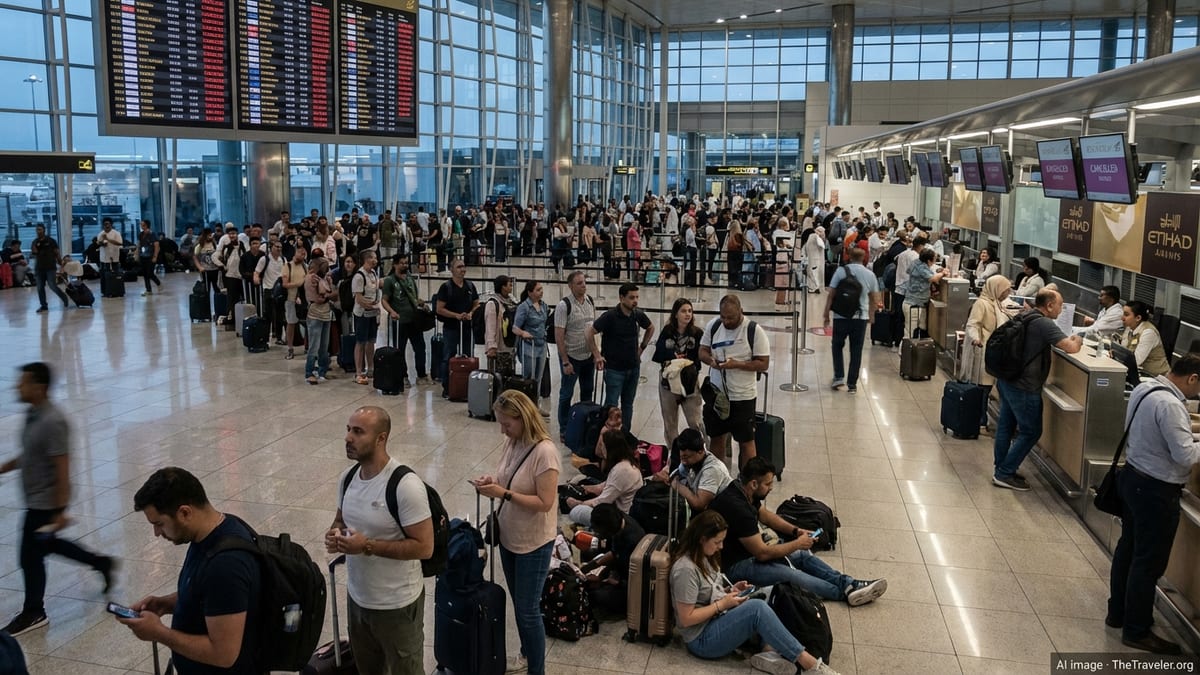
Separate State Department messaging has also stressed that travelers in the broader Middle East should be prepared for flight cancellations, periodic airspace closures, and other disruptions that can strand passengers or force sudden route changes. That framing has become a common feature of recent security-related travel alerts tied to heightened regional volatility.
Why disruptions matter for travelers right now
For US citizens in Iran, the central travel problem is that an exit plan can become obsolete quickly. Even when flights are operating, schedules can change rapidly, and airlines may reduce service, reroute, or cancel segments because of security developments, insurance considerations, or airspace restrictions in neighboring countries.
Beyond aviation, published reporting and prior US alerts have repeatedly pointed to the potential for internal movement constraints during periods of unrest, including temporary road closures, transportation slowdowns, and communications disruptions. In practical terms, that can make it harder to reach airports, confirm bookings, or communicate with family, employers, or travel providers while arranging departure.
The State Department’s worldwide caution updates in 2026 have also emphasized that tensions involving Iran can have knock-on effects across the region, including disruptions tied to airspace management and heightened security measures at airports. For travelers, those regional effects can influence connections and transit routing even when a departure plan begins outside Iran.
Consular limits in Iran and the role of protecting powers
The United States does not maintain an embassy or consulate in Iran, which significantly limits the kinds of services Americans might expect in a crisis. Publicly available State Department guidance has long advised travelers not to rely on US government assistance to leave in an emergency and to have contingency plans that work even if direct consular help is unavailable.
For many years, Switzerland has served as the protecting power for US interests in Iran, helping facilitate limited assistance under constrained conditions. Recent State Department travel advisory language has also noted that the Swiss Embassy’s Foreign Interests Section in Tehran has faced operational limitations at times, which can further reduce access to in-person help when demand is highest.
Separately, US crisis-response guidance describes that, in rare circumstances and when conditions allow, the US government can coordinate assistance for private citizens if commercial options are unavailable. However, that information is presented as a contingency rather than a planning baseline, particularly in locations where the United States has no diplomatic presence.
What Americans in Iran can do immediately
US travel guidance commonly encourages Americans abroad to enroll in the Smart Traveler Enrollment Program (STEP) so they can receive official alerts and so consular teams can better account for them during emergencies. Enrollment can be especially relevant in fast-moving situations where flight options and local conditions can change within hours.
Travelers who are preparing to depart typically need to confirm passport validity, verify exit and transit requirements for any routing they intend to use, and check with carriers directly for the most current schedule status. Because payment systems, airline policies, and operational constraints can shift quickly, travelers may need to review backup itineraries and multiple carriers rather than relying on a single route.
Because communications can be disrupted, travelers may also need redundancy in how they receive updates, such as downloading offline copies of reservations and keeping written details of key contacts. Public State Department materials also advise having a plan for medical care and insurance coverage abroad, which can be relevant if delays or rerouting extend a trip unexpectedly.
What the warning means for would-be visitors and dual nationals
For Americans planning travel, the immediate message is that Iran remains a destination the US government advises against for any reason. The State Department’s advisory language has repeatedly emphasized that the US government’s capacity to help is extremely limited and that detention risks can be difficult to mitigate once a traveler is in-country.
Publicly available US guidance has also indicated that particular groups can face heightened risk, including dual US-Iranian nationals and people traveling for journalism, academic, or business activities. Travelers who have family ties to Iran or who routinely cross borders in the region can face additional scrutiny, and the advisory has cautioned that Iran does not recognize dual nationality in the same way the United States does.
Finally, the renewed emphasis on possible travel disruptions is a reminder that even travelers not headed to Iran may see broader Middle East itineraries affected through airspace management and knock-on cancellations. For passengers with upcoming trips through regional hubs, monitoring carrier updates and reviewing change and rebooking policies may be prudent as conditions evolve.