


More news on this day
New comments from US Air Force Chief of Staff Gen. Ken Wilsbach are drawing attention to how recent combat experience with Iran, the long-delayed T-7 Red Hawk trainer and persistent F-35 program setbacks are reshaping the service’s modernization plans and its ability to generate ready forces.
Get the latest news straight to your inbox!
Combat over Iran sharpens focus on survivability and basing
Recent US air operations against Iran have become a reference point for Wilsbach as he describes how the Air Force must adapt to more lethal air defenses and long-range strike capabilities. According to published coverage, he has pointed to the vulnerability of high-value aircraft on the ground and the need to assume that large, fixed bases will be under persistent threat in any major conflict.
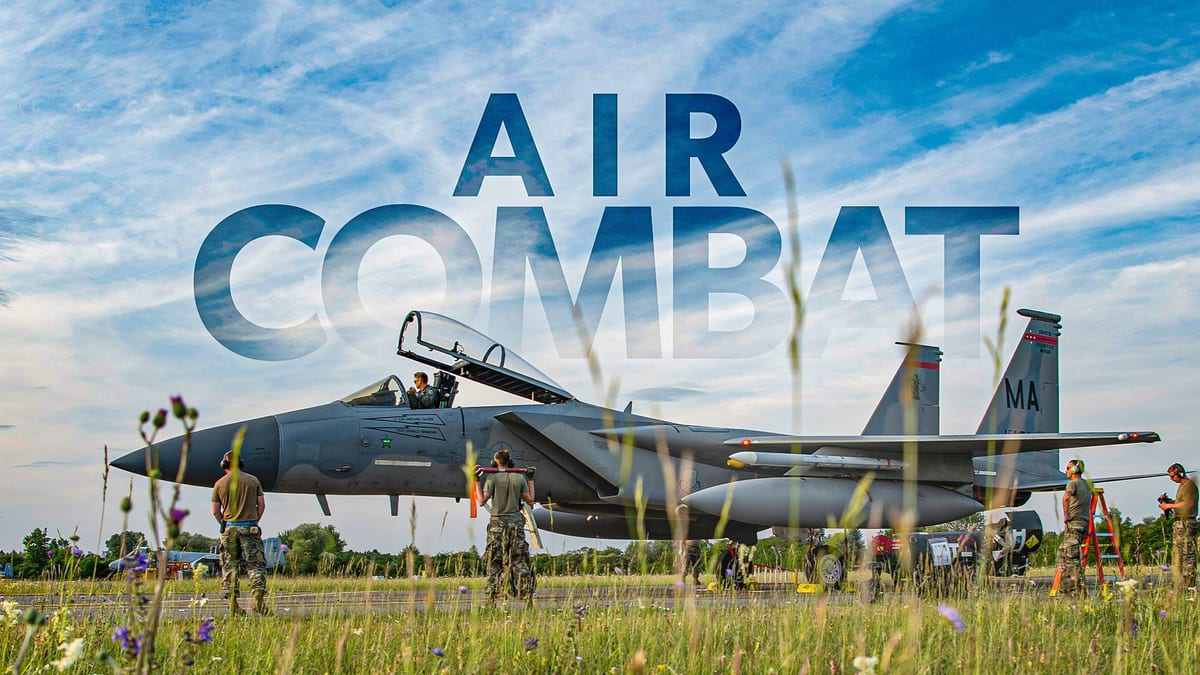
Reports from ongoing operations highlight instances in which US fighters, including F-15E and F-35 aircraft, have faced increasingly capable Iranian air defenses and unconventional threats. Publicly available information indicates that at least one F-35 was forced to divert after being hit, while other aircraft have flown in heavily defended environments where adversaries are rapidly improving their own sensors, weapons and tactics.
In this context, Wilsbach has emphasized lessons around base defense, dispersal and hardening of shelters. Coverage of his recent public remarks describes a renewed emphasis on spreading aircraft across more locations, improving passive defenses and designing operations that assume runways, fuel farms and maintenance facilities could be targeted early in a conflict. Those themes echo broader Pentagon debates on “agile combat employment,” which seeks to reduce dependence on a small number of large, exposed air bases.
The experience over Iran is also reinforcing long-standing concerns about predictability in flight tactics. Analysis in open reporting suggests that Iranian forces have benefited when US flight profiles, routes and timing become routine. That has fed calls for more varied tactics, greater integration of space and cyber capabilities, and expanded use of unmanned systems and collaborative combat aircraft to complicate an adversary’s targeting picture.
T-7 Red Hawk moves forward after years of turbulence
While combat experience is reshaping operational concepts, Wilsbach is also tying those lessons to the next generation of pilot training. The Boeing-built T-7A Red Hawk, conceived as the Air Force’s first new jet trainer in decades, has endured schedule slips tied to escape system concerns, flight control software and other technical issues. Program reviews by oversight bodies and defense media have repeatedly warned that delays could create a gap in training capacity as the aging T-38 fleet nears the end of its service life.
After several course corrections, the service in recent months has taken visible steps to move the T-7 into regular use. Public affairs releases show Wilsbach flying in a T-7A at Joint Base San Antonio to get a firsthand look at the jet’s performance, a symbolic milestone that follows years of developmental testing at Edwards Air Force Base and incremental approvals to proceed toward production.
Reporting this year indicates that Air Force acquisition leaders are now prepared to authorize full-rate production decisions, even as they accept higher programmatic risk by overlapping some testing with early fielding. Officials involved in the program have argued in public forums that this concurrency is necessary to avoid further delays in getting a modern trainer into the hands of instructors and students.
The T-7 is designed from the outset to prepare pilots for fifth-generation fighters such as the F-35 and F-22, with large-area cockpit displays, open architecture avionics and a digital backbone intended to support advanced simulations and electronic warfare training. That linkage is central to Wilsbach’s message: the same complex threat environment seen over Iran is the one new pilots must learn to manage from the beginning of their careers.
Training modernization and the future fighter pipeline
Wilsbach has repeatedly framed training as a core readiness issue, arguing in earlier congressional testimony that Air Force pilots are not flying enough and that maintenance shortfalls and supply chain problems are eroding sortie generation. Public transcripts from his confirmation process highlighted how spare parts shortages and aircraft downtime directly reduce flying hours, with knock-on effects for proficiency and retention.
Against that backdrop, the T-7 is only one element of a broader shift in how the service prepares new aviators. Recent reporting on pilot training reforms describes a syllabus that blends high-fidelity simulators, data-driven debriefs and more tailored flight time, aiming to produce mission-ready pilots faster while exposing them earlier to complex scenarios such as dense surface-to-air missile threats and multi-domain operations.
Training commands have begun to receive initial T-7 aircraft for instructor use, a milestone that allows them to refine lesson plans before large student cohorts arrive. Defense analysts note that the trainer’s modern avionics and embedded simulation are intended to mirror front-line fighters closely enough that pilots can practice weapons employment, sensor fusion and formation tactics in a way that older T-38s were never designed to support.
For Wilsbach, integrating those capabilities is closely tied to the future of collaborative combat aircraft, the family of uncrewed systems expected to fly alongside manned fighters. According to defense industry coverage, he has pointed to the need for pilots who are comfortable managing swarms of autonomous teammates, delegating tasks and fusing data, skills that can be rehearsed in a digital-friendly training environment long before a pilot reaches an operational squadron.
F-35 delays complicate modernization timelines
Even as the Air Force moves to update training, the F-35 program remains a drag on near-term force structure plans. The aircraft’s latest hardware and software upgrade package, known as Technology Refresh 3 and tied to the more ambitious Block 4 modernization, has encountered integration challenges that have slowed deliveries and limited the readiness of jets already in the inventory. Publicly available assessments from government auditors and defense media describe a program grappling with cost growth, test delays and maintenance burdens.
Wilsbach has acknowledged in multiple public appearances that F-35 availability has been hampered by supply chain issues and sustainment problems, echoing concerns he raised before taking on the chief of staff role. Those challenges affect not only the ability to generate daily sorties, but also the timeline for replacing older fourth-generation fighters that are increasingly expensive to maintain and may be less survivable in heavily contested airspace.
In the near term, delays in fielding fully capable F-35s are forcing the Air Force to make difficult trade-offs: extend the life of legacy aircraft, accept a smaller fighter fleet, or adjust readiness targets. Analysts note that these choices are unfolding as the service also invests in the still-classified Next Generation Air Dominance family of systems, heightening pressure on budgets and schedules.
From a training standpoint, F-35 delays risk creating a mismatch between what new pilots learn in modern aircraft such as the T-7 and what they encounter when they reach operational units constrained by older hardware and limited Block 4 capabilities. Observers suggest that this could increase reliance on simulators and synthetic environments to expose pilots to advanced F-35 features that are not yet widely available in the field.
Linking combat lessons, training reform and acquisition risk
Across his recent public comments, Wilsbach has drawn a connecting line from real-world combat over Iran to the classrooms and cockpits where the next generation of Air Force pilots is being prepared. The themes are consistent: adversary threats are evolving quickly, fixed bases are more vulnerable, and the service must adapt both its operational concepts and its force-building systems to keep pace.
In this framing, the T-7 Red Hawk is more than a replacement for the T-38. It represents an attempt to align training with a battlespace defined by advanced air defenses, long-range precision weapons and growing use of autonomous systems. At the same time, the program’s history of delays and technical issues is a reminder of the risks inherent in complex acquisition efforts, particularly when they are expected to bridge capability gaps on a tight schedule.
The F-35’s modernization challenges add another layer of uncertainty. While the aircraft has demonstrated strong performance in exercises and operations, including in recent Middle East deployments, slow progress on upgrades and sustainment undercuts the Air Force’s ability to field the numbers and readiness levels envisioned in earlier plans. That tension is likely to remain central to debates over budgets and priorities in the coming years.
For now, Wilsbach’s message combines urgency and pragmatism. Public reporting suggests he is pressing for more resilient basing concepts, faster incorporation of combat lessons into training and a willingness to accept some programmatic risk on systems like the T-7 in order to close operational gaps. How effectively those priorities translate into funded programs and fielded capability will shape the Air Force’s posture well beyond the current confrontation with Iran.