


More news on this day
Fresh security warnings from the United States, coupled with renewed flight disruptions across key Gulf transit hubs, are reshaping how international travellers move through Bahrain, Saudi Arabia, the United Arab Emirates, Kuwait and Jordan at the height of the northern summer travel season.
Get the latest news straight to your inbox!
US Warnings and Regional Advisories Tighten Around the Gulf
Publicly available US travel guidance currently places Bahrain, Saudi Arabia, the United Arab Emirates, Kuwait and Jordan at a higher risk tier, advising travellers to reconsider non essential trips amid a fluid security environment in the wider Middle East. A worldwide caution notice updated in mid July reiterates that the situation can change quickly and urges travellers to monitor destination specific advisories closely before and during any journey.
Other national foreign ministries, including those in Europe, have updated their own travel advice for Bahrain and neighbouring Gulf states, citing recent missile and drone activity, previous airspace closures and the potential for further short notice restrictions on civilian aviation. Advisories highlight that facilities associated with Western military or diplomatic activity and major transport infrastructure remain potential points of concern.
This combination effectively aligns the messaging from Bahrain and its Gulf neighbours with the more cautious tone in US communications, even where borders remain formally open. For travellers, the practical impact is a higher likelihood of sudden route changes, operational pauses at key airports and tighter scrutiny on transit plans that pass through the region.
Travel industry updates and security analyses suggest that, in practice, airlines and airports across Bahrain, Saudi Arabia, the UAE, Kuwait and Jordan are operating but under constraints that can include rerouting, congestion and schedule thinning on certain corridors, especially those closest to current flashpoints.
Flight Disruptions Hit Bahrain and Major Gulf Transit Hubs
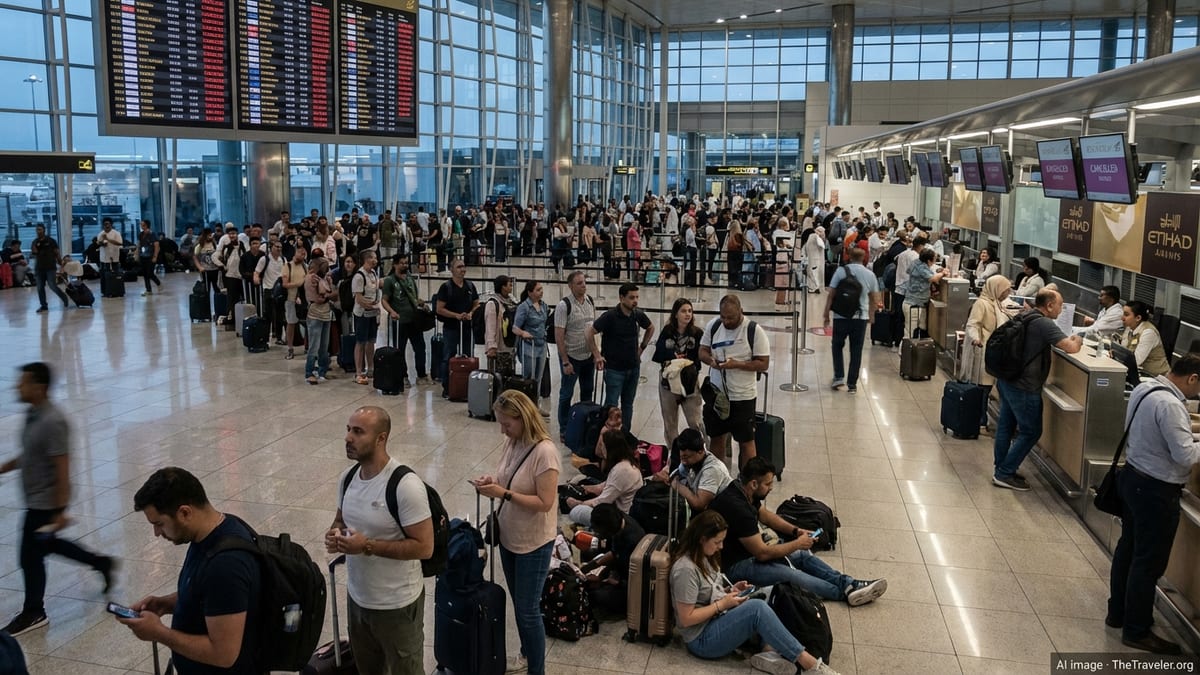
Published coverage from Middle East and international outlets indicates that flight operations at hubs in the UAE, Saudi Arabia, Kuwait and Bahrain have been repeatedly disrupted since the spring due to regional hostilities and shifting airspace restrictions. Carriers have temporarily suspended some routes, trimmed frequencies or rerouted aircraft around affected zones, lengthening flight times and tightening connection windows.
Sector specific reports show that Bahrain International Airport is operational but subject to intermittent restrictions and rerouting, particularly for overflights, which can create knock on delays for passengers transiting between Europe, Asia and Africa. Kuwait International Airport has undergone a phased recovery after earlier drone attacks, with schedules still more limited and vulnerable to disruption than before the current crisis.
In the UAE and Saudi Arabia, the largest Gulf hubs are broadly open yet face periodic congestion and short term adjustments as airlines respond to evolving guidance from aviation regulators and risk assessments from insurers. Industry advisories describe the east west corridor through Saudi airspace as one of the few relatively stable long haul pathways, but even there capacity and timings are being recalibrated week by week.
These pressures are especially significant for international travellers who rely on Gulf carriers for long haul connections. Longer routings via alternative hubs, last minute gate changes and rolling schedule updates are becoming more common, reinforcing the need for passengers to treat confirmed itineraries as provisional rather than fixed.
How Bahrain and Its Neighbours Are Positioning Their Response
Bahrain, which hosts a major US naval presence and has been directly affected by recent regional tensions, has seen its own official travel and aviation notices evolve through 2026. Public documents from Bahrain’s civil aviation authorities outline updated entry and screening procedures and reference temporary routing measures for overflight traffic during sensitive periods, underlining a strategy of keeping the airport open while managing heightened risk.
Saudi Arabia, the UAE, Kuwait and Jordan have adopted similar balancing acts, maintaining core connectivity while publicly outlining that schedules, routings and airport access could change at short notice. Regional travel advisories and airline notices frequently emphasise that passengers should not proceed to airports until flights are confirmed as operating and should anticipate limited capacity on some routes.
Security risk assessments from aviation specialists and European regulators recommend exercising caution in or above several Gulf states, including Bahrain, Kuwait, Qatar and the UAE, reflecting concerns about potential spillover from wider regional conflict. This guidance has prompted many airlines to fine tune routing and altitude choices and in some cases to avoid specific airspace corridors altogether.
Together, these measures amount to a de facto alignment between Bahrain and its neighbours on how to navigate the latest US warnings. Governments are publicly acknowledging elevated risk, while airports and airlines focus on keeping essential corridors open and providing rolling operational updates rather than sweeping, long term shutdowns.
What International Travellers Should Do Right Now
For travellers with imminent itineraries through Bahrain, Saudi Arabia, the UAE, Kuwait or Jordan, the first priority is to verify every sector of the journey directly with the operating airline and to repeat that check frequently. Published schedules and booking confirmations may not fully reflect last minute cancellations, rerouting or aircraft changes triggered by altered airspace conditions.
Travel experts recommend building in additional buffers around connections through Gulf hubs, particularly for itineraries linking Europe or North America with South or Southeast Asia. Where possible, opting for longer minimum connection times or even overnight stopovers can reduce the risk of missed onward flights if inbound services are delayed or diverted.
Passengers are also encouraged to review their travel insurance documents in detail, focusing on how policies treat war, terrorism, government advisories and airspace closures. Many standard policies restrict coverage for disruptions linked to declared conflicts or official warnings, so travellers may need to seek specialised coverage or accept a higher level of financial risk when transiting the region at this time.
Those who have not yet booked but are considering itineraries via the Gulf may wish to compare routings that use alternative hubs further from current flashpoints, such as in southern Europe or East Asia, against the convenience and pricing of traditional Gulf connections. The trade off between cost, duration and risk has shifted, and travellers should factor that into planning rather than relying on pre crisis norms.
Planning Ahead as Conditions Continue to Shift
With US travel advisories and regional security assessments under continual review, conditions for flying through Bahrain and neighbouring Gulf hubs are likely to remain changeable through the coming weeks. Analysts note that even partial de escalation can take time to translate into more stable airline schedules and less congested airspace, while any renewed flare up could trigger new rounds of restrictions or short notice suspensions.
Prudent travellers are increasingly treating travel through the region as an exercise in contingency planning. This can mean tracking multiple alternative routings, being prepared to accept involuntary rerouting via different hubs and keeping accommodation and ground transport plans flexible at both origin and destination.
Travel risk consultancies and major airlines alike stress the importance of closely following official advisories from home governments and destination states, together with operational notices from carriers and airports. Subscription based alert services and airline apps can provide near real time updates on gate changes, delays and route adjustments, which are particularly valuable when connectivity is tight.
For now, Bahrain and its Gulf neighbours are signalling that they intend to remain open for international traffic while aligning with the cautious stance reflected in fresh US warnings. International travellers who stay informed, build flexibility into their plans and understand the limits of their insurance protection will be best placed to navigate a region where the skyways remain vital but volatile.