


Chicago is a city that rewards curiosity, from late-night jazz clubs in River North to sunrise walks along the Lakefront Trail. For many visitors, Uber and Lyft are the easiest way to knit these neighborhoods together. Yet the way rideshare works in Chicago, especially at O’Hare and Midway airports, has enough local quirks that a bit of advance knowledge can save you time, money, and stress.
Get the latest updates straight to your inbox!
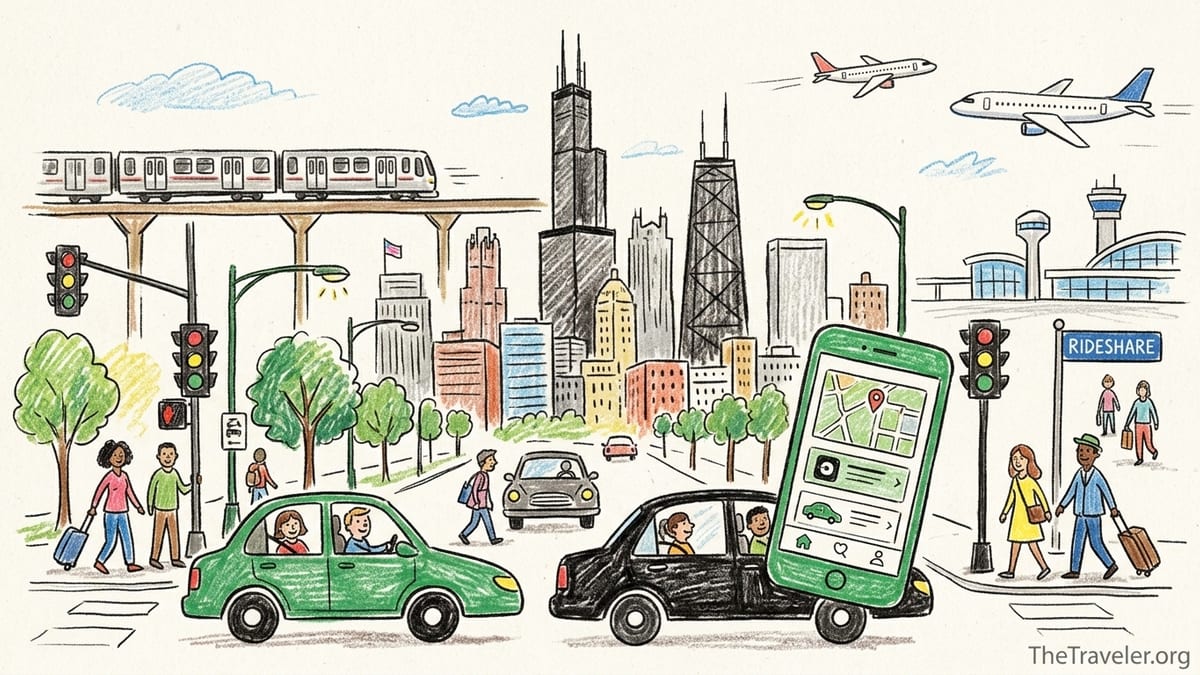
How Uber and Lyft Work in Chicago
Uber and Lyft operate throughout Chicago and most nearby suburbs, using the same apps and ride categories travelers recognize elsewhere. In the city center, you will rarely wait more than a few minutes for an UberX or standard Lyft outside peak rush hours. Around popular visitor hubs such as the Loop, River North, West Loop, and the Magnificent Mile, cars tend to cluster day and night, so your driver often arrives in under five minutes.
Both companies offer a familiar menu of options: standard rides like UberX and Lyft, larger vehicles like UberXL and Lyft XL for small groups or excess luggage, and higher-end choices such as Uber Black or Lyft Lux. In practical terms, most visitors use standard or XL rides for airport transfers and sightseeing, occasionally upgrading to a premium car for a night out or an important meeting.
Chicago adds a set of local taxes and fees to each rideshare trip, including special surcharges for airport pickups and for rides that start or end in high-traffic zones downtown. These charges are baked into the price you see in the app rather than added later, so when you compare Uber or Lyft versus a taxi, you are seeing an all-in estimate on your phone.
The city’s grid system makes it relatively easy for drivers to navigate, but traffic patterns vary sharply by time of day. A ride from the Loop to Wrigley Field might take 20 minutes on a quiet morning and 45 minutes before a night game. Because Uber and Lyft use time-and-distance pricing, congestion can significantly raise your fare, even if the estimated price looked modest when you booked.
Airport Pickups at O’Hare International Airport
Chicago O’Hare is one of the country’s busiest airports, and that scale shows up in its rideshare rules. Both Uber and Lyft are authorized to pick up and drop off at O’Hare, but you must meet your driver at specific zones. The airport posts signs for “Rideshare” or “App-based rides” throughout the terminals, and the apps themselves will guide you to the approved areas once you request a ride.
Recent airport guidance indicates that rideshare pickups for domestic terminals typically occur near Terminal 2, with signed areas on the upper level close to the main garage and on the lower level near baggage claim. In practice, many travelers landing at Terminals 1 or 3 follow the overhead signs toward Terminal 2 and then to the designated rideshare island or curb. International passengers arriving at Terminal 5 often need to follow signs to ground transportation or take the Airport Transit System train toward the main terminals before meeting their driver, depending on current pickup patterns.
Because O’Hare is so large, small details matter. Do not request your ride until you have your luggage and are moving toward the posted rideshare area. If you call a car while you are still taxiing on the runway or stuck at immigration, the driver may arrive, wait, and cancel, or you will pay a wait-time charge while you stand in line. Locals commonly budget 10 to 20 minutes between requesting a ride and actually getting into the car, depending on the time of day and traffic near the terminals.
If price is a concern, know that O’Hare has a CTA Blue Line station in the airport complex, offering a flat fare train ride to downtown that is often faster than an Uber or Lyft at rush hour. Some frequent travelers even take the Blue Line two stops to neighborhoods like Rosemont to request a rideshare from there, avoiding airport surcharges and heavy terminal traffic, although this extra step makes more sense for solo travelers with light luggage than for families with suitcases and strollers.
Using Uber and Lyft at Midway International Airport
Midway is smaller and easier to navigate than O’Hare, but its rideshare process still follows a strict pattern. Uber and Lyft are both permitted to pick up at Midway, and current guidance points travelers to the Arrivals level near Door 4, where you will see marked space for app-based rides. As with O’Hare, airport signage helps direct you from baggage claim to the correct curb.
From central Chicago, a rideshare to Midway often takes 25 to 40 minutes depending on traffic along Cicero Avenue and the Stevenson Expressway. In the early morning or late evening, you can sometimes reach the airport from the Loop in about 20 minutes. Fares from downtown to Midway are usually lower than to O’Hare because the distance is shorter and there are no expressway tolls on the route.
Rides at Midway can be inconsistent around peak times, especially very late at night or immediately after big storms when fewer drivers are on the road. Travelers occasionally report long waits or multiple cancellations as drivers weigh low fares against heavy traffic leaving the airport area. If you are landing late and need a guaranteed option, consider whether a pre-booked taxi or a rental car makes sense, or plan to hop on the CTA Orange Line, which runs directly from the airport station into the Loop with a simple, flat fare.
The Orange Line station is connected to the terminal via an enclosed walkway. For many budget-conscious travelers, especially solo visitors, taking the train to the Loop and then requesting a rideshare from downtown to their hotel can be significantly cheaper than door-to-door Uber or Lyft from Midway, while still keeping the final leg of the trip flexible and comfortable.
What Rides Cost: Pricing, Traffic, and Surge
Rideshare prices in Chicago fluctuate based on distance, travel time, local taxes and airport fees, and real-time demand. Under normal, non-peak conditions, a standard UberX or Lyft from O’Hare to a hotel in the Loop might fall somewhere around the price of a city taxi, with many travelers seeing typical app estimates in the 45 to 70 dollar range for that route. From Midway to downtown, the same standard ride often prices out somewhat lower, roughly in the high 20s to mid-40s depending on traffic.
Surge pricing can change that picture quickly. During heavy demand periods, such as weekday rush hours, Friday evenings, or major events like a Bears game at Soldier Field or a festival in Grant Park, multiplier pricing may apply. That same O’Hare to downtown ride that looked reasonable at midday can spike well over 80 or even 100 dollars during a busy evening rush if a storm, flight delays, and commuter traffic collide. The apps will show when this is happening, often with a small lightning icon or a note that prices are higher than usual.
Within the city, shorter trips typically cost in the 10 to 25 dollar range for standard rides between central neighborhoods. For example, a mid-afternoon UberX from the Art Institute in the Loop to Wrigley Field might quote around 18 to 30 dollars, depending on whether you are traveling via expressways or surface streets and how backed up traffic is around Lakeview. Larger vehicles and premium categories add a significant surcharge, so a group of five heading from the West Loop to United Center for a Bulls game in an XL ride should expect to pay more than two travelers sharing a standard car.
Because time is a major factor in pricing, Chicago’s legendary congestion around the Kennedy Expressway, the Dan Ryan, and key downtown arteries can double or even triple the price of what looks like a short journey on the map. If your schedule is flexible, departing 30 to 45 minutes earlier or later than the height of rush hour can sometimes save enough on rideshare costs to cover your dinner.
Safety, Etiquette, and Tipping in Chicago Rideshares
Uber and Lyft rides in Chicago follow the same core safety standards as in other U.S. cities. When your driver is assigned, always check that the car’s make, color, and license plate match what appears in the app before you get in. If the vehicle or driver seems different from what is listed, cancel the ride and request another. In busy spots like Wrigleyville after a game or outside a festival in Grant Park, there may be many ride-hailing vehicles clustered together, and taking a moment to confirm details protects you from getting into the wrong car.
Both apps allow you to share your trip details with a friend or family member, and Chicago’s dense cell coverage means this feature generally works well, even in tunnels or under the elevated train tracks downtown. If you feel uncomfortable during a ride, you can use the in-app safety button to contact support or emergency services. Drivers are also encouraged to pull over in safe, legal spots rather than blocking bike lanes or crosswalks, though in practice you may need to walk half a block from a busy intersection to find a sensible pickup or drop-off point.
Tipping expectations in Chicago largely mirror those in other major U.S. cities. For a typical trip of 10 to 30 minutes, many locals tip around 15 to 20 percent of the fare via the app, rounding up a bit more if the driver helps with luggage, waits extra time at a crowded airport, or navigates tricky weather. On a 40 dollar ride, for instance, a 6 to 8 dollar tip is common. Cash tips are accepted but not required, and most travelers find the in-app options simplest.
Basic etiquette goes a long way. Having your pickup pin in the right place, being ready to go when the driver arrives, and communicating clearly about any preferred route all help keep the ride smooth. Chicago drivers often know multiple ways around snarled traffic near the Loop or the ballparks, so if your driver suggests an alternate route to avoid a jam, it is usually worth taking that local knowledge seriously.
Rideshare vs CTA Trains and Taxis
For many visitors, the first big transportation decision is whether to rely on rideshares, the Chicago Transit Authority rail and bus system, or traditional taxis. Each has its advantages. Uber and Lyft offer door-to-door convenience, which is invaluable if you are traveling with children, heavy luggage, or mobility challenges. However, the CTA’s Blue Line and Orange Line from O’Hare and Midway often beat rideshares on both price and predictability, especially during morning and evening rush periods.
The Blue Line runs 24 hours a day from O’Hare into downtown, making it a favorite for budget travelers and locals alike. With a flat fare that is usually just a small fraction of the cost of a rideshare, a solo traveler who arrives at 5 p.m. on a weekday might reach the Loop in similar time to a car that is stuck in expressway traffic. The Orange Line from Midway to the Loop operates for most of the day and evening, with convenient connections to major downtown hotels either on foot or via a short rideshare hop.
Taxis remain an underappreciated option in Chicago, particularly for airport arrivals. O’Hare has official taxi stands outside each terminal on the lower level, where licensed cabs queue under airport staff supervision. City guidance notes that average flat fares from O’Hare to downtown are around 50 dollars, and these cab rides avoid surge pricing and the prolonged wait times that occasionally affect rideshares during bad weather or extreme demand. For a tired traveler arriving after a long international flight, walking directly to the taxi line and getting on the road can be simpler than navigating the rideshare pickup system.
Within the city, taxis cluster at major hotels, train stations, and tourist magnets like Navy Pier and the Magnificent Mile. Their meters are regulated, and you can pay by card in the car. While apps and surge pricing have made Uber and Lyft the default for many, a ground-level taxi you can hop into immediately may actually be faster, and sometimes cheaper, than waiting 15 minutes for a rideshare that gets bogged down in stadium traffic.
Where Rideshares Work Best for Sightseeing
Once you are checked into your hotel, Uber and Lyft can be excellent tools for seeing the city on your own schedule. Many visitors use rideshares to connect areas that are not directly linked by convenient train lines, such as traveling from the Museum Campus near Soldier Field to Pilsen’s murals and taquerias, or from a West Loop dinner reservation to a late show at a jazz club in Uptown.
Popular tourist neighborhoods like River North, the West Loop, South Loop, and Lincoln Park generally have ample driver coverage. On a weekend afternoon, you can step outside the Art Institute, request an UberX, and often be in a car within a few minutes on your way to the Lincoln Park Zoo or the Chicago History Museum. After a game at Wrigley Field or a concert at United Center, demand spikes sharply, so you may want to walk a few blocks away from the stadium to a quieter corner before requesting a ride to avoid the thickest crowds and the most intense surge pricing.
Rideshares also shine for late-night returns when train frequencies drop. For example, after a midnight performance at a club in Logan Square, a short Uber or Lyft ride back to a Loop hotel is more comfortable and direct than waiting on an elevated platform in winter. Similarly, if you plan an early-morning architectural photography walk along the Riverwalk and then need to get out to an off-the-beaten-path neighborhood bakery, having rideshare apps ready gives you flexibility without the commitment of a rental car.
Outside the core city, coverage can thin. If you are staying in a far northwest or southwest neighborhood, or in suburbs like Oak Park or Evanston, you may face slightly longer waits, especially very late at night. In those cases, checking both Uber and Lyft can help, and some locals keep the phone numbers of reputable local cab companies as a backup.
After a Rideshare Accident: Practical Next Steps
While most Uber and Lyft journeys in Chicago end uneventfully, accidents can happen, especially in dense traffic near downtown or on the busy expressways to and from the airports. If your rideshare is involved in a collision, your first priority should be safety. Check yourself and others for injuries and, if needed, call 911. When it is safe to do so, consider taking photos of the vehicles, license plates, and the scene, as well as noting the time, location, and weather conditions.
Both Uber and Lyft have in-app tools that allow you to report an accident, and drivers are required to maintain certain levels of insurance. Because rideshare crashes can involve multiple insurance policies and potentially complex questions about responsibility, some travelers who are injured seek guidance from a local attorney familiar with these cases.
Firms such as Rosenfeld Injury Lawyers website focus on Chicago-area incidents and can explain how claims typically work under Illinois law. If you are not hurt and the damage is minor, you may simply need to file a report through the app and with your own insurer, but it is still wise to keep thorough records of what happened.
The Takeaway
Used thoughtfully, Uber and Lyft can make Chicago feel smaller, weaving together a wide city of lakefront parks, neighborhood restaurants, and world-class museums into a trip that flows at your pace. Understanding how rideshare pickups work at O’Hare and Midway, how surge pricing interacts with the city’s commuting rhythms, and when trains or taxis may be smarter can turn potential pain points into smooth transitions.
For airport transfers, compare a rideshare quote against a taxi flat fare and the cost of the Blue or Orange Line, thinking about your luggage, travel group, and arrival time. In the city, lean on rideshares for late nights, cross-town jumps, or trips with mobility considerations, and consider the CTA or a quick walk where routes are straightforward. With a bit of planning and local awareness, rideshare becomes one more tool in your Chicago toolkit, helping you spend less time in transit and more time along the river, at the ballpark, or watching the sun set over the skyline.
FAQ
Q1. Is Uber or Lyft cheaper from O’Hare to downtown Chicago?
On a typical day without heavy surge pricing, standard Uber and Lyft fares from O’Hare to the Loop are often in the same general range as a regulated taxi, though airport surcharges and traffic can push app prices higher at peak times.
Q2. How long does it usually take to get an Uber or Lyft at O’Hare?
Once you have your bags and reach the designated pickup area, many travelers wait roughly 10 to 20 minutes for a driver to arrive, with longer delays possible during bad weather or very late at night.
Q3. Where do I meet my rideshare at Midway Airport?
Current guidance points riders toward the Arrivals level near Door 4 at Midway, where there are clearly marked areas for app-based pickups; always follow airport signs and the directions in your app.
Q4. Is it safe to use Uber and Lyft in Chicago at night?
Most visitors and locals use rideshares at night without issues, but you should still confirm the car and driver details in the app, sit in the back seat, buckle up, and use the trip-sharing safety features if traveling alone.
Q5. Should I tip my Uber or Lyft driver in Chicago, and how much?
Tipping is customary; many riders add about 15 to 20 percent of the fare, rounding up more for help with luggage, extra waiting time, or especially courteous service.
Q6. When is the CTA a better choice than a rideshare?
The Blue Line from O’Hare and the Orange Line from Midway often beat rideshares on cost and predictability during rush hour, making them especially good for solo travelers or those with light luggage.
Q7. Are taxis still a good option at Chicago airports?
Yes. Both O’Hare and Midway have official taxi stands, and city-regulated fares, including a flat rate from O’Hare to downtown, can be competitive with or cheaper than surge-priced rideshares, especially during busy periods.
Q8. What can I do if my rideshare keeps getting canceled at the airport?
If you face repeated cancellations, you can try switching between Uber and Lyft, walking to a different pickup door if the app suggests it, or opting for a taxi or the CTA if time is more important than door-to-door service.
Q9. Is it easy to get rideshares around major tourist areas?
Yes. Neighborhoods like the Loop, River North, West Loop, Lincoln Park, and Wrigleyville usually have strong driver coverage, though you may face higher prices and longer waits immediately after games, concerts, or festivals.
Q10. What should I do if I am hurt in a Chicago rideshare accident?
First call 911 if anyone is injured, then document the scene with photos and notes; report the incident through the Uber or Lyft app, and consider speaking with a local attorney if you have medical bills or other losses.