


More news on this day
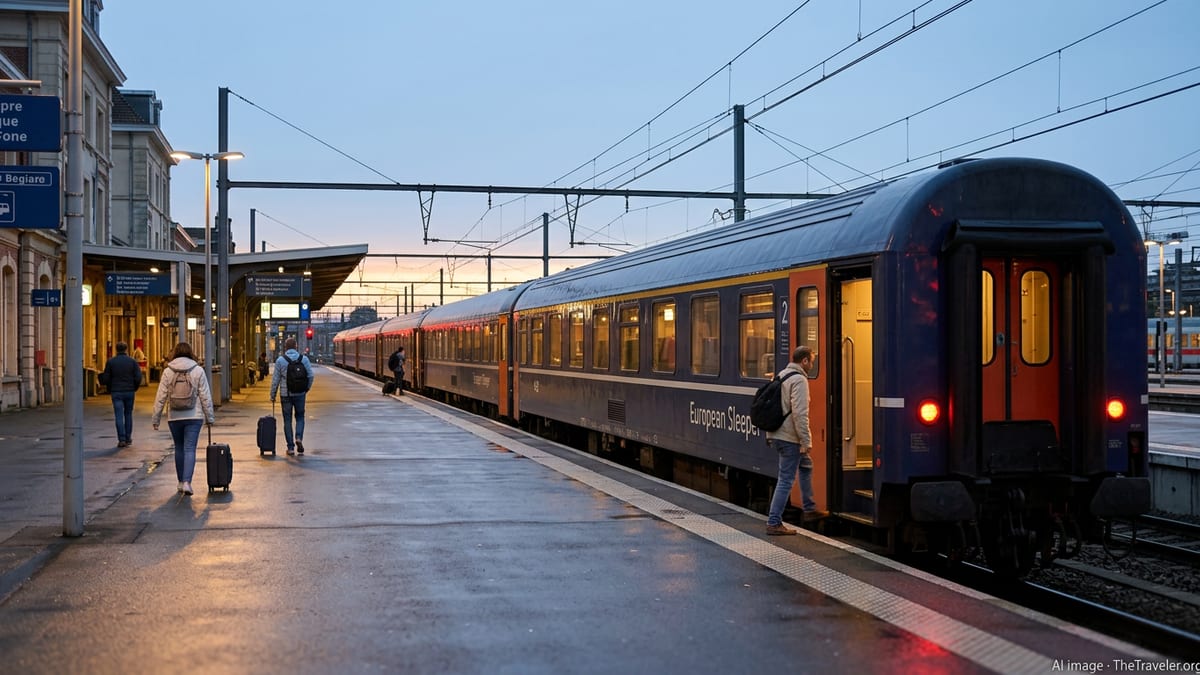
Cross-border rail travel between Belgium and Italy is set for a significant upgrade in 2026, as European Sleeper prepares to launch a new Brussels–Milan night train that will connect Belgium directly with Switzerland and northern Italy.
Get the latest news straight to your inbox!
Launch Timeline and Core Route Details
According to published timetable information, European Sleeper plans to start its new Brussels–Milan overnight service on 9 September 2026, operating three times per week. The service will initially run between Brussels and Milan, with onward connections and route extensions scheduled in subsequent timetable changes.
Publicly available route maps and operator information show that the night train will depart from Brussels and travel via Liège and Aachen towards Germany, before turning south through Switzerland and into northern Italy. The southbound service is scheduled to call at major intermediate hubs including Cologne and Zürich, as well as key stops such as Bellinzona, Lugano and Como San Giovanni, before terminating at Milano Porta Garibaldi.
The northbound return will mirror this corridor, bringing Italian and Swiss passengers directly to Belgium without the need for overnight changes. Information from European rail booking platforms indicates that the service is designed as a dedicated international route, with domestic journeys within countries such as Belgium, France, Switzerland or Italy not offered through European Sleeper’s booking channels.
European Sleeper’s own timetable overview points to a “standard annual 2026 timetable” for Brussels–Milan, with later refinements expected for 2027. From the December 2026 timetable change, company information highlights that additional intermediate stops, including Antwerp, Breda and Eindhoven, are due to be added on selected departures, improving access from the Netherlands and northern Belgium.
Frequency, Onboard Offer and Pricing Signals
Rail information portals tracking the rollout of the new line state that the Brussels–Milan night train is planned as a thrice-weekly operation in each direction. This matches the pattern of European Sleeper’s existing night services between Brussels, Berlin and Prague, and the newer Paris–Berlin overnight route, suggesting a consistent model built around three departures per week on key corridors.
European Sleeper’s publicly accessible booking pages advertise headline one-way fares on the Brussels–Milan route from around €49.99, typically associated with reclining seats or shared couchette accommodation. Higher comfort options, including classic and comfort couchettes and sleeping compartments, are also indicated, sometimes with the possibility to reserve an entire compartment for private use on international sectors.
Operator guidance notes that bike transport on the Brussels–Milan train is not expected to be bookable during the 2026 timetable year. Information for rail pass holders, including Interrail users, indicates that the night train can be used with a pass, subject to payment of the appropriate reservation supplement, in line with European Sleeper’s existing policies on other routes.
The company continues to work with refurbished rolling stock, and independent travel reports from its current services point to a mix of modernised yet older carriages and basic but functional onboard facilities. While specific interior details for the Milan train have not yet been widely published, expectations are for a similar configuration, with a choice of seating and couchette arrangements, overnight bedding, and limited onboard catering or snack options.
Improved Connectivity Between Belgium, Switzerland and Northern Italy
Public information released by European Sleeper describes the Brussels–Milan connection as a key north–south rail corridor linking the Benelux region with Switzerland and northern Italy. With stops at major Swiss nodes such as Zürich, Bellinzona and Lugano, the route offers overnight access not only to Milan but also to destinations around Lake Como and the wider Ticino region.
Travel guidance pages from national rail operators underline that, from 9 September 2026, passengers in Belgium will have a direct night train to Milan, complementing existing daytime itineraries via high-speed and EuroCity services. For travellers in Switzerland, the new train adds another overnight option to reach Brussels and, via daytime connections, onward cities such as Antwerp and Amsterdam.
The planned intermediate calls are expected to provide additional opportunities for cross-border tourism and business travel. For example, Como San Giovanni gives access to lakeside resorts in northern Italy, while Liège-Guillemins and Cologne serve as important hubs for connections deeper into Belgium and Germany. Industry observers note that the routing via Zürich also opens up practical interchange options with other long-distance services traversing the Alps.
Travel advisory sites highlight that the night train could become particularly attractive for travellers seeking to avoid air travel between Belgium and Italy, while still arriving in central Milan after a full night’s rest. The ability to board in Brussels in the evening and wake up close to Milan’s business districts and tourist landmarks is presented as a key advantage over early morning flights and airport transfers.
Part of a Broader Night-Train Expansion Strategy
The Brussels–Milan launch fits into a wider expansion phase for European Sleeper, which began operating its first route between Brussels, Amsterdam, Berlin and Prague in May 2023. Company materials and independent coverage describe a strategy focused on gradually adding cross-border overnight links that bridge key European metropolitan areas.
Before the Milan announcement, the operator confirmed a second night train between Paris and Berlin, taking over a route previously served by national rail incumbents. Reports on European Union rail initiatives have also highlighted European Sleeper’s role in pilot projects designed to test and support new international night services, including future links towards Switzerland, Italy and Spain.
Publicly available planning documents and news summaries indicate that the Brussels–Milan train will be followed by further network growth later in the decade. Proposals currently referenced in rail community discussions include a Brussels–Barcelona sleeper and additional northbound expansions from Belgium and the Netherlands towards Scandinavia, although these later services remain at the announcement and planning stage.
Rail commentators point out that the Milan route helps to re-establish a direct overnight connection that was largely missing after earlier international trains between Belgium and northern Italy were withdrawn. The new service is seen as part of a broader European night-train revival that seeks to rebuild long-distance rail options lost during previous decades of network retrenchment.
Implications for Sustainable and Convenient Long-Distance Travel
According to environmental and transport analysis frequently cited in public debate, long-distance rail journeys typically generate lower per-passenger emissions than equivalent short-haul flights, especially on electrified corridors such as those between Belgium, Germany, Switzerland and Italy. By linking Brussels and Milan with a direct overnight service, European Sleeper’s new route is expected to appeal to travellers prioritising lower-carbon options.
Travel planning resources already highlight that passengers from cities such as London, Rotterdam or Amsterdam can connect into the Brussels–Milan train via afternoon high-speed or EuroCity services, effectively stitching together multi-country rail journeys without flying. This kind of “train-to-train” itinerary is promoted as an alternative for leisure travellers heading to northern Italy’s lakes, cultural cities and Alpine regions.
For business travellers, the night train offers the potential to combine daytime working hours with overnight travel, arriving in Milan or Brussels early in the morning without sacrificing a full day to airport formalities or daytime rail journeys. Advocates of night trains argue that this time-efficient model can make rail more competitive on mid-distance international journeys.
As demand for more sustainable travel choices continues to grow across Europe, the new Brussels–Milan night train adds another option to the continent’s evolving network of overnight links. While the service will initially operate only three times a week, its launch in September 2026 signals renewed investment in cross-border sleeper trains connecting Belgium and Italy and may pave the way for more frequent services in the years ahead.
European Sleeper – Night train Brussels–Milan