


More news on this day
Passengers traveling through Vancouver International Airport on June 9 are facing a fresh wave of disruption, with publicly available data showing at least 52 flight delays and 13 cancellations affecting major North American carriers and a mix of domestic and international routes.
Get the latest news straight to your inbox!
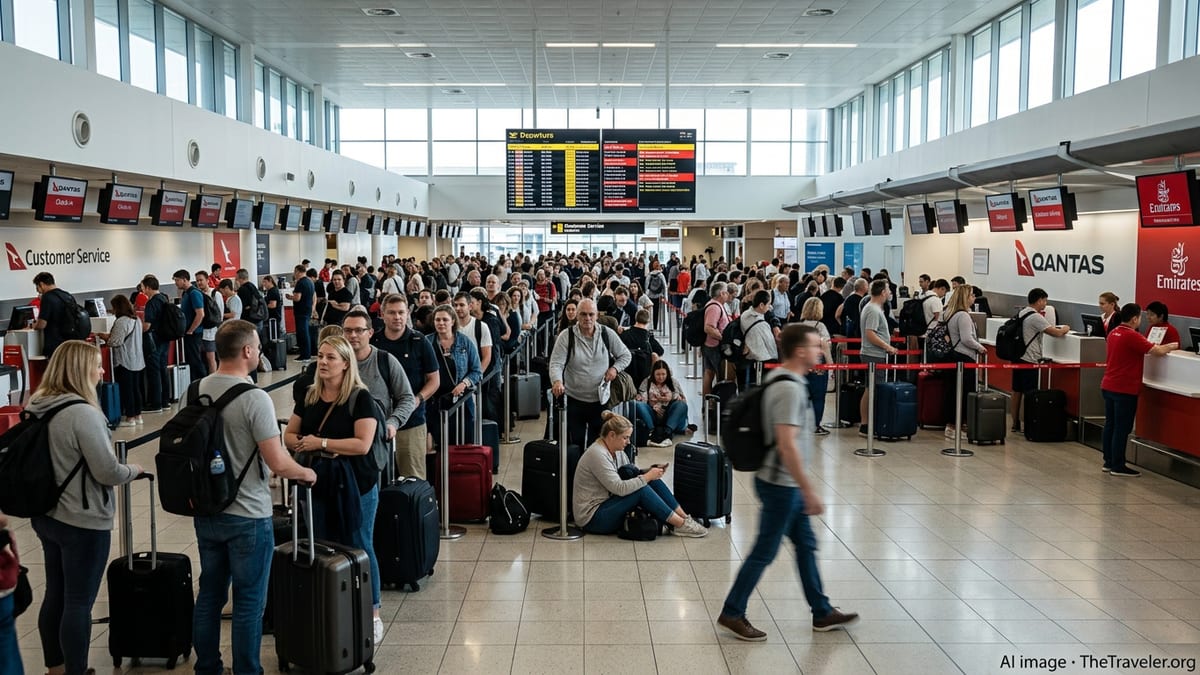
Dozens of Flights Affected Across Major Carriers
The latest operational picture at Vancouver International Airport indicates that a broad cross section of airlines is dealing with schedule disruptions. Air Canada, WestJet, United Airlines and Alaska Airlines are among the hardest hit, alongside a handful of other domestic and international carriers operating from the hub. Both short regional hops within British Columbia and longer services to major Canadian and United States cities are seeing knock-on impacts.
Departures and arrivals boards for June 9 show delays clustering around peak travel periods, with a growing number of services pushed back by more than 30 minutes. Canceled flights are concentrated on some high-frequency domestic links, including services to Toronto and Calgary, as well as select transborder routes such as Vancouver to Seattle. The pattern points to strain across the airport’s wider network rather than a problem isolated to a single airline or route.
While a portion of flights are still operating close to their scheduled times, the cumulative effect of dozens of disrupted services is significant. Travelers making connections through Vancouver risk missed onward flights, and aircraft arriving late into the airport add pressure on later departures as airlines work to reset rotations and crew schedules.
The disruptions come at a time when Vancouver International Airport is managing a complex mix of domestic, transborder and long haul traffic, with overall volumes having steadily risen toward or above pre pandemic benchmarks. Even a moderate cluster of delays and cancellations can therefore ripple quickly through the system, especially on high demand corridors such as Vancouver to Toronto and Vancouver to Calgary.
Domestic Routes to Toronto and Calgary Under Strain
Domestic trunk routes linking Vancouver with Toronto and Calgary are among the most visible flashpoints. These corridors are central to national connectivity, serving both business travelers and leisure passengers and acting as feeders into wider Canadian and international networks. When multiple services on these routes are delayed or canceled in a single day, the consequences are felt not just in the departure and arrival cities but across a web of onward connections.
Available flight status data for June 9 shows several departures to Toronto and Calgary subject to lengthy holds, with some services withdrawn entirely from the schedule. Delays on these heavily used routes often lead airlines to rebook passengers onto later flights or reroute them via alternate hubs, which can extend travel times by hours. In turn, aircraft and crews arriving late into Toronto Pearson and Calgary add to congestion there, magnifying the disruption beyond Vancouver.
For travelers already at Vancouver International Airport, this means longer waits at gates, repeated boarding time revisions and, in some cases, overnight stays if later services are already full. Those yet to depart face uncertainty over whether to proceed to the airport as planned or seek changes before leaving home. The pattern reinforces how sensitive Canada’s east west air corridors are to localized disruptions at major hubs.
Transborder and International Links Also Disrupted
The impact is not limited to domestic services. Publicly available information indicates that several transborder flights to and from United States destinations, including Seattle, are among those delayed or canceled. United Airlines and Alaska Airlines both appear within the group of carriers affected, reflecting how cross border operations are exposed when a key hub experiences a cluster of schedule changes.
Seattle, a short but strategically important hop from Vancouver, supports a high proportion of connecting passengers bound for wider U.S. networks. Disruptions on this route can therefore have outsized consequences, as missed connections in Seattle cascade into later flights across the western United States. Similarly, any delays on longer Vancouver U.S. routes, such as services to California or the U.S. East Coast, can interfere with onward international itineraries.
While fewer in number, international services beyond North America are not immune to disruption. Late arriving aircraft from overseas can compress ground times and contribute to departure delays from Vancouver, while outbound long haul flights leaving behind schedule can force airlines to adjust arrival slots and handling arrangements at distant airports. As airlines work to restore regular patterns, ad hoc swaps of aircraft types and gate changes add further complexity for ground operations and passengers.
Operational Pressures Behind the Disruptions
The precise blend of causes behind the June 9 disruptions at Vancouver International Airport is still emerging, but the situation fits into a broader pattern of operational pressure seen at major hubs in 2025 and 2026. Across North America and Europe, airlines and airports have been grappling with tight staffing, air traffic control constraints and infrastructure bottlenecks, all of which reduce the margin for error when schedules are busy.
In the Canadian context, publicly available discussions about air traffic control staffing and sector capacity have highlighted how limited flexibility can contribute to chronic delays during peak periods. When traffic levels rise in summer or during major events, even relatively minor incidents such as ground handling delays, aircraft turnaround issues or localized weather can quickly escalate into wider network problems.
Vancouver International Airport has also been managing long running capital projects and facility constraints that limit its ability to absorb operational shocks. In this environment, multiple airlines operating tight turnarounds on trunk routes and transborder flights are especially vulnerable. A late inbound aircraft or a crew reaching duty time limits on one sector can trigger a domino effect through subsequent flights, which is likely reflected in the 52 delays and 13 cancellations recorded on June 9.
What Travelers Can Expect in the Coming Days
With aircraft and crews out of position, recovery from a day of concentrated disruption often takes more than a single schedule cycle. Travelers passing through Vancouver over the next 24 to 48 hours may still encounter residual delays, connection risks and occasional cancellations as airlines work to rebalance their operations. This is particularly true on high frequency domestic routes and popular cross border services, where demand limits the number of spare seats available for rebooking.
Passengers with flexible itineraries may find it easier to adjust travel plans to less congested times of day or to alternative hubs if options exist on their chosen carrier. Those with fixed departure dates are more likely to face extended airport waits or involuntary changes to routing. Travel industry observers note that these patterns have become increasingly common during peak seasons, and advise that travelers build additional buffer time into itineraries involving tight connections.
For Vancouver International Airport, the disruptions on June 9 underscore the challenges of operating at high capacity with limited operational slack. As traffic continues to build into the summer period, the experience of more than 50 delayed flights and a cluster of cancellations in a single day serves as a reminder of how quickly schedule reliability can deteriorate when multiple stress factors align.