


Vancouver International Airport, better known as YVR, is one of Canada’s busiest and most user-friendly gateways. For a first-time visitor, though, the combination of domestic and international terminals, train connections, taxis, rideshare pick-ups, cruise transfers and shuttles to Whistler can feel like a lot to process right after landing. This guide walks you through YVR step by step, with real-world examples of how to get into Vancouver, connect to your cruise or ski vacation, and make smart choices on time and budget.
Get the latest updates straight to your inbox!
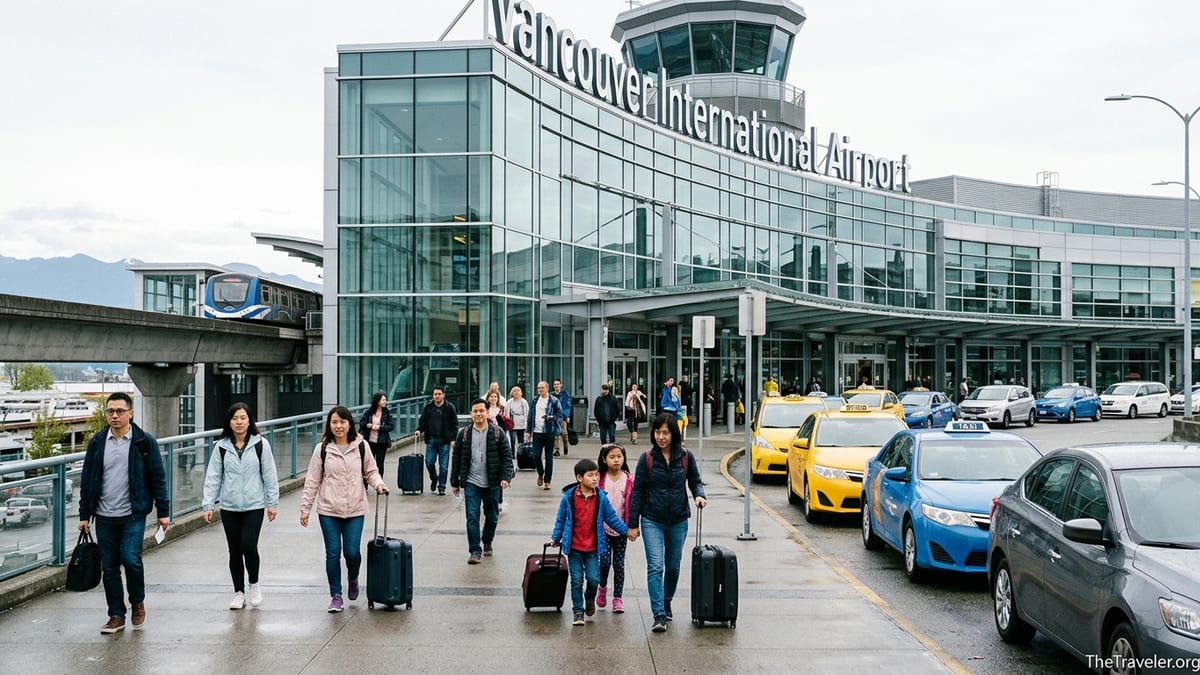
Understanding YVR’s Terminals and Layout
Vancouver International Airport sits on Sea Island in Richmond, roughly 10 kilometers south of downtown Vancouver. YVR has two main terminal complexes: the Main Terminal, which is split into Domestic and International areas, and the smaller South Terminal, which handles some regional and seaplane services. Most visitors, including those flying Air Canada, WestJet, United, Delta, American and many Asian and European carriers, will arrive and depart through the Main Terminal.
In practice, you can think of the Main Terminal as one continuous building with a domestic side and an international / transborder side. Domestic flights within Canada usually arrive on the east side of the building, while international and US-bound flights use the west side, including a secure US preclearance area. Walking between the domestic and international arrivals halls is straightforward and fully indoors, and many passengers routinely transfer between, for example, an Air Canada flight from Toronto and another to Tokyo without leaving the building.
The South Terminal is physically separate, a short distance away on the island. It serves smaller regional airlines and floatplane operators heading to communities along the British Columbia coast and Vancouver Island. If you land on a major carrier in the Main Terminal and then connect to a South Terminal airline, you typically collect your bags, exit customs if applicable, and then take the free YVR courtesy shuttle over to the South Terminal, allowing at least 45 minutes of transfer time between flights.
First-time travelers often underestimate walking distances, especially when jet-lagged. From a typical international arrival gate to the public arrivals hall can easily be a 10 to 20 minute walk when you include immigration, baggage claim and customs. If you are connecting onward, factor this in when booking tight layovers, and remember that many airlines at YVR recommend a minimum of 1.5 to 2 hours for international-to-domestic connections.
Arrivals: From Plane Door to Curb
On arrival at YVR, most international passengers follow a clearly signed route to primary inspection kiosks and immigration. Electronic kiosks and e-gates help speed things up, but at peak times, for example early afternoon transpacific arrivals from Tokyo, Seoul and Hong Kong, lines can still be lengthy. Travelers with connecting flights should watch the signage closely; if your luggage is tagged through, you may be directed to a dedicated connections corridor rather than the public exit.
After collecting bags, you pass through customs and emerge into the public arrivals halls. Domestic arrivals come out on one level, while international arrivals are on another, but both open into similar concourses with bank machines, currency exchange desks, car rental counters and information booths. For instance, if you land from Toronto on Air Canada, you might step out directly beside a coffee shop and the escalators leading down to the Canada Line train station, while a passenger from London Heathrow will exit near travel desks and the main taxi queue.
YVR is known for its Indigenous art and natural light. Large totem-like sculptures and glass walls make the arrivals area feel less claustrophobic than many airports. That said, it can still be disorienting after a long-haul flight. A practical approach is to pause at a bench or café, open your map app while on free airport Wi-Fi, and pinpoint where you are in relation to Canada Line, taxis or car rental. Airport staff in red or blue uniforms are generally visible and will point you toward the correct exit for trains, rideshare or hotel shuttles.
If someone is picking you up, YVR has signed passenger pickup lanes outside each terminal. Drivers typically wait in a nearby holding lot until you text that you are ready. At busy times, such as Friday evenings, police and traffic control staff move cars along quickly, so first-timers should only head to the curb once they have all bags in hand.
Departures: Check-in, Security and Timing
For departures, YVR is generally efficient, but security lines can spike in the early morning and late afternoon. Domestic flights within Canada often depart early, so if you are catching a 7:00 a.m. WestJet flight to Calgary, plan to arrive at the terminal no later than 5:30 a.m. International flights to Europe and Asia cluster in the late morning and late evening, when security and check-in counters are at their busiest. Many airlines at YVR open check-in desks three hours before international departures and two hours before domestic flights.
Check whether you are leaving from the domestic or international side before you call a taxi or step on the train. A traveler staying at a downtown hotel and flying to Montreal on Air Canada, for example, will be dropped at the domestic departures level, while a passenger flying to San Francisco on United will use the US transborder area on the international side. The two entrances are connected, and it is possible to walk between them inside the terminal, but it is easier to be dropped at the right one to start with.
Security screening at YVR uses standard Canadian procedures. Electronics are usually removed from bags, and liquids must follow the common 100-millilitre rule. At peak times, staff may direct passengers to alternative screening lines farther down the hall, which can save 10 to 15 minutes if you are willing to walk. Once airside, the domestic and international concourses offer a mix of familiar chains and local options, including coffee shops, casual restaurants and Canadian brands selling outdoor gear.
Because YVR is relatively compact compared with some major hubs, walking times from security to the gate are often under 10 to 15 minutes. An exception is some US-bound gates in the far reaches of the transborder pier, where you may face a longer stroll. If you need assistance, wheelchair and buggy services should be requested from your airline ahead of time, especially during busy cruise and ski seasons.
Taking the Canada Line: Fast Rail into Downtown
One of YVR’s biggest advantages is the Canada Line, a rapid transit train running directly from the airport into downtown Vancouver in under 30 minutes. The station, called YVR Airport, sits between the Domestic and International terminals; you reach it via a signed, covered walkway from the departures level. Trains run roughly every 7 to 10 minutes during the day and every 12 to 20 minutes late at night, with the first departures early in the morning and the last around one in the morning depending on the day of the week.
The Canada Line is part of the regional transit network operated by TransLink. From the airport, most first-time visitors ride north toward downtown, passing Bridgeport, Marine Drive and several neighborhood stations before arriving at Vancouver City Centre or Waterfront. In typical conditions, YVR to Waterfront, which is near Canada Place cruise terminal and many central hotels, takes about 25 minutes. Travelers heading to Richmond, including some airport hotels, go one stop in the other direction to Templeton or Bridgeport.
Fares are a combination of regular transit prices plus an additional airport surcharge when you leave YVR. As of mid 2026, that airport add-on is in the range of a few extra dollars; it applies if you pay with stored value on a Compass card, with contactless credit or debit, or if you buy a day pass at the station. Visitors often find that a single adult fare from YVR to downtown typically comes out to roughly the cost of an inexpensive lunch in the city, significantly cheaper than a solo taxi ride. Children, seniors and holders of certain passes may pay less.
For a concrete example, a solo traveler landing midday and staying at a hotel near Vancouver City Centre station can usually be checked in downtown within 45 to 60 minutes of landing if lines at immigration are short. By contrast, the same trip by taxi in moderate traffic might take 30 to 40 minutes and cost the equivalent of several transit rides. The Canada Line does not run all night, so passengers with flights arriving after midnight or departing very early in the morning should check schedules in advance and consider taxis or rideshare if trains are not operating.
Taxis, Rideshare and Private Transfers from YVR
For many first-time visitors, especially families or those with heavy luggage, taking a taxi or rideshare from YVR is the most straightforward option. Licensed airport taxis wait in clearly marked queues just outside the arrivals areas of the Main Terminal. There is usually a dispatcher managing the line, and vehicles are assigned as you reach the front. YVR taxis operate on a zone-based flat fare system for trips leaving the airport, so a ride to a downtown hotel in most central neighborhoods typically falls within a published price band. In practice, many recent travelers have reported paying in the high 30s to low 40s in Canadian dollars for a taxi from YVR to downtown, plus optional tip, under normal traffic conditions.
Rideshare services, including major brands such as Uber and Lyft, are authorized to pick up and drop off at YVR. Unlike the taxis, rideshare prices fluctuate based on demand, time of day and traffic, so a standard ride to downtown may range from around the mid 20s to 50 Canadian dollars or more during busy periods. Visitors arriving on a Friday evening ahead of a cruise or a major soccer match have noted higher prices, while mid-morning weekday arrivals often see more moderate fares. Pick-up locations for rideshare are typically on the same general level as taxis, with signs indicating the correct curb.
To decide between taxi, rideshare and train, consider your group size and budget. A family of four staying near Canada Place, for example, might find that a flat-rate taxi or a single rideshare vehicle works out to about the same price per person as individual transit fares, with the advantage of a door-to-door trip. A solo backpacker headed to a hostel near Waterfront station, on the other hand, will almost always save by taking the Canada Line instead of hiring a car.
For travelers who prefer guaranteed service or added comfort, several companies offer prebooked private transfers from YVR. These can range from sedan services meeting you at arrivals with a sign to larger vans for cruise groups headed directly to the pier. Prices are typically higher than regular taxis, especially during high season, but can be worthwhile for those with mobility needs or tight schedules.
Cruise Transfers and Routes to Canada Place
Vancouver is a major departure point for Alaska cruises, and many first-time visitors fly into YVR specifically to sail from Canada Place in the downtown harbor. Getting from the airport to the cruise terminal is straightforward. The simplest budget option is to take the Canada Line from YVR Airport station to Waterfront station and then walk or take a short taxi ride to the Canada Place pier. The walk is mostly level and takes about 10 minutes with luggage if you are comfortable rolling bags through city streets.
For travelers with more luggage or mobility concerns, taxis from YVR to Canada Place operate under the same zone fare system as other downtown destinations. Recent anecdotal reports describe fares in the low 40s Canadian dollars under standard conditions, which can be reasonable when shared by two or three passengers. Rideshare quotes for the same route will vary, but cruise travelers often see prices fluctuating within a similar broad range depending on the time of day and local events.
Several cruise lines and independent operators also run seasonal shuttle buses between YVR and Canada Place. These services typically bundle luggage handling and drop you right beside the terminal check-in area, which can be appealing for older passengers or large groups. However, the per-person cost can exceed that of a shared taxi unless you are traveling alone. For instance, a shuttle charging a per-person fee might be attractive for a solo passenger with two large suitcases, but a group of four might find that two regular taxis or a van-based rideshare are more cost-effective and flexible.
If you are disembarking from a cruise and flying out later the same day, a common strategy is to store luggage at facilities near Canada Place or at the airport and spend a few hours exploring downtown. With the Canada Line operating frequently between Waterfront and YVR, many cruisers comfortably plan a late afternoon or evening flight after a morning dock, though it is prudent to leave a buffer in case of delays at customs or baggage reclaim.
Getting from YVR to Whistler
Whistler, about two hours north of Vancouver in good conditions, is another major reason travelers pass through YVR. The mountain resort attracts visitors year-round, from winter skiers to summer hikers and mountain bikers. The route from the airport to Whistler follows the scenic Sea to Sky Highway, and several shuttle companies operate direct services from YVR to the village. One of the main operators is YVR Skylynx, which runs buses between the airport, downtown Vancouver and Whistler on scheduled timetables throughout much of the year.
Shuttle buses typically depart from a designated curb area outside the terminal. Passengers often prebook seats online, selecting a time at least 60 to 90 minutes after their scheduled flight arrival to allow for immigration and baggage. Under light traffic and good weather, the trip from YVR to Whistler can be around two and a half hours, but it can stretch to three hours or more during heavy snowfall or peak holiday periods. In winter, when storms affect the highway, shuttle departures may be adjusted, and operators usually communicate by email or text, so it is wise to ensure your booking includes up-to-date contact information.
Pricing for YVR–Whistler shuttles varies by season and demand. As a rough guide, many visitors expect to pay an amount per adult that is similar to a midrange restaurant meal, with discounts for children or round-trip bookings. For a family of four carrying ski gear, the convenience of loading bags once onto a coach at the airport and stepping off in Whistler Village can outweigh the savings of piecing together transit via downtown or renting a car, especially in winter when driving conditions can be challenging for those unfamiliar with snow and mountain roads.
For those who prefer to drive, major car rental companies have desks at YVR, and the Sea to Sky Highway is well signed. However, rental rates increase in high season, and winter driving may require snow tires or chains depending on conditions and regulations at the time of travel. First-time visitors who are not confident on mountain highways often find that shuttles or private transfers provide a more relaxed start to their Whistler trip.
Car Rental and Driving from YVR
Several international and Canadian car rental brands operate directly from YVR’s Main Terminal, with vehicles parked in adjacent garages reachable by short, signed walkways from arrivals. Renting at the airport can be convenient if you plan to explore beyond central Vancouver, visit the Okanagan wine region, or drive up to Whistler while maintaining flexible departure times. Counter lines can grow long during peak holiday periods, particularly on Friday evenings and weekend mornings, so including an extra 30 minutes for pickup in your schedule is wise.
Rates fluctuate significantly depending on season, vehicle class and demand. In mid-winter or high summer, a basic compact car may cost noticeably more per day than in shoulder seasons such as October or April. Fuel prices in British Columbia also vary but are often higher than in many parts of the United States, so visitors planning long drives should factor gasoline into their budget. Some rental companies at YVR offer all-inclusive packages that bundle unlimited kilometers, collision damage waivers and winter tire surcharges, which can make costs more predictable.
Driving from YVR into downtown Vancouver is straightforward. You follow signs to Grant McConachie Way and then to Highway 99 and the city center. In typical mid-day traffic, the drive can be around 30 minutes; during weekday rush hours it may take longer, especially near major bridges. Parking in central Vancouver is comparatively expensive, and many downtown hotels charge daily parking fees that can approach the cost of a modest hotel dinner, so visitors who plan to stay mostly in the core often skip car rentals entirely and rely on transit, walking, taxis and rideshare.
For day trips beyond Vancouver, however, having a car can open up destinations such as the North Shore mountains, Fraser Valley farms and wineries, or beaches along the Tsawwassen and White Rock coastlines. When exiting YVR’s rental car garages, build in time to learn the vehicle’s controls, set up navigation and adjust to driving on local roads before tackling busy highways or mountain routes.
First-Time Tips for Navigating YVR and Vancouver
First-time visitors often underestimate how compact and walkable central Vancouver is once they arrive. Many major hotels cluster around the downtown peninsula near Robson Street, Coal Harbour and Yaletown. A traveler staying near Robson and Burrard, for example, can ride the Canada Line from YVR to Vancouver City Centre station, walk 10 minutes to the hotel, and then explore much of the city on foot. For trips farther afield, such as to the Capilano Suspension Bridge or Grouse Mountain, it is easy to combine transit with local shuttle buses.
Weather can influence how pleasant your arrival feels. Vancouver has a mild but wet climate, especially from October through April. Landing in a winter rainstorm and stepping out into a dark, damp evening can be a shock, particularly for passengers arriving from sunnier climates. Packing a compact umbrella and a light waterproof jacket in your carry-on makes the first transfer from airport to hotel more comfortable, whether you are waiting at a taxi stand or walking from a train station.
Payment is another consideration. Credit cards are widely accepted in Vancouver, including at YVR, in taxis, at transit ticket machines and in most restaurants and shops. Contactless tap payments work on the Canada Line fare gates, making it unnecessary for many visitors to purchase a dedicated transit card for a short stay. Nevertheless, having a small amount of Canadian cash can be handy for tipping, coin-operated luggage carts or small purchases at more casual venues.
Finally, allow time in your schedule to enjoy YVR itself. The airport incorporates Indigenous art, aquarium tanks and large picture windows with views of the surrounding mountains and runways. If you have a layover of a few hours, grabbing a coffee and watching seaplanes and jets against the backdrop of the Coast Mountains can be an unexpectedly calming way to reset before heading into the city.
FAQ
Q1. How long does it usually take to get from YVR to downtown Vancouver on the Canada Line?
In normal conditions, the Canada Line takes about 25 minutes from YVR Airport station to Waterfront station in downtown Vancouver, with trains running every few minutes during the day.
Q2. Is a taxi from YVR to downtown worth it compared with the train?
For solo travelers, the Canada Line is usually better value. For couples, families or those with heavy luggage, a taxi can be worthwhile, with many passengers paying in roughly the high 30s to low 40s Canadian dollars to central downtown hotels.
Q3. Can I use Uber or Lyft at Vancouver International Airport?
Yes. Major rideshare services such as Uber and Lyft are authorized to operate at YVR. Prices fluctuate with demand, but typical fares to downtown can range from the mid 20s to around 50 Canadian dollars depending on traffic and time of day.
Q4. How early should I arrive at YVR before my flight?
For domestic flights within Canada, arriving 1.5 to 2 hours before departure is usually sufficient. For international and US-bound flights, aim for 3 hours, particularly in the busy cruise and ski seasons.
Q5. What is the easiest way to get from YVR to Canada Place for a cruise?
The most straightforward budget option is the Canada Line from YVR Airport station to Waterfront station, followed by a short walk to Canada Place. Taxis and rideshare provide door-to-door service and are more convenient with heavy luggage.
Q6. Are there direct shuttles from YVR to Whistler?
Yes. Companies such as YVR Skylynx operate direct shuttle buses between the airport and Whistler on scheduled timetables. The trip often takes between two and a half and three hours depending on traffic and weather.
Q7. Do I need to rent a car at YVR to see Vancouver?
No. Central Vancouver is compact and well served by transit, taxis and rideshare. Many visitors skip car rentals if they plan to stay mainly in the city and on organized excursions.
Q8. How do I transfer between the Main Terminal and the South Terminal at YVR?
Passengers use a free airport courtesy shuttle that runs between the Main Terminal and the South Terminal. You should allow at least 45 minutes between flights to collect luggage and make this transfer.
Q9. Is it easy to pay for transit and taxis with a credit card at YVR?
Yes. Contactless credit and debit cards are widely accepted on the Canada Line and other transit services, and most taxis and rideshare services also accept card payments, including tap.
Q10. What should first-time visitors know about YVR late-night or early-morning flights?
Canada Line trains do not run all night, so for very late arrivals or very early departures you may need to rely on taxis or rideshare. Scheduling a buffer in your plans is wise, especially if you are connecting to or from long-haul international flights.