

More news on this day
Varanasi is stepping into a new role on the global travel map as Air India’s Easy Connect initiative, aligned with India’s regional aviation push, begins routing international-bound passengers through the ancient Ganges city later this month.
Get the latest news straight to your inbox!
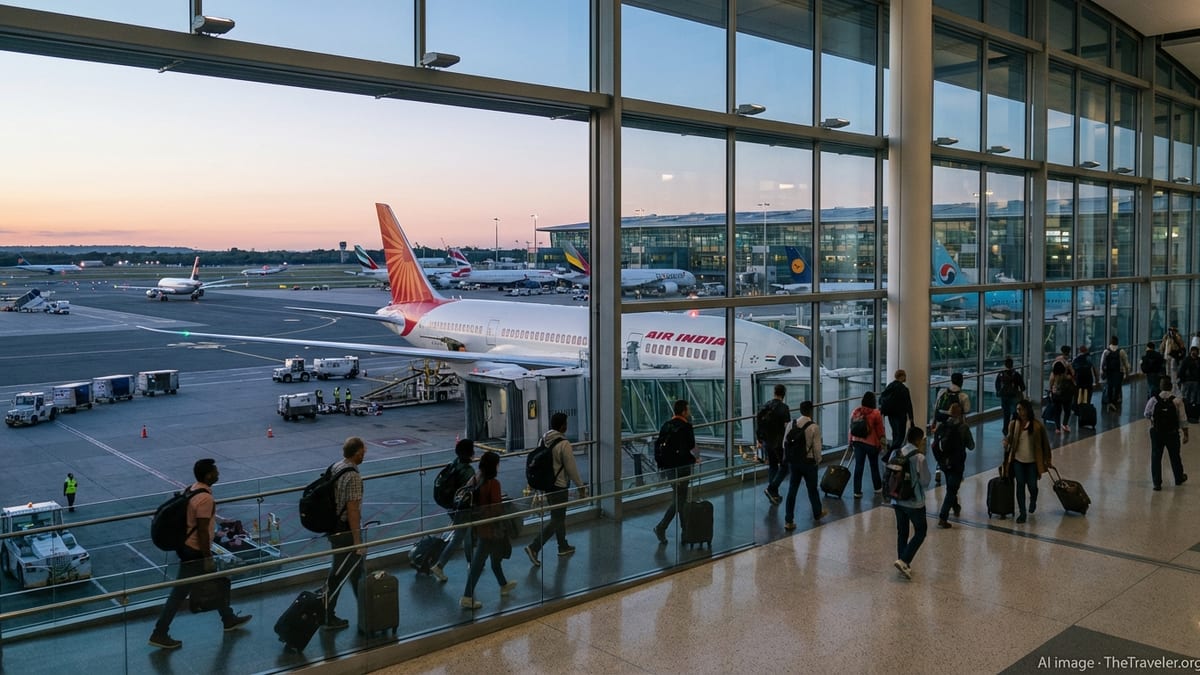
Easy Connect Turns Sacred City into Strategic Hub
Air India is preparing to launch its Easy Connect service from Varanasi on June 25, creating a new spoke in India’s fast-evolving aviation network. Reports indicate that the product has been designed to give travelers departing from Varanasi a seamless end-to-end journey, with check-in, baggage tagging and immigration completed at Lal Bahadur Shastri International Airport before a short domestic hop to a major international gateway.
According to published coverage of the rollout, the flagship Easy Connect flight from Varanasi to Delhi will operate daily and feed into Air India’s long-haul services. The model is intended to offer travelers from Varanasi and neighboring regions one continuous itinerary rather than fragmented domestic and international bookings, a shift that could significantly improve the city’s appeal to long-haul travelers who previously preferred hubs such as Delhi or Mumbai.
The carrier’s strategy draws on a classic hub-and-spoke system, but with a twist oriented toward emerging Indian cities. By embedding immigration and baggage processes at the origin airport, Easy Connect aims to cut connection stress and time spent in crowded hubs, a pain point long cited by international visitors to India. The move immediately elevates Varanasi from a point-to-point religious tourism stop into a structured regional node for global travel.
Global aviation observers note that this kind of service, more commonly associated with large North American and European hubs, is increasingly being adapted for mid-sized airports in fast-growing markets. Varanasi’s selection as one of the early Easy Connect bases underscores the strategic weight the city now carries in both domestic and inbound tourism plans.
UDAN and Easy Connect: A New Layer to India’s Regional Aviation Story
The Easy Connect launch arrives as India’s broader regional air connectivity effort continues to reshape travel patterns between big metros and smaller cities. Government data and recent analysis show that the UDAN scheme, introduced in 2016 to make flying more affordable and expand the airport network, has led to hundreds of new routes serving dozens of previously unserved or underserved airports across the country.
While UDAN has grappled with issues such as route viability and fluctuating passenger demand, policy updates in recent years have extended funding and operational support to keep regional services in the air. Cabinet decisions have cleared additional budget and a modified framework aimed at maintaining smaller airports and encouraging airlines to sustain connectivity beyond the initial subsidy window.
Varanasi sits at the intersection of these dynamics. Regional plans have increasingly presented the city as a gateway for eastern Uttar Pradesh and neighboring Bihar, with several new airports and planned UDAN routes in the region referencing Varanasi as a key connecting point. Airlines participating in the regional scheme and other route expansions have announced links from emerging airports in Bihar and central India to Varanasi, embedding the city more deeply into subregional travel patterns.
Easy Connect effectively layers an international dimension onto this existing regional architecture. As more tier 2 and tier 3 cities gain short-hop connectivity into Varanasi under UDAN-style models, passengers from those places stand to benefit from through-checked journeys that continue onward via Easy Connect to global destinations, without the need for self-transfer in crowded metros.
Airport Upgrades Position Varanasi for Long-Term Growth
The strategic timing of Easy Connect aligns closely with major physical upgrades at Lal Bahadur Shastri International Airport. Public documents and infrastructure reports detail a significant redevelopment program for Varanasi, including a new terminal and expanded airside capacity, with investment figures running into several thousand crore rupees.
Plans presented in aviation sector overviews describe Varanasi’s redevelopment as more than cosmetic. The airport is being designed to handle substantially higher passenger volumes, with expanded check-in halls, security lanes and immigration counters that can support both regional and international flows. Design details highlighted in industry commentary also emphasise cultural motifs and a sense of place aimed at aligning the terminal’s look and feel with Varanasi’s famed spiritual heritage.
Separate reporting from the Airports Authority of India and the Ministry of Civil Aviation points to Varanasi as a flagship in a broader package of airport projects across the country. These include new greenfield airports, upgraded terminals and runway extensions at regional facilities that, in many cases, are intended to feed into larger hubs. Within this context, Easy Connect’s choice of Varanasi validates the scale of the investment and offers a clear commercial pathway to fill the expanded infrastructure.
Industry analysts note that aligning service innovations with ongoing capital works is essential to avoid the “ghost airport” phenomenon, where new terminals open without sufficient scheduled flights. Early integration of Varanasi into Air India’s global network via Easy Connect may help anchor flight schedules and provide a stabilizing demand base as new regional routes and facilities come online.
Implications for Pilgrimage, Heritage and Business Travel
For travelers, the most immediate impact of Easy Connect is likely to be felt in the pilgrimage and heritage segments. Varanasi is one of India’s most visited religious destinations, drawing domestic and international visitors year-round for rituals on the Ganges and access to nearby Buddhist sites such as Sarnath. Easier single-ticket connections from Europe, North America and East Asia, routed via Delhi or other hubs but anchored at the Varanasi end, can reduce travel friction for tour operators and independent travelers alike.
The initiative also carries implications for meetings, incentives, conferences and exhibitions, with hospitality developers and local tourism stakeholders watching closely. According to recent travel trade coverage, Varanasi has seen a steady pipeline of new hotels and upgraded riverfront accommodations in response to rising visitor numbers. Simplified aviation access could encourage more short-stay corporate and spiritual retreat programmes that previously defaulted to Delhi, Jaipur or Rishikesh.
For outbound travel from the region, Easy Connect may gradually change behavior among residents of eastern Uttar Pradesh and neighboring districts in Bihar. Instead of travelling overland to larger metros, passengers may find it more convenient to originate long-haul journeys from Varanasi if fare parity and schedule reliability are maintained. This could support higher load factors on both regional and international legs, improving the economics of the new model.
Tourism planners point out that improvements in flight connectivity must be matched by ground infrastructure, from last-mile airport access to riverfront crowd management and sustainable heritage conservation. As Varanasi’s air links grow, the city’s ability to manage seasonal surges and protect its fragile historic core will become as important to the travel experience as seat capacity and timetables.
Testing Ground for India’s Next Phase of Connectivity
Beyond the immediate benefits for Varanasi, Easy Connect is being watched as a test case for how India’s flagship carrier and regional policy can work together to knit smaller cities more tightly into global networks. Aviation commentators suggest that if the service performs well, similar models could be extended to other airports receiving major upgrades under national infrastructure plans.
The experiment comes at a time when India’s aviation map is more crowded and complex than ever before. Regional facilities built under UDAN and earlier programmes have generated mixed results, with some routes thriving and others faltering when subsidies tapered or demand proved weaker than expected. Integrating these airports into long-haul networks through products like Easy Connect could provide a new pathway to long-term sustainability.
For international travelers, the success of this approach would mean a wider range of entry and exit points into India’s interior, potentially cutting surface travel times and opening less-visited regions to tourism. For local communities around Varanasi and its satellite airports, it offers the prospect of more steady visitor flows, business links and employment tied to aviation and hospitality.
As the first Easy Connect passengers depart Varanasi in late June, the city’s performance as a regional hub will be closely watched by airlines, policymakers and destination marketers. The outcome may help determine how India balances rapid airport expansion with the practical challenge of filling seats and delivering smoother journeys across one of the world’s most dynamic aviation markets.