


More news on this day
Rail passengers using one of the United Kingdom’s busiest commuter corridors faced severe disruption after a person was hit by a train on the line between London Waterloo and Clapham Junction, forcing services to be halted, diverted or heavily delayed and causing widespread knock-on disruption across the South Western network.
Get the latest news straight to your inbox!
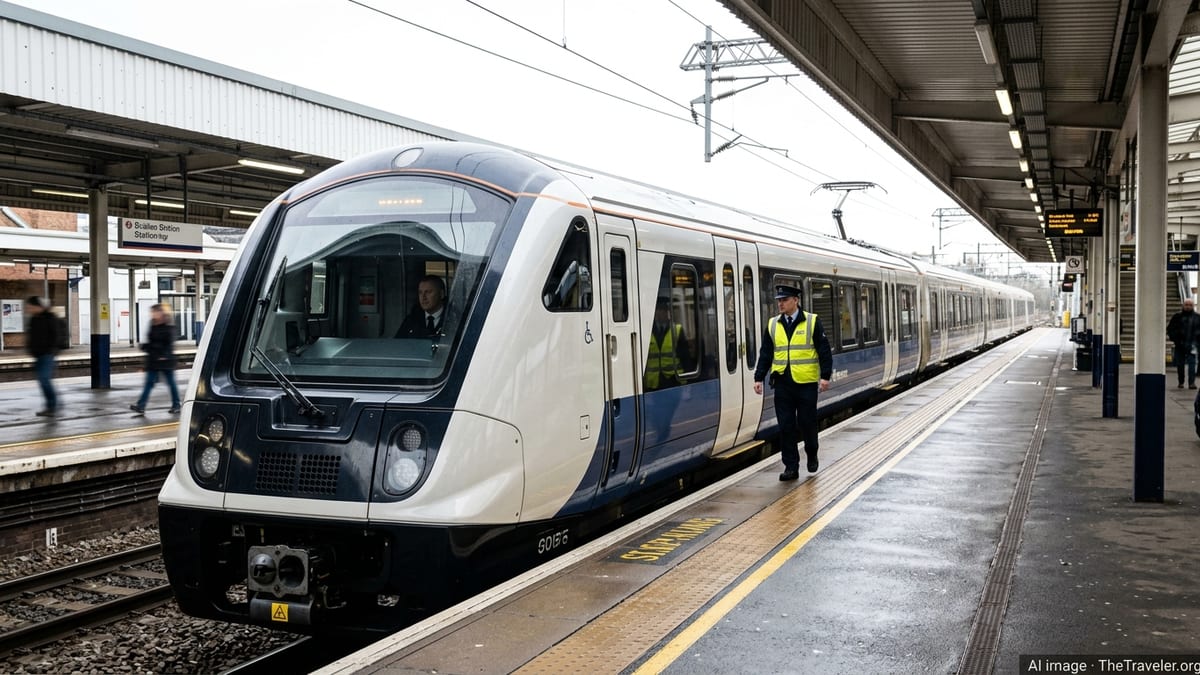
Key Artery Into Central London Brought To A Standstill
The incident occurred on the crucial stretch of railway linking London Waterloo with Clapham Junction, a corridor that carries intensive commuter, regional and long distance services into the capital. Publicly available disruption reports indicate that trains were stopped in the area while emergency services attended the scene and safety checks were carried out on the line.
As a result, services between London Waterloo and Clapham Junction were cancelled, turned short of their destinations or diverted away from the affected tracks. Passengers on board trains already on the route experienced long periods at a standstill, with reports of carriages held outside stations as rail traffic was temporarily frozen.
Because Waterloo is the country’s busiest rail terminal by passenger numbers and Clapham Junction is one of Europe’s busiest interchange hubs, even a single line blockage can quickly cascade into a large scale operational challenge. Trains scheduled to run from the south and southwest of England into central London were among those heavily affected, with disruption spreading well beyond the immediate area of the incident.
Widespread Disruption For Commuters And Long Distance Travelers
Real time journey planners and rail operator updates showed major alterations across the South Western Railway network following the incident. Services from destinations including Portsmouth, Southampton, Bournemouth, Exeter and suburban branches in Surrey and south west London were delayed or cancelled as trains and crews were displaced from their usual diagrams.
Even passengers not directly travelling to or from Clapham Junction or Waterloo felt the impact. Trains were reported as being turned back short of their planned terminals, missing intermediate stops, or running with significantly extended journey times as they followed diversionary routes or queued to enter congested sections of track.
Evening peak services were particularly affected, with many commuters facing uncertainty over when they would reach home. Images and accounts shared on social media described busy platforms, altered departure boards and crowding on trains that did run, as passengers attempted to replan journeys in real time using station announcements and journey planning apps.
Knock On Effects Across A Historically Congested Corridor
The Waterloo to Clapham Junction corridor has long been recognised as one of the most heavily used sections of railway in the United Kingdom, with an intensive pattern of suburban, regional and long distance trains converging on a relatively constrained stretch of track. Clapham Junction itself is widely cited as the busiest station in Britain by the number of trains passing through each hour, reflecting its role as a junction point for routes from both Waterloo and London Victoria.
Because so many services share the same tracks in this area, operational disruption can escalate rapidly when an unexpected incident closes one or more lines. Trains can be left waiting for a path through the bottleneck, while other services are cancelled to avoid further congestion. According to published coverage of previous events, similar incidents have at times taken many hours to unwind, as rail staff work to restore a normal timetable and return trains and crew to their correct positions.
The latest disruption occurred against a backdrop of recent and planned engineering work on routes into Waterloo intended to modernise signalling, renew track and improve reliability. Industry reports have highlighted upgrades around Queenstown Road and Clapham Junction designed to deliver a more flexible and resilient layout, reflecting the strategic importance of this key approach into central London.
Passenger Information, Ticket Acceptance And Delay Compensation
Following the incident, journey planning tools, station departure boards and operator alert services advised passengers not to travel on affected routes unless essential, or to allow significantly extra time for their journeys. Rail users were urged to check the status of individual services before setting out and to be prepared for short notice alterations even once on board.
In line with established practice during major disruption, other train operators and some London public transport services were reported to be accepting tickets from the affected routes, enabling passengers to use alternative lines into central London where capacity allowed. Replacement road transport is often limited in such circumstances due to the sheer number of passengers who normally rely on the railway at peak times.
Rail industry guidance states that passengers whose journeys are significantly delayed or cancelled may be eligible for compensation under delay repayment schemes. Travelers are typically advised to retain their tickets and evidence of their journey and to submit claims through operator websites or customer service channels once disruption has subsided.
Renewed Questions Over Network Resilience And Passenger Support
Although incidents involving a person being hit by a train are comparatively rare when set against the volume of daily rail traffic, they have a profound local impact and present particular challenges for rail operations. Trains must be stopped while emergency responders attend, and subsequent safety inspections can be time consuming, especially on busy multi track sections where access is constrained.
The event between Waterloo and Clapham Junction has again focused attention on the resilience of the rail network on this crucial corridor and on the support available for passengers caught up in sudden disruption. Commentators have pointed to the combination of high train frequencies, limited spare capacity and the need for safety critical responses as factors that make incident recovery complex and often lengthy.
At the same time, the incident has prompted renewed discussion about communication with passengers during major service failures. Rail users frequently highlight the importance of clear, consistent and timely information about the nature of the disruption, realistic estimates of expected delays and practical alternative routes. The latest episode on the Waterloo to Clapham Junction line is likely to add further pressure on rail operators and infrastructure managers to continue improving both the robustness of the network and the way passengers are supported when serious incidents occur.