


More news on this day
Peak summer travel to Mexico is being tested as a mix of severe weather, infrastructure constraints and heavy demand triggers fresh rounds of delays and cancellations on routes linking Cancun, Mexico City and major international gateways.
Get the latest news straight to your inbox!
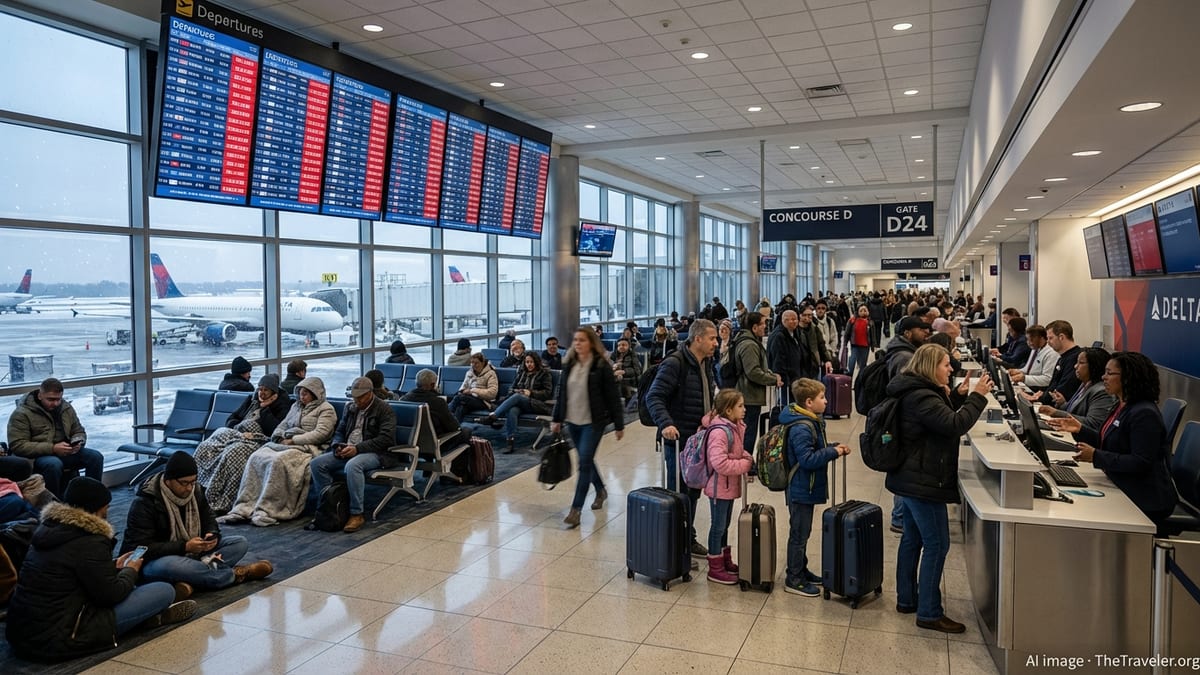
Storm Impacts Hit Cancun at the Height of Summer Demand
Recent tropical weather in the Caribbean and Gulf of Mexico has pressured operations at Cancun International Airport, one of the country’s busiest tourism gateways. Publicly available airline and aviation data show multiple cancellations and extended delays on services into and out of Cancun in mid-July, including flights connecting the resort city with hubs in the United States and northern Mexico.
Flight-tracking information indicates that some services on key leisure routes, such as Monterrey to Cancun, were scrubbed at short notice, leaving passengers to rebook onto later departures or reroute through Mexico City. The pattern has been consistent with the operational strain that typically follows days of heavy thunderstorms in the region, which slow arrivals and departures as crews and aircraft fall out of position.
Published coverage also notes that carriers have at times preemptively thinned Cancun schedules when forecasts pointed to deteriorating conditions along the Yucatán coast or at connecting airports further north. Those moves can ease congestion once storms arrive but add uncertainty for travelers trying to plan tight connections or short stays.
Although full closure of Cancun’s runways has been limited in recent weeks, the combined effect of weather-related ground stops, air traffic flow controls and crews hitting duty-time limits has translated into missed connections on domestic links to Mexico City and other interior cities.
Mexico City Delays Exacerbate Knock-On Disruptions
Mexico City International Airport remains a central pressure point in the country’s aviation network, and any slowdown there can ripple quickly toward coastal destinations such as Cancun. In late June and early July, local media reported periods when heavy rain forced Mexico City operations onto a single runway for stretches of up to an hour, backing up both arrivals and departures.
When Mexico City temporarily reduces capacity, flights from resort airports often see their arrival slots pushed back, which in turn delays aircraft that are scheduled to return passengers to leisure markets later the same day. On busy holiday weekends, this has resulted in long waits on the ground in Cancun as aircraft position out of Mexico City with significant delays already accumulated.
Government and airport communications over recent months have repeatedly highlighted efforts to keep Mexico City’s main hub operating normally despite infrastructure limits and work to rebalance traffic across the capital region. Even so, the combination of slot restrictions, summer thunderstorms and heavy demand has kept on-time performance under pressure, with Mexico City related delays frequently cited in airline advisories to passengers bound for coastal resorts.
Travelers connecting between Cancun and Mexico City are particularly exposed when afternoon storms strike the capital. Late-day flights are more likely to be affected, as even modest schedule disruptions early in the day cascade into longer delays after sunset.
High Season Crowds and Limited Spare Capacity
Available traffic statistics from Mexico’s major airport operators show that passenger volumes through Cancun and other key gateways remain close to or above pre-pandemic levels, even as some domestic routes have seen modest contractions. In this environment, airlines have limited slack in their systems to absorb weather or operational problems without disrupting large numbers of travelers.
Reports from passenger forums and travel industry channels describe crowded terminals and long lines at check-in and security when several delayed flights depart in the same window. In Cancun, the effect is particularly visible on peak weekends, when hundreds of operations are scheduled in a single day and even small schedule adjustments can produce bottlenecks around immigration and baggage claim.
At the same time, Mexico’s aviation regulators have been managing broader capacity and safety questions, including adjustments to airspace procedures around Mexico City and ongoing efforts to align oversight with international standards. While those measures aim to strengthen the system over the long term, they have also contributed to a tightly calibrated operating environment in which carriers are cautious about recovering delays by adding unscheduled sections or last-minute extra flights.
The result for travelers is a network that functions smoothly under ideal conditions but becomes vulnerable when storms, technical faults or external events chip away at the daily margin for error.
High-Profile Cancellations Draw Attention to System Strains
In recent days, a series of high-profile disruptions has cast additional attention on the fragility of the Mexico flight network. According to major international press coverage, one widely reported cancellation involved a Cancun departure to the United States that had been scheduled to carry Mexico’s incoming president to the final of a major global sporting event, underscoring how even prominent passengers are subject to the same operational realities affecting ordinary travelers.
Separately, regional news outlets have chronicled spikes and dips in daily operations at Cancun, with some days registering noticeable drops in total flights after periods of stronger activity. These swings suggest that airlines are still recalibrating capacity in response to demand signals, weather patterns and broader security considerations across parts of the country.
Observers note that while none of these incidents alone point to systemic failure, the accumulation of delays, cancellations and uneven schedules has sharpened public scrutiny of how airlines manage communication, rebooking and passenger care when things go wrong. Social media posts by affected travelers highlight long queues at service desks and inconsistent information about compensation or hotel arrangements after late-night cancellations.
Mexico City’s role as the primary domestic hub means that any disruption there, whether caused by storms, congestion or unrelated security events, can quickly translate into missed or canceled connections for travelers headed to or from Cancun, magnifying the perceived impact of each incident.
Advice for Travelers Navigating Mexico Flight Disruptions
For travelers planning journeys between Cancun, Mexico City and international destinations over the coming weeks, aviation and consumer advocates advise a cautious approach. Publicly available guidance from airlines and travel organizations consistently emphasizes the value of leaving extra time for connections, particularly when routing through Mexico City during afternoon and evening periods prone to thunderstorms.
Passengers are encouraged to monitor their flights closely through airline apps and airport information screens, as same-day schedule changes remain relatively common in peak season. When severe weather is forecast, some carriers publish waivers that allow travelers to adjust plans without additional penalties, although specific rules vary by airline and route.
Travel planners also recommend considering earlier departures in the day, when possible, to reduce exposure to knock-on delays that tend to accumulate by nightfall. For those starting or ending trips in Cancun, selecting nonstop services to and from home markets can reduce dependence on Mexico City connections, though such options may come at a higher fare.
Industry data and recent experience suggest that the current pattern of sporadic but sometimes significant disruptions is likely to persist through the height of the summer holiday period. Travelers who build flexibility into their itineraries, stay informed about changing conditions and maintain alternative options for overnight stays or rebooking are better positioned to manage the uncertainties surrounding flights into and out of Cancun and Mexico City.