


Tokyo Haneda Airport is one of the most convenient gateways into Japan, and it can also be a surprisingly pleasant place to spend a layover. Whether you have two hours between domestic hops or an overnight connection on an international route, Haneda offers everything from 24-hour observation decks and on-site hot springs to quick train links into central Tokyo. The key is matching your plans to the length of your layover and whether you can clear immigration or need to remain airside.
Get the latest updates straight to your inbox!
Understanding Your Haneda Layover
Before deciding what to do, start by confirming two basics: the length of your layover and whether your ticket allows you to enter Japan. Many international-to-international connections at Haneda route you through immigration and customs, but some same-ticket itineraries keep you airside. If you must stay within the secure zone, your options focus on Terminal 3 facilities, lounges, and the in-terminal transit hotel.
The next step is to understand Haneda’s layout. The airport has three terminals: Terminal 1 and Terminal 2 mainly serve domestic flights, while Terminal 3 handles most international services. A free shuttle bus links all three terminals landside, and Terminals 1 and 2 are connected by an underground walkway. This means that even if you land in one terminal, you can usually visit shops, restaurants, and observation decks in the others as long as you have time and do not need to stay airside.
Opening hours also matter. Terminal 3 operates around the clock, while the domestic terminals generally run from early morning to around midnight. Observation decks at Terminals 1 and 2 typically open from about 6:30 to 22:00, and the Terminal 3 deck is usually accessible 24 hours a day. If you arrive very late or leave at dawn, most restaurants and shops will be closed, but the building itself, seating areas, and some convenience-style outlets remain open.
Finally, consider practicalities such as checked luggage and security lines. If your bags are checked through to your final destination, you will be lighter and more mobile. If you need to re-check luggage, build in extra time on your return. For an international departure, aim to be back at your check in or security area at least 60 to 90 minutes before boarding, more if you expect heavy crowds or are unfamiliar with the airport.
Making the Most of 2–4 Hour Layovers Inside the Airport
If your layover is under four hours, it is almost always best to stay at Haneda rather than attempt a trip into the city. Between walking to immigration, clearing formalities, and returning through security, your theoretical layover can shrink quickly. Instead, focus on the airport’s airside and landside attractions that are easy to reach and do not risk your onward flight.
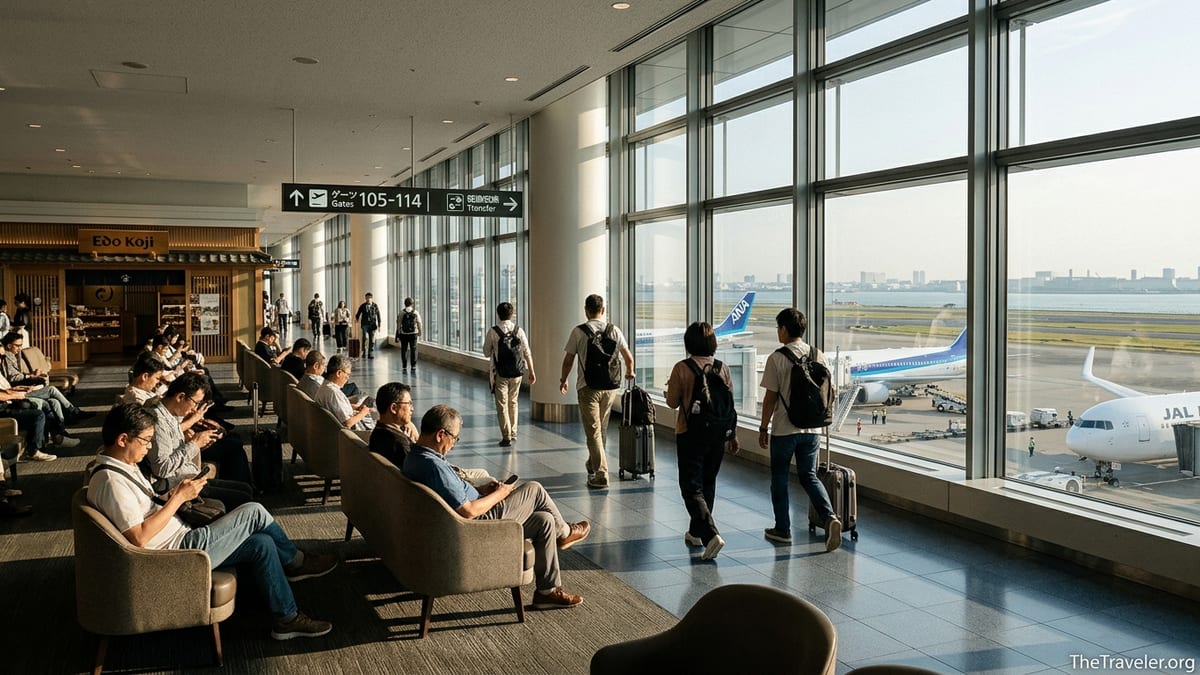
One of the simplest pleasures at Haneda is plane spotting. Both Terminal 1 and Terminal 2 have rooftop observation decks, and Terminal 3 has an open-air deck on the fifth floor. From here you can watch everything from Japan Airlines and ANA wide-bodies to international carriers lining up along Tokyo Bay. At sunset, the decks fill with photographers capturing the “magic hour” as runway lights come on and jets depart over the water.
If you are tired but not exhausted, combine a meal with some light shopping. Terminal 3’s Edo Koji area recreates the look of old Tokyo with wood-fronted shops and lanterns, selling Japanese confectionery, regional souvenirs, and travel essentials. You can pick up boxed sweets such as Tokyo Banana or regional senbei rice crackers, then sit down for a donburi, steaming bowl of ramen, or a plate of tempura at one of the many restaurants that cater to both Japanese and international tastes.
Travelers who need to stay productive can take advantage of free Wi-Fi, plentiful charging outlets, and pay-per-use lounges. Several airlines and independent providers run lounges in Terminal 3 where, for a relatively modest fee compared with hotel day rooms, you can enjoy soft drinks, simple snacks, and quieter seating away from the main concourse. If you have access through a frequent flyer program or premium ticket, factor in time to shower and change before your onward flight.
Relaxing Escapes: Onsen, Showers, and Sleeping Options
For layovers of four hours or more, especially on long-haul itineraries, Haneda’s biggest perk is the ability to properly rest and freshen up. The standout option is Izumi Tenku no Yu, a large 24-hour hot spring spa located above the Haneda Airport Garden complex, directly connected to Terminal 3. The facility offers a mix of indoor and outdoor baths, saunas, and relaxation areas that look out toward the Tamagawa River and the city beyond, giving you a genuine Japanese onsen experience without leaving the airport district.
Admission prices are similar to other major-city spas and typically include a bath towel, face towel, and access to rest lounges. You change into provided loungewear, store your belongings in a locker, and move between gender-segregated bathing areas and shared relaxation spaces. For an overnight layover, some travelers choose to nap in the loungers or tatami-style rest rooms for several hours, effectively using the spa as a very relaxed “hotel” while periodically soaking away jet lag.
If you prefer a conventional bed, Haneda offers several hotel options. Inside the secure area of Terminal 3, The Royal Park Hotel Tokyo Haneda Transit Hotel provides short-stay rooms exclusively for international transit passengers with valid boarding passes. These quiet, windowless rooms are designed for privacy and rest between flights and can often be booked in blocks of a few hours, making them ideal for red-eye connections where you do not want to leave the terminal.
Landside, The Royal Park Hotel Tokyo Haneda at Terminal 3 and hotels in the Haneda Airport Garden complex, including higher-end properties with direct access to the onsen, cater to overnight and long layovers. For shorter rests, many of these hotels sell day-use plans that let you check in for a morning or afternoon block to shower, sleep, and reorganize luggage before heading back upstairs to departures. If all hotel options are full or out of budget, you will still find reasonably comfortable seating zones around Terminal 3 where overnight passengers quietly stretch out, though lights and announcements continue through the night.
Food, Shopping, and Cultural Finds Without Leaving the Airport
Even if you never step outside, Haneda’s terminals provide a compact introduction to Japanese food culture and design. Terminal 3’s Edo Koji dining street is the most atmospheric example, lined with noren curtains, lanterns, and wooden facades that evoke an older Tokyo. Here you can sample familiar staples such as ramen and sushi, along with more regional specialties like tempura rice bowls and grilled eel, all in a setting designed for travelers who may have only a few hours in the country.
For quick meals, each terminal has convenience stores and fast casual counters selling bento boxes, onigiri rice balls, sandwiches, and drinks. This is often the easiest option if you are with a family or pressed for time. Domestic terminals feature branches of popular Japanese chains, where a bowl of hot udon or curry rice can be both affordable and filling before a long flight. Coffee chains and pastry shops provide lighter options if you just want a snack and a seat.
Shopping ranges from everyday travel essentials to high-end Japanese brands. Duty free areas in Terminal 3 stock cosmetics, electronics, and liquor familiar to international travelers, but you will also find shops highlighting Japanese knives, stationery, and craft goods. One store might showcase locally made folding fans and tenugui cloths, while another focuses on character merchandise and anime figures. Even a short stroll through the retail floors can give you a sense of current Japanese trends and design.
If you are interested in culture but cannot spare time for a museum, keep an eye out for small exhibitions and seasonal displays in public areas. Haneda periodically hosts art installations, promotional exhibits from regional tourism boards, and pop-up kiosks featuring local snacks from different prefectures. Stopping to try a box of sweets from Hokkaido or browsing a corner promoting festivals from Kyushu can make a layover feel more like a mini cultural tour than a wait in transit.
When You Have Time to Explore Beyond the Airport
With a layover of six to eight hours or more, and assuming you can clear immigration and hold any necessary visa, it becomes realistic to leave Haneda for a brief look at Tokyo. You still need to allow generous margins for security and potential queues, but a focused itinerary can turn dead time into a memorable side trip. As a rough guide, many repeat visitors find that an eight-hour layover might yield four to five usable hours in the city after accounting for formalities and transport.
From the airport, the Tokyo Monorail runs frequently between Haneda and Hamamatsucho Station, connecting onward to the JR Yamanote Line that circles some of Tokyo’s main centers. Keikyu Line trains link Haneda with Shinagawa, a major rail hub with easy transfers to other lines. Both routes are well signposted in English, and trains are designed to accommodate passengers with luggage, though rush hour can still feel crowded with large bags.
For a first-time visitor with limited time, it is often better to choose one district rather than rushing between several famous spots. For example, from Haneda you could ride the monorail to Hamamatsucho and continue to Shibuya to experience the scramble crossing, grab a quick meal, and shop at a large variety store for cosmetics and souvenirs before heading back. Alternatively, you might head to Asakusa to see Sensoji Temple, browse Nakamise shopping street, and then return directly, trading nightlife and neon for a more traditional atmosphere.
If that sounds too ambitious, consider staying closer to the airport. The neighborhoods around the Keikyu line, such as Otorii or Anamori Inari, have a very local feel with small shrines, family-run restaurants, and compact shopping streets. Spending two or three hours wandering, grabbing a simple set meal, and people-watching in a residential district can provide a more relaxed glimpse of everyday Tokyo life with less travel time and fewer crowds.
Practical Tips for a Smooth Haneda Layover
A few practical steps can make any Haneda layover, regardless of length, more comfortable. First, confirm whether your checked baggage will be through checked to your final destination or whether you must collect and re-check it. If you do need to claim luggage, build in extra time and consider using airport baggage storage so you do not have to haul large suitcases around restaurants or into the city.
Second, think about connectivity and payments. Haneda offers free Wi-Fi throughout the terminals, but it is often faster and more reliable to rent a pocket Wi-Fi or buy a local eSIM if you plan to head into Tokyo. Most places in and around the airport accept major credit cards, but small neighborhood shops may prefer cash or local payment apps. If you intend to use coin lockers or buy small items at convenience stores, withdrawing a modest amount of yen from an ATM in the terminal can be useful.
Third, mind local etiquette, especially if you decide to visit the onsen. At facilities like Izumi Tenku no Yu, guests are expected to bathe nude in gender-segregated tubs, wash thoroughly before entering the baths, and avoid bringing phones into bathing areas. Large tattoos may be an issue in some traditional baths, though newer spa-style facilities are often more flexible, sometimes offering cover stickers or designating certain times for tattooed guests. If you are unsure, check the spa’s rules at the entrance.
Finally, always work backwards from your departure time. For international flights, being back in the terminal 90 minutes to two hours before boarding keeps stress levels low, especially during busy travel seasons. If you are tempted to squeeze in one more neighborhood stop or an extra half hour in the hot spring, remember that immigration queues and security checks can fluctuate. At Haneda, it is almost always better to arrive early, pick up a snack, and relax at the gate than to be rushing through halls watching the boarding time tick closer.
The Takeaway
A layover at Tokyo Haneda Airport can be far more than a long wait in a crowded seating area. Within the terminals themselves, you can watch aircraft soar over Tokyo Bay from rooftop decks, dine on regional Japanese specialties, rest in a spa or hotel room, and browse shops that showcase both high-tech gadgets and traditional crafts. For longer connections, efficient rail links turn central Tokyo into a realistic side trip, from neon intersections to temple-lined streets.
The best approach is to align your plans with the time you realistically have, not just the number printed on your ticket. If your layover is short or your energy is low after an overnight flight, staying within Haneda and perhaps visiting the onsen upstairs may be the most rewarding choice. If you have a full day and have already adjusted to the time zone, a carefully planned excursion into one or two nearby districts can add an unforgettable chapter to your journey.
Whatever you choose, Haneda’s combination of 24-hour services, compact layout, and easy access to the city means your layover does not have to feel like wasted time. With a bit of planning and realistic expectations, it can become an unexpected highlight of your trip, blending convenience, culture, and a taste of Tokyo life between flights.
FAQ
Q1. Can I leave Haneda Airport during my layover to visit Tokyo?
You can leave the airport if you clear immigration and have any required visa. For layovers of six to eight hours or more, a short city visit becomes realistic, but you must return at least 60 to 90 minutes before your next flight.
Q2. How long of a layover do I need to use the onsen at Haneda?
If your flights are in the same terminal and your luggage is checked through, a four to six hour layover usually provides enough time to enter Izumi Tenku no Yu, bathe, relax, and return through security without rushing.
Q3. Is there a hotel inside the secure area at Haneda?
Yes. The Royal Park Hotel Tokyo Haneda Transit Hotel in Terminal 3 is located airside and is designed for international transit passengers. Rooms are typically bookable in short blocks for rest between flights.
Q4. Are the observation decks at Haneda open 24 hours?
The Terminal 3 observation deck is generally open around the clock, while the decks at Terminals 1 and 2 operate from early morning until late evening. Hours can change, so always check current information on arrival.
Q5. Can I store my luggage at Haneda during a layover?
Yes. Each terminal offers baggage storage counters and coin lockers where you can leave suitcases and carry-ons for a fee, making it easier to visit the onsen, relax in the terminal, or head briefly into the city.
Q6. Is it worth going into central Tokyo on a five hour layover?
In most cases it is not. By the time you clear immigration, travel into the city, and then return early for your next flight, you will have very little usable time. Staying at the airport or exploring nearby neighborhoods is usually more comfortable.
Q7. What are the best things to do during an overnight layover at Haneda?
Popular options include booking a room at an on-site hotel, spending several hours at the 24-hour onsen, visiting the Terminal 3 observation deck at night, and finding a quiet corner of the terminal to sleep if hotels are full or out of budget.
Q8. Is Haneda Airport easy to navigate if I do not speak Japanese?
Yes. Signs throughout the terminals are in Japanese and English, and many staff members have at least basic English for common travel questions. Ticket machines for the monorail and trains also offer English language options.
Q9. Can I use public transport from Haneda with large luggage?
Trains such as the Tokyo Monorail and Keikyu Line are commonly used by travelers with suitcases. Carriages have open spaces and racks, though busy commuting hours can be crowded. If you prefer more space, consider airport buses or taxis.
Q10. Are there vegetarian or halal food options at Haneda?
Haneda’s terminals include a growing number of restaurants and cafés that indicate vegetarian dishes, and some venues cater to halal needs or offer seafood-based menus. Choice is more limited late at night, so daytime travelers will have better options.