


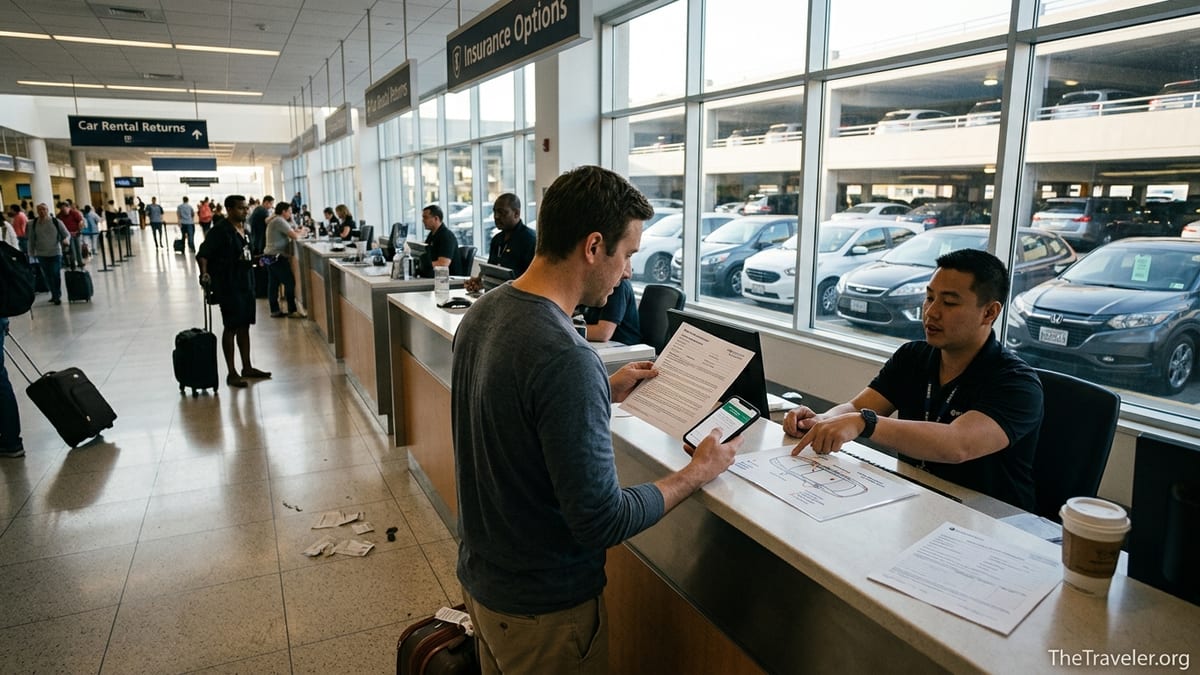
Few things stress travelers out faster than a rental car agent sliding a damage waiver form across the counter and warning that even a small scratch could cost thousands of dollars. RentalCover is one of the biggest third‑party options promising cheaper, broader protection than what you are offered at the desk. Before you click “add insurance” on a booking site or buy directly, it pays to understand what RentalCover actually is, how it works in practice, and the expectations you should have if you ever need to make a claim.
Get the latest updates straight to your inbox!
What RentalCover Is (and What It Is Not)
RentalCover is a specialist provider of rental vehicle protection that sells policies online, often integrated into booking sites such as Rentalcars, Booking, or Priceline. In most countries these policies are underwritten by established insurers and administered by Cover Genius, the insurtech company behind the brand. For you as a traveler, what you see is a standalone rental car protection product you buy before you reach the counter, separate from the insurance the rental company sells.
In day‑to‑day terms, RentalCover is usually not the same thing as the “Collision Damage Waiver” (CDW) the rental company offers. At the counter, CDW or Loss Damage Waiver is typically a waiver of the rental company’s right to pursue you for vehicle damage. RentalCover, by contrast, generally reimburses you after the fact for amounts the rental company charges, or in some cases provides primary damage protection according to the plan wording. That distinction is critical: you usually still need to comply with the rental company’s rules and pay them upfront if something goes wrong, then claim back from RentalCover.
Another important point is that RentalCover is not a full auto policy in the way your personal car insurance is. In many countries, particularly the United States, it focuses on the car itself and related fees, while separate “Supplemental Liability Insurance” may be available for third‑party injuries or property damage. Travelers often assume that because they bought something called “rental car insurance” they are automatically covered for liability. Depending on your country of residence, that may not be true, so you need to read what type of protection you are actually purchasing.
Where RentalCover can be attractive is price. The company advertises savings of up to around 50 percent compared with buying equivalent damage waivers from large rental brands such as Alamo, Avis, or Hertz for a one‑week compact rental in major U.S. cities like Boston or Las Vegas. In practical terms, if a counter is quoting you 30 to 40 dollars a day for full damage protection, you might see RentalCover priced closer to 10 to 20 dollars per day for comparable coverage, depending on your trip details.
How RentalCover Works in Real Travel Scenarios
Most travelers encounter RentalCover in the booking flow. For example, when reserving a compact car in Orlando through an online travel agency, you might see an offer such as “Full Protection from RentalCover for 11 dollars per day” alongside your 38‑dollar daily car rate. If you accept, you receive a confirmation email with a policy schedule and instructions on what to do if there is damage. Crucially, you still pick up the car at, say, Alamo or Budget, and their rental agreement is separate from your RentalCover policy.
If you have an incident, the process usually looks like this: the rental company charges you for damage, excess, or fees, and you then gather documents and submit a claim online to RentalCover. Many positive reviews describe situations such as a rock cracking a windshield on an Italian highway or a tire being slashed on a rural Australian road. In these cases, renters paid the local agency a few hundred euros or dollars, uploaded invoices, photos and the rental contract through RentalCover’s portal, and reported that reimbursement was approved within hours or a few days, with payouts sent to a bank account, PayPal, or even a mobile wallet.
There are also more complex examples. A traveler renting in Sardinia might be charged over 1,000 euros after losing a car key and scratching an alloy wheel. Although the driver felt the rental company’s fees were excessive, RentalCover still reimbursed the full amount once the documents were in order. Another U.S. traveler renting in Greece reported being billed roughly 600 dollars for minor paint damage, but successfully claimed it back from RentalCover after submitting the desk report and charge receipt.
You should also be prepared for less smooth experiences. Some reviewers describe confusion when they discovered that RentalCover reimburses rather than directly paying the rental company, or frustration at communication delays during busy periods. In a few cases, travelers booked through big aggregators, had damage, and then felt caught between the rental brand, the booking site, and RentalCover when claims took weeks to resolve. These stories highlight the importance of understanding that you remain responsible for paying the rental company first and then working through the RentalCover claims process.
What RentalCover Typically Covers and Common Exclusions
Coverage varies by country and product, so your own plan wording is the final authority. Broadly, RentalCover’s core “Collision Damage Protection” or “Full Protection” style products focus on damage to or theft of the rental vehicle, including incidents such as collisions, vandalism, and many types of weather or environmental damage. Policies often extend to elements the rental company may exclude from its own CDW, such as windows, mirrors, headlights, wheels, tires, roof, and underbody, though the exact list depends on your destination and the insurer behind the contract.
Many policies also cover so‑called “administrative charges” that rental companies add on top of repair bills. In practice, this can mean reimbursement for loss of use fees while the car is off the road, towing and relocation charges if the vehicle has to be moved, or various processing fees that appear as separate line items on your final invoice. For example, a driver who scraped a door in a parking garage might see 4,500 euros charged, made up of actual panel work plus a sizeable loss of use component. If their RentalCover policy allows for it and they provide the paperwork, those extra fees can be reimbursed up to the policy limit.
Typical limits for damage protection are in the tens of thousands of dollars, with U.S. travelers often seeing maximum benefits of around 35,000 to 50,000 dollars and zero deductible. Some bundles include emergency medical evacuation or limited personal accident benefits, particularly when sold as part of a broader travel protection plan. In North America, separate Supplemental Liability Insurance can sometimes be added, with advertised limits up to around 1 million dollars for third‑party injury and property damage, filling a gap where rental companies may carry only minimal liability cover.
On the flip side, there are clear exclusions you should expect. RentalCover does not protect you if you violate major terms of the rental agreement, such as driving off‑road against the company’s rules, allowing an unauthorized driver behind the wheel, or driving under the influence. Claims can also be rejected if you fail to provide essential documents, if the event happened before you bought the policy, or if it arises from intentional damage. Some plan documents exclude situations that lead to a police investigation or criminal proceedings, or certain types of commercial use. In practice, that means you should treat the rental car conservatively and closely follow the rental company’s conditions.
How RentalCover Compares With Counter Insurance and Credit Cards
Before purchasing RentalCover, it is worth comparing it with two other common options: buying the rental company’s own waivers and relying on your credit card or personal auto policy. At the counter, a U.S. renter in Los Angeles might be offered a Loss Damage Waiver at around 30 to 40 dollars per day plus tax, along with separate liability supplements and personal accident cover. For a seven‑day compact rental, that can push protection costs close to or even above the base rental price.
By contrast, that same traveler might find a RentalCover quote around 10 to 15 dollars per day for primary damage protection when booking online in advance. Over a week, the difference could easily approach 150 to 200 dollars. For budget‑minded travelers or long rentals in places like Florida, Nevada, or Texas, those savings are significant. The trade‑off is convenience: with the rental company’s own waiver, you typically hand back the keys after a minor incident and walk away, while with RentalCover you pay the charge and then invest time assembling a claim.
Your credit card and personal auto policy also matter. Many premium travel cards in the United States advertise primary rental collision coverage when you pay for the rental with the card and decline the rental company’s CDW. In practice, they can cover damage to the rental car up to a generous limit but may exclude trucks, luxury vehicles, or long‑term rentals. If you already have one of these cards, adding RentalCover damage protection might be redundant in your home country, though some travelers still choose it to avoid filing a claim through their card issuer or personal auto insurer.
Outside North America, credit card coverage is less consistent and sometimes secondary to local waivers, while personal auto policies from home often do not extend to rentals abroad. A Canadian traveler driving in Portugal, for instance, might find that their domestic auto policy and card both offer limited or no protection, making a product like RentalCover particularly appealing compared with paying a high excess to the European rental company. In regions where rental excesses can be 1,500 to 3,000 euros or more, reducing that potential out‑of‑pocket exposure is often worth the extra daily cost.
Real‑World Pros and Cons Travelers Report
Traveler feedback about RentalCover paints a generally positive picture, but with some recurring themes you should factor in. On the positive side, many customers highlight how fast and straightforward simple claims can be when they have all the documents. Cases involving chipped windscreens on highways in Italy, punctured tires on gravel roads in Iceland, or single‑vehicle scrapes in supermarket parking lots in Spain often result in fast approvals once invoices and photos are uploaded.
Another common positive is flexibility across rental brands and countries. Because RentalCover sits on top of your rental agreement, you can book with a wide range of companies, from large chains like Hertz and Enterprise to local agencies in places such as Sardinia or Crete, while keeping the same style of protection. For frequent travelers hopping between the United States, Europe, and Australia, this can simplify planning compared with learning the details of each company’s in‑house damage waiver every time.
On the negative side, the gap between expectation and reality is a frequent source of frustration. Some renters only discover after an accident that their policy reimburses them rather than directly covering the rental company’s bill, leaving them temporarily out of pocket for amounts that can easily reach 2,000 dollars or more. Others report confusion about what is considered an insured “excess” or damage charge versus non‑covered administrative or fuel fees. When communication from support is slow or unclear, that anxiety is amplified.
There are also scattered reports of delays, particularly for more complex claims or when documents are missing or inconsistent. A traveler who booked through a global site, damaged a car, and then tried to resolve reimbursement across three entities sometimes faces weeks of back‑and‑forth. While many of these cases eventually result in payouts, they underscore the fact that you are dealing with an insurance‑style product, not an instant waiver. If you prefer to avoid any paperwork, paying more at the counter for a waiver that lets you hand over the keys with no questions might be more aligned with your risk tolerance.
Key Things to Check Before You Buy RentalCover
Before adding RentalCover to your booking, treat it like any other financial product and do a quick checklist. First, confirm what protections you already have. If you are a U.S. resident with a robust personal auto policy and a premium travel credit card that includes primary rental collision cover, you may already be well‑protected for domestic rentals. In that case, RentalCover might still be useful if it covers gaps such as tires, windscreens, administrative fees, or rentals outside the United States where your existing policies do not apply.
Next, read the headline limits and inclusions on the quotation page, then open the detailed plan wording from your confirmation email. Look for the maximum amount payable for damage or theft, the list of covered parts of the vehicle, whether loss of use and admin fees are included, and any country‑specific conditions. For instance, in some countries RentalCover’s benefit might be capped at around 35,000 dollars with no deductible, while in others the structure could be different or bundled with additional travel insurance benefits.
You should also pay close attention to exclusions around driving behavior and vehicle type. Standard coverage may not apply to motorcycles, high‑value sports cars, large commercial vans, or vehicles used on unpaved roads against the rental company’s rules. If you are planning to rent a rugged SUV in Iceland and drive on F‑roads, or a campervan in the American West, make sure both the rental company and RentalCover allow that use. Otherwise, a single misjudged gravel track could leave you personally on the hook.
Finally, manage your expectations about the claims process. Note what documents are required: typically the rental agreement, the final invoice showing the damage charges, photos if available, and sometimes a police report for significant incidents. Ask yourself whether you will realistically have the time and discipline on the road to collect these. If you know that you prefer a “no paperwork, just walk away” approach, you might accept the higher cost of the rental company’s own waiver instead.
The Takeaway
RentalCover can be a cost‑effective, flexible way to protect yourself from high rental car damage bills, especially on international trips or in regions where standard excesses are steep. For many travelers, paying roughly half of the counter price for primary damage protection that extends to glass, tires, or underbody strikes a sensible balance between risk and affordability. Real‑world experiences from drivers around the world show that straightforward claims for visible damage and properly documented charges are often reimbursed quickly.
At the same time, RentalCover is not magic. It does not usually replace the need to obey your rental agreement, pay the rental company when something goes wrong, or gather and submit documents. Nor does it automatically include liability cover everywhere, or guarantee protection for every vehicle type and use case. Misunderstandings around these points are at the heart of most negative stories you will read.
If you are considering RentalCover before your next trip, start by mapping your existing protections from auto insurance and credit cards, then compare the cost and convenience of three options: RentalCover, the rental company’s own waivers, and going without extra coverage. For many international visitors picking up cars in countries such as Italy, Spain, or the United States, RentalCover will emerge as a strong middle ground. Just go in with clear expectations about how it works, keep good records on the road, and you will vastly improve your chances of a smooth outcome if the unexpected happens.
FAQ
Q1. Is RentalCover primary insurance or does it just reimburse my deductible?
In many destinations RentalCover offers primary damage protection up to a stated limit, but in practice you usually still pay the rental company first and then seek reimbursement from RentalCover. It does not typically function like a full personal auto policy, so always read your specific plan wording to see whether it is described as primary coverage and how claims are actually paid.
Q2. Do I still need the rental company’s Collision Damage Waiver if I buy RentalCover?
Often you can decline the rental company’s Collision Damage Waiver if your RentalCover policy clearly states that it covers damage and theft for the rental vehicle up to a sufficient limit. However, some rental companies structure their pricing or deposits assuming you have their waiver, so check the rental terms. If you are uncomfortable with a large security hold or want to avoid any reimbursement paperwork, you may still choose the counter product despite the higher cost.
Q3. What documents will I need if I file a RentalCover claim?
Expect to provide your rental agreement, the final invoice or charge showing the damage or excess amount, proof of payment, and any photos or incident reports you can gather. For significant accidents or theft, a police report may also be required. Having these ready usually speeds up the assessment and reduces the likelihood of follow‑up questions or delays.
Q4. Does RentalCover include liability insurance for injuries or damage I cause to others?
Not always. In some countries RentalCover sells separate Supplemental Liability Insurance with its own limits, while in others your liability protection may depend on local law or your personal auto policy. Never assume that buying RentalCover automatically gives you high liability limits. If you are driving in the United States or Canada, carefully check whether you have adequate third‑party cover from any source before you get on the road.
Q5. How does RentalCover pricing compare with buying at the counter?
RentalCover often costs noticeably less per day than the rental company’s own waivers, especially for week‑long rentals in popular U.S. destinations. While counter products can run 30 to 40 dollars per day or more for full protection, RentalCover quotes are commonly closer to the low double digits, though final prices depend on your age, vehicle type, location, and trip dates.
Q6. Will RentalCover cover things like cracked windscreens, tires, and keys?
Many RentalCover plans highlight cover for commonly excluded items such as windscreens, mirrors, headlights, wheels, tires, and lost keys, but this is not universal. You should confirm in your own policy wording that these parts and situations are listed as covered, and whether any special conditions apply, such as needing a damage report from the rental company or a receipt for replacement keys.
Q7. What are the most common reasons RentalCover claims are denied?
Frequent issues include breaching the rental agreement, such as driving off‑road where it is prohibited, having an unauthorized driver, or driving under the influence. Claims can also be rejected when key documents are missing, when the event occurred before the policy was purchased, or when the charges relate to non‑covered items like traffic fines or pre‑existing damage. Reading both the rental and policy terms before you travel reduces these risks.
Q8. How long does it usually take to get reimbursed by RentalCover?
Time frames vary, but many straightforward claims where all documents are submitted correctly are reported as being approved within hours or a few days, with payment following shortly afterward. More complex cases, disputed charges, or situations involving multiple parties can take longer as extra information is requested. If you are depending on a quick refund for cash‑flow reasons, factor this uncertainty into your planning.
Q9. Is RentalCover worth it if my credit card already has rental car coverage?
If your credit card provides strong primary collision coverage for rentals in the country you are visiting, RentalCover may offer limited additional value for damage protection alone. However, it might still be useful if it fills gaps such as higher limits, coverage for glass and tires, or reimbursement of administrative fees the card does not address. Compare your card’s guide to benefits with the RentalCover plan details before deciding.
Q10. Can I cancel RentalCover if my plans change or I find a better option?
RentalCover generally allows you to cancel any time before the pickup date for a refund, subject to the terms in your confirmation. If your trip is canceled, you change rental companies, or you realize another policy suits you better, log in to your account or contact support ahead of the pickup day. Once the rental has started or a claimable event has occurred, cancellation is normally no longer possible.