


Airport lounges used to feel like an exclusive perk reserved for first class tickets and frequent flyers. Escape Lounges have helped change that. Spread across major and mid‑size U.S. airports, these independent lounges promise quieter spaces, complimentary food and drinks, strong Wi‑Fi and a more civil start to your trip, whether you are flying economy or business. Before you pay for a day pass or rely on a credit card for entry, it helps to know exactly what to expect when you walk up to the frosted glass doors of an Escape Lounge.
Get the latest updates straight to your inbox!
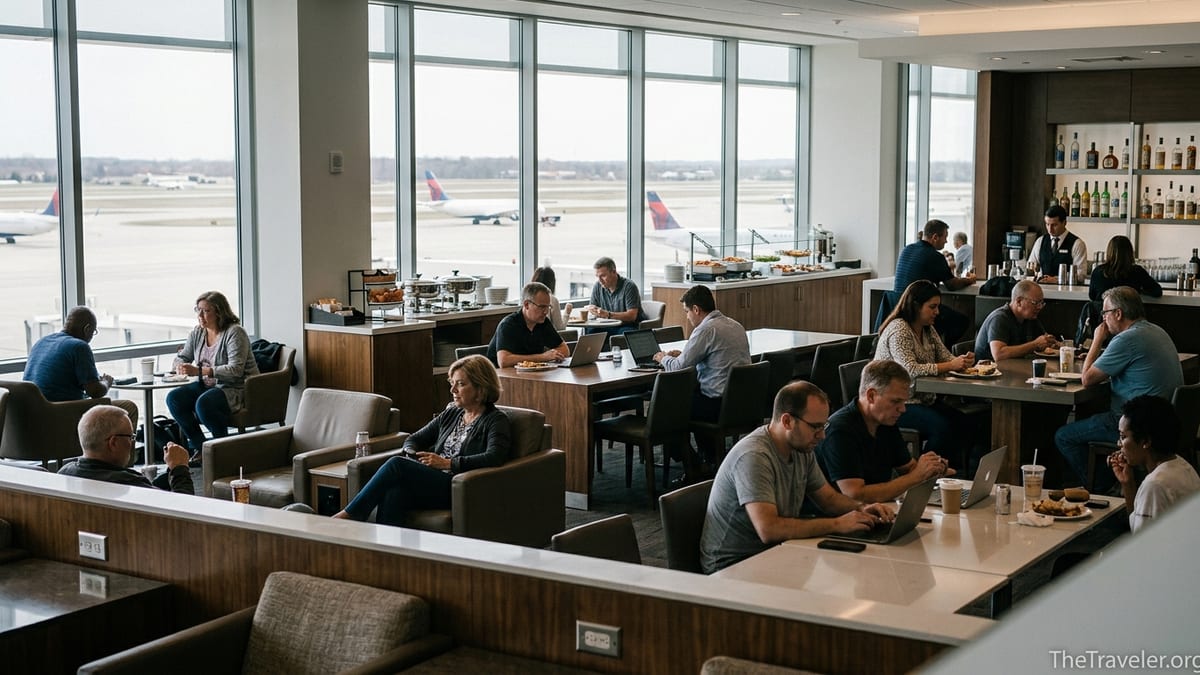
Where You Will Find Escape Lounges in the United States
Escape Lounges operate a growing network of common‑use airport lounges across the United States. As of mid‑2026 there are roughly 20 U.S. locations, including lounges at Minneapolis–Saint Paul, Phoenix Sky Harbor, Portland, Fort Lauderdale, Oakland, Kansas City, Greenville‑Spartanburg, Columbus and Hartford, among others. Newer openings include lounges at Tulsa International and San Juan’s Luis Muñoz Marín International, which signals that the brand is intentionally targeting both large hubs and strong regional airports.
Many of these locations are branded as “Escape Lounges – The Centurion Studio Partner,” reflecting a partnership with American Express. At Minneapolis–Saint Paul, for example, the Escape Lounge functions as part of the American Express Global Lounge Collection and sits airside in Terminal 1, giving Delta and other domestic travelers a non‑airline option before their flight. At Phoenix, one Escape Lounge is in Terminal 3, airside between two concourses, so it is convenient for passengers flying Alaska, Delta, JetBlue and several smaller carriers that use that terminal.
In practice, your experience will vary slightly depending on the airport layout. At Fort Lauderdale, the lounge is post‑security in Terminal 3, so it mainly serves passengers on carriers like JetBlue and Southwest; you would need to be flying from that terminal to access it before your flight. At Portland, the lounge is located near the updated central concourse with the airport’s new timber roof, which means you may need a short walk from your gate but are rewarded with floor‑to‑ceiling windows and views of the airfield.
Because Escape Lounges are not tied to a single airline, they tend to be particularly valuable in airports where traditional airline lounges are limited. Travelers flying ultra‑low‑cost carriers or in standard economy on legacy airlines often find that paying for entry at a smaller airport, such as Greenville‑Spartanburg or Syracuse, buys them an experience they might otherwise only get in a major hub business‑class lounge.
How Access Works: Cards, Day Passes and Airline Invitations
One of the biggest advantages of Escape Lounges is flexibility in how you can get in. Anyone with a same‑day boarding pass, regardless of airline or class of service, can usually purchase access. Pre‑booking online typically starts around 32 to 35 dollars per person in the United States, while walk‑up day passes more commonly hover around 40 to 45 dollars, with some locations listing walk‑up prices from about 30 dollars at quieter airports. These prices can change, but across multiple airport examples the pattern is consistent: booking ahead is usually the cheaper route, and walk‑up rates are the premium option.
If you hold certain credit cards, you may not need to pay anything at the door. American Express Platinum, Business Platinum and Centurion cardmembers generally receive complimentary access to Escape Lounges that are part of the American Express Global Lounge Collection, along with access for up to two guests, subject to capacity. In practical terms, a family of three traveling out of Phoenix Terminal 3 could present one Platinum card, their same‑day boarding passes and ID, and all enter without buying day passes, as long as the lounge is not over capacity.
Priority Pass, DragonPass and some regional lounge membership programs also provide access at many Escape Lounges, although not every location participates in every program. For instance, the Phoenix Terminal 3 Escape Lounge recognizes Priority Pass, meaning a cardholder can use one of their annual visit entitlements instead of paying a separate fee. By contrast, another Escape Lounge in the same airport or a different concourse might not yet be part of the Priority Pass network, so checking your specific airport and terminal is important.
Finally, some airlines invite eligible passengers into Escape Lounges instead of running their own facility. A common example is a regional business‑class ticket or top‑tier elite status on a carrier that operates from a smaller airport where it does not have a branded lounge. In these cases, lounge access is bundled into the ticket. You simply follow the signage to the Escape Lounge, show your airline‑issued invitation or boarding pass to the front desk, and you will be admitted without a separate payment.
What Is Included Inside: Food, Drinks and Work‑Friendly Spaces
Across the network, Escape Lounges aim to provide a consistent core experience: comfortable seating, freshly prepared food, a complimentary bar and solid connectivity. At most locations, admission covers an all‑you‑can‑eat buffet of hot and cold dishes that rotate throughout the day. You might see a breakfast spread with scrambled eggs, breakfast potatoes, pastries and yogurt in the morning, followed by items like salads, soup, roasted vegetables and a pasta or rice dish later in the day. Certain locations, such as Portland, emphasize locally inspired menus that nod to regional flavors.
The bar is another major part of the appeal. Standard beers, house wines, basic mixed drinks, soft drinks and espresso‑based coffee are usually included in the entry fee. For example, at Fort Lauderdale’s Escape Lounge, guests can expect complimentary house wine or beer, along with sodas and coffee, while premium cocktails or top‑shelf spirits may carry a small surcharge. In lounges that serve a strong business‑traveler base, bartenders become familiar with common orders such as a pre‑flight gin and tonic, a glass of sparkling wine or a non‑alcoholic mocktail for those who prefer to skip alcohol.
Work‑friendly amenities are fairly robust for what are still relatively compact spaces. Most Escape Lounges offer high‑speed Wi‑Fi, power outlets at or near most seats, and a mix of communal tables, café‑style seats and softer armchairs. Some locations, like Minneapolis–Saint Paul, also provide small conference or meeting areas that can be handy for a quick call before boarding. Travelers routinely use these lounges as places to answer email, finish a presentation or download entertainment to their devices before a long flight.
Compared with sitting at a crowded gate, the atmosphere inside is usually calmer. Large windows overlooking the tarmac are common, especially at newer lounges such as Kansas City or Portland, and design elements often mirror the local airport architecture. That said, during peak departure banks these lounges can still feel busy, with most seats occupied and a short wait at the bar or buffet. Travelers who value quieter corners should plan to arrive soon after opening or during off‑peak mid‑day periods whenever possible.
Typical Visit Length, Timing and Crowd Patterns
Most Escape Lounges in the United States limit visits to approximately three hours before your scheduled departure time. This limit is designed to keep traffic flowing and avoid guests camping out all day. For example, if you have a 5:00 p.m. flight from Phoenix, you will generally be admitted starting around 2:00 p.m. If you show up at 11:00 a.m., the front desk staff may ask you to return closer to your departure time or explain that your access window has not opened yet.
The busiest times tend to mirror the airport’s departure peaks. At a business‑heavy airport like Minneapolis–Saint Paul, weekday mornings between 6:00 a.m. and 9:00 a.m. can be particularly crowded as commuters head out on the first wave of flights. Travelers report that even with the three‑hour rule, waitlists for entry sometimes form during these windows. In Portland, where the Escape Lounge sits near the popular new terminal spaces, Friday mornings and late‑afternoon departures see a noticeable spike in traffic.
Leisure‑focused airports with heavy weekend traffic, such as Fort Lauderdale, can see Saturday and Sunday midday rushes, especially in winter when many vacation flights depart to the Caribbean or Latin America. During school holidays in the United States, families may make up a larger share of lounge guests, and you will see more children spreading out at the larger tables. If you are traveling for work and need a quiet call, it is wise to scope out the layout quickly and choose a seat away from the buffet and bar, where noise levels are highest.
Food and beverage service normally continues throughout operating hours, but some lounges stop replenishing the buffet or serving alcohol roughly 30 minutes before closing. If you arrive near closing time, you should expect a more limited selection. For example, an evening visitor to the Phoenix Terminal 3 lounge may still be able to grab a light snack and a soft drink at 8:45 p.m., but hot dishes could already be cleared if the lounge shuts at 9:00 p.m.
Costs, Value for Money and When It Is Worth It
Whether Escape Lounge access is “worth it” depends on how you travel, how busy the airport is and what you would otherwise spend in the terminal. At many U.S. locations, a pre‑booked entry fee in the low‑to‑mid‑30‑dollar range competes favorably with buying a full meal and a drink from an airport restaurant. A sandwich, side and beer at a typical airport bar can easily run to 25 or 30 dollars once tax and tip are added, and that still leaves you sitting at a crowded gate afterwards.
Consider a practical example in Columbus. A solo traveler with a two‑hour layover around lunchtime could pre‑book Escape Lounge access for around 35 to 40 dollars, arrive, have a hot meal, coffee, a glass of wine and use the Wi‑Fi at a reserved table. Someone who values that quieter environment and expects to eat and drink at the airport anyway may find the cost easy to justify. On the other hand, a traveler with only 45 minutes between flights, who already ate before leaving home, might find that even a discounted day pass is not good value because they will barely have time to settle in.
For couples or families paying cash, costs add up quickly. A family of four paying a typical 40‑dollar walk‑up fee per adult and a reduced rate for children could easily spend more than 120 dollars. In that case, the math may push you toward eating at a sit‑down restaurant unless you place a high premium on the lounge environment. However, if one adult holds an eligible American Express or Priority Pass‑linked card and receives complimentary access with guest privileges, that same family may only pay for one extra guest or none at all, turning the lounge into excellent value.
Travelers should also think about alternative lounge options at a given airport. At Chicago O’Hare, for instance, some Priority Pass members may compare the Escape Lounge day pass price with using Priority Pass at a different third‑party lounge in another terminal. If your card includes lounge access as a bundled perk, using it at an Escape Lounge usually makes sense, especially in airports where branded airline lounges are either absent or extremely crowded.
House Rules, Dress Code and Etiquette
Escape Lounges do not impose a strict business‑attire dress code, but they do expect guests to be neat and presentable. Jeans, sneakers and casual tops are entirely acceptable, and you will see plenty of travelers in comfortable travel clothes. What staff typically discourage are visibly dirty clothing, offensive slogans on shirts and behavior that disrupts other guests. If you are coming from a red‑eye flight and feel disheveled, taking a few minutes to freshen up in the restroom before checking in can make the experience more pleasant for you and those around you.
Many of the unwritten rules mirror those in other lounges. Guests are generally asked to keep phone calls short and at a reasonable volume, especially in smaller locations where voices carry. Some lounges mark “quiet zones” or ask guests to take video calls to a designated area or the hallway. It is acceptable to briefly reserve a table while you visit the buffet, but spreading personal items across multiple seats during peak times is frowned upon.
Families with children are welcome, and children under a certain age, often around three years old, may enter free with a paying adult. That said, parents are expected to supervise kids and keep noise levels in check. In practice, you might see a family at a corner table in Fort Lauderdale using a tablet with headphones and coloring books, while business travelers stick closer to the bar or workstations. Staff typically step in only if behavior affects other guests, such as running around the buffet or playing videos aloud without headphones.
Finally, tipping customs are relaxed but present. Because food and drinks are technically included, there is no obligation to tip at the bar or to the staff clearing plates. Still, many U.S. travelers choose to leave a few dollars on the bar after multiple drinks or a particularly attentive service experience. If you order a premium alcohol that carries an extra charge, tipping in the same way you would at an airport bar is a simple rule of thumb.
Using Specific Lounges: Real‑World Examples
To better understand what to expect, it helps to look at how a visit plays out at a few actual Escape Lounge locations. In Portland, Oregon, which was recently recognized in a global lounge award program, travelers describe a space filled with natural light, wood accents that echo the terminal’s new design and a menu that leans into local ingredients. A morning guest might arrive around 7:30 a.m., grab a seat by the window overlooking the new concourse, pour a locally roasted coffee and enjoy a plate of scrambled eggs and roasted potatoes while answering a few emails before boarding.
At Phoenix Sky Harbor Terminal 3, the Escape Lounge serves a more mixed crowd of business and leisure travelers connecting across the West. A Priority Pass cardholder on a midday connection from Seattle to Mexico City could stop in for a quick lunch of salad, soup and a soft drink, then plug in at a communal table with strong Wi‑Fi to download shows for the next flight. Here, the main trade‑off is crowding during busy banks of flights. Travelers occasionally report short waits at the door during winter and spring peak seasons, particularly in the mornings.
Fort Lauderdale presents a different vibe. Located in a heavily leisure‑focused airport with many cruise passengers, the Escape Lounge becomes a calm alternative to noisy gate areas full of vacationers. A couple flying to a Caribbean island for their honeymoon may pre‑book a morning visit, arrive two hours before departure, order mimosas at the bar and have a small breakfast while watching aircraft depart to various beach destinations. Because many airlines at Fort Lauderdale do not operate their own lounges, Escape fills a clear gap in the market.
In smaller markets such as Greenville‑Spartanburg or Syracuse, the lounge can be a game‑changer for long layovers or irregular operations. Imagine a traveler facing a three‑hour delay on a winter evening. Instead of sitting at a busy gate or in a chilly concourse, they can retreat to the Escape Lounge, have a hot meal, coffee or a glass of wine, and use the Wi‑Fi to rebook onward travel. In these airports, where seating can be limited and food options close early, the value of the lounge feels particularly tangible.
The Takeaway
Escape Lounges aim to make the airport experience feel less chaotic and more intentional, especially for travelers who do not otherwise have access to airline‑branded lounges. With a network that now spans about 20 U.S. airports, they offer a consistent mix of complimentary food, drinks, Wi‑Fi and comfortable seating in spaces that generally feel more refined than the main concourse.
Before you visit, it pays to check three things: how you will access the lounge, how busy your particular airport tends to be at your travel time and how long you realistically have before boarding. If you can use a credit card benefit or a lounge membership to get in and have at least 90 minutes to relax, the experience will usually beat spending the same money at an airport restaurant or bar. If you are paying full walk‑up price for a short stay, or traveling at prime rush hour in a heavily used location, the value calculation becomes less clear.
For many travelers, the decision ultimately comes down to peace of mind. Knowing that you can step into a quieter room, plug in your laptop, eat a proper meal and enjoy a drink without hunting for a power outlet at the gate changes how a travel day feels. If you fly through one of the airports served by Escape Lounges, a bit of advance research on access rules and pricing can help you decide whether this version of pre‑flight comfort fits your travel style and budget.
FAQ
Q1. Do I need to be flying business class to use an Escape Lounge?
Not at all. Escape Lounges are open to any passenger with a same‑day boarding pass, regardless of airline or cabin. You can pay for a day pass, use an eligible credit card, rely on a lounge membership program, or enter with an airline invitation if your ticket includes access.
Q2. How much does an Escape Lounge typically cost if I pay cash?
Prices vary by airport, but in the United States you can usually expect pre‑booked entry starting in the low‑30‑dollar range per person, with walk‑up rates often around 40 to 45 dollars. Smaller or lower‑demand airports may occasionally post walk‑up prices closer to 30 dollars.
Q3. Which credit cards get me into Escape Lounges for free?
Many Escape Lounges that are part of the American Express Global Lounge Collection admit American Express Platinum, Business Platinum and Centurion cardmembers on a complimentary basis, usually with up to two guests. Some locations also accept Priority Pass, DragonPass and similar memberships that may be bundled with premium credit cards.
Q4. How early can I enter, and how long can I stay?
Most Escape Lounges in the United States allow entry up to about three hours before your scheduled departure and set a similar three‑hour maximum visit length. This is designed to balance comfort with capacity, so the space does not become overcrowded with all‑day stays.
Q5. Are food and drinks really included in the entry fee?
Yes. Admission generally covers a buffet of hot and cold dishes along with standard alcoholic and non‑alcoholic drinks. Some locations charge extra for premium spirits or specialty cocktails, so you should check the bar menu for any surcharges.
Q6. Can children use Escape Lounges, and do they pay full price?
Children are welcome, and infants or very young children are often admitted free with a paying adult, while older children may pay a reduced fee. Specific age cutoffs and pricing can differ by lounge, so it is worth confirming your departure airport’s policy in advance.
Q7. Is there a dress code inside Escape Lounges?
There is no formal business dress requirement, but guests are expected to be neat and appropriately dressed. Clean, casual clothing such as jeans, sneakers and T‑shirts is common. Apparel with offensive language, swimwear or visibly dirty clothing may result in denied entry at staff discretion.
Q8. Do Escape Lounges have showers or sleeping areas?
Most Escape Lounges focus on seating, dining and workspaces rather than spa‑style facilities. A few locations may offer enhanced amenities, but showers and dedicated sleeping pods are not standard features. If showers are important to you, check your specific lounge’s amenities before you travel.
Q9. How crowded do Escape Lounges get during peak times?
Crowding depends heavily on the airport, time of day and season. At busy hubs during morning and evening departure banks, Escape Lounges can reach capacity and operate waitlists. At off‑peak times or in smaller airports, you are more likely to find open seating and a quieter atmosphere.
Q10. Is it better to pre‑book or just walk up to the lounge?
Pre‑booking usually offers two advantages: a slightly lower price and a stronger guarantee of entry, especially during busy travel periods. Walk‑up access is convenient for last‑minute decisions but is always subject to capacity on the day, and the per‑person price is often higher.