


Escape Lounges have become a go-to option for travelers who want a calm space, decent food, and Wi-Fi before a flight. But as day-pass prices at many locations now hover around 45 to 60 dollars per person, it is fair to ask whether you can get similar comfort for less. In many airports, the answer is yes. From independent lounges and credit card networks to pay-per-use suites and simple restaurant credits, there are several realistic ways to reduce what you spend while still upgrading your airport experience.
Get the latest updates straight to your inbox!
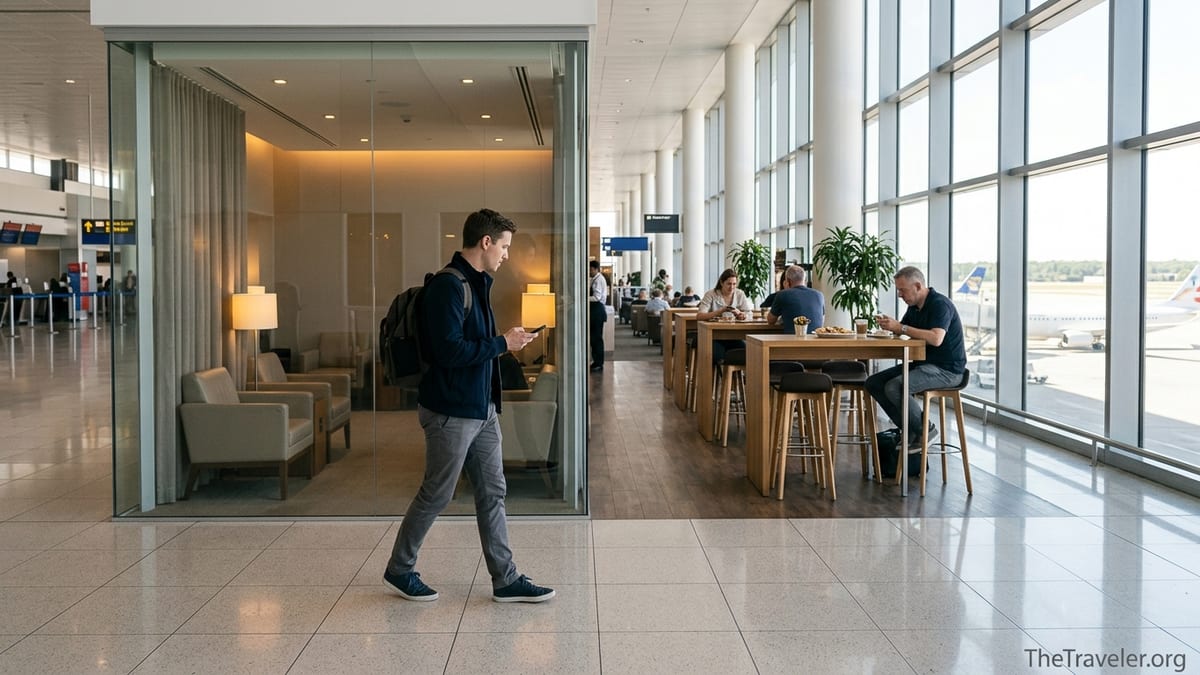
What You Are Really Paying For at Escape Lounges
In the United States, Escape Lounges typically market advance online pricing from around 32 dollars per person where promotional rates are available, but many busy or newer lounges now list starting prices closer to 45 dollars when you pre-book. Walk-up rates often climb to around 60 dollars plus tax at some locations. For example, a recent media release for a new Escape-branded lounge at Cincinnati/Northern Kentucky International Airport highlighted 50 dollars plus tax for pre-booked visits and 60 dollars for walk-ins, which is consistent with what many travelers see at other larger airports.
That price usually covers up to three hours of access with buffet-style hot and cold food, a basic open bar where allowed, Wi-Fi, seating with power outlets, and sometimes a quiet zone or small business area. Children under three normally enter free with an adult, so a family of four with two young kids may pay roughly 100 to 120 dollars total for three hours if they pre-book. For a solo traveler, though, spending 50 to 60 dollars for a few snacks, a glass of wine, and a chair can feel expensive, especially at airports with other options.
To decide whether Escape Lounge pricing is worth it, it helps to break the visit into components. Consider what you most value: Is it the food, alcohol, quiet, or just a guaranteed seat and outlet? Once you know your priority, you can compare it to other lounge networks, day-pass clubs, or even simple restaurant credits that may deliver that same benefit more cheaply.
Cheaper Contract Lounges and Day Pass Clubs
The most straightforward alternative to Escape Lounges is another contract lounge at the same airport. Independent brands such as Plaza Premium, Aspire, and The Club often sell day passes online or at the door, with typical prices in the 30 to 50 dollar range per adult. Some of these lounges still run promotional pricing where advance purchase online can be roughly 10 to 20 percent cheaper than a walk-in rate, which may undercut nearby Escape Lounge pricing by a noticeable margin.
For instance, at certain mid-size US airports, an Aspire or Plaza Premium lounge may advertise a pre-booked three-hour pass from about 35 to 40 dollars, while the local Escape Lounge lists 45 to 50 dollars for a similar duration. Both lounges usually include simple buffet food, coffee, beer and wine, and Wi-Fi. If your goal is a light meal and a comfortable seat, the contract lounge with the lower rate will deliver a nearly identical experience to Escape for less money.
Airport websites and lounge search tools increasingly list all lounges and their approximate day-pass prices, which helps you comparison-shop before leaving home. If you see that Escape is 50 dollars while another contract lounge across the hall is 38 dollars, it becomes clear which one offers better value unless Escape has a standout feature you care about, such as a particular menu or more workspace.
Using Priority Pass and Similar Memberships as a Price Cutter
Another way to lower your effective cost is to avoid paying per visit at all. Priority Pass and similar memberships work like a subscription that spreads lounge costs across your travel year. Priority Pass, for example, now partners with more than 1,800 lounges and airport experiences worldwide. Several tiers charge an annual fee plus a per-visit charge, while the top tier offers unlimited visits for a higher annual price. In practice, many US travelers get Priority Pass bundled with a premium credit card instead of paying for it directly.
If you hold a card that includes lounge membership, your out-of-pocket cost at the airport can drop to zero for each visit, aside from potential guest fees. Even if your membership charges roughly 35 dollars per visit after an annual fee, that can still be cheaper than a 50 to 60 dollar Escape Lounge day pass. If you travel six to ten times a year, the effective per-visit cost of an included lounge membership can fall into the low 20 dollar range or even less, which makes Escape’s walk-up price hard to justify.
Escape Lounges themselves participate in some of these programs. Selected Escape locations accept Priority Pass for entry, subject to capacity rules, which means there are circumstances where a traveler with membership pays nothing additional at the door while someone without membership pays the full 50 dollars or more. For value-focused travelers, checking whether your credit card quietly includes lounge access is one of the easiest ways to reduce how much you spend compared with paying Escape’s list price every time.
Credit Card Lounges and Airline Clubs as Higher-Value Alternatives
Premium credit card and airline-specific lounge networks are not necessarily cheaper per visit than Escape Lounges, but once you factor in their other benefits they often provide more value at a similar or lower effective cost. Cards like the Platinum Card from American Express, the Capital One Venture X, or the Chase Sapphire Reserve include access to their respective branded lounges along with a complimentary Priority Pass membership for many cardholders. If you already keep such a card for its travel credits or rewards, lounge access becomes a built-in perk rather than a separate purchase.
Consider a traveler who flies seven or eight times a year and already carries a premium card primarily for benefits like annual airline credits or statement credits that offset much of the annual fee. Access to an American Express Centurion Lounge or a Capital One Lounge is therefore effectively free, aside from guest fees. In many airports these lounges offer more extensive hot food, craft cocktails, showers, and better workspace than a typical Escape Lounge. If the traveler can reliably use one of these lounges, paying 50 or 60 dollars for an Escape day pass on top of an existing premium card rarely makes sense.
Airline-operated clubs can also rival Escape Lounges on price and quality in certain situations. Day passes for American Airlines Admirals Club or United Club locations often run in the 50 to 80 dollar range. At the high end, that can be more than Escape; at the low end, special promotions or bundled access with a co-branded credit card can bring the effective per-visit cost down. Frequent flyers based at hubs like Dallas Fort Worth, Chicago O’Hare, or Newark often find that putting their money into an airline club membership or an airline’s premium card yields considerably more lounge usage per year than sporadically buying Escape day passes.
Pay-Per-Hour Suites and Quiet Spaces Instead of Lounges
For some travelers, the main reason to visit Escape Lounges is not food but simply a quiet, private place to work or rest. In that case, pay-per-hour airport suites can be a smarter use of money. Companies such as Minute Suites operate small private rooms past security in several large US airports, including hubs like Atlanta, Dallas Fort Worth, and Philadelphia. These rooms generally feature a daybed or sofa that converts to a bed, a work desk, a television, and charging outlets.
Recent pricing guidance from Atlanta’s visitor information notes that Minute Suites at the airport typically charge around 50 to 60 dollars for the first hour, with additional time billed at roughly 10 to 15 dollars per 15 minutes. Multi-hour packages can bring the rate closer to about 90 to 140 dollars for two to three hours and more for overnight stays. While that initial hourly price roughly matches or even exceeds the cost of an Escape Lounge visit, you are paying for a dedicated private room rather than a shared space.
If you are traveling as a couple or family of three or four, a single Minute Suite can represent better value than multiple Escape Lounge passes. A family of four paying 50 dollars per adult at an Escape Lounge might spend 150 to 200 dollars total for three hours, whereas the same family could share a private suite for several hours at a similar or slightly lower overall cost, with much more privacy and the ability to nap behind a closed door. You will not get free buffet food, but you can often bring takeaway meals from the terminal into the suite and still come out ahead.
Restaurant and Bar Credits as a “DIY Lounge”
A lower-key but often overlooked alternative to Escape Lounges is to skip traditional lounges entirely and create your own experience with restaurant and bar credits. Some credit cards with Priority Pass have historically included credits at participating airport restaurants, where each visit provided a fixed discount on the food and drink bill. While those restaurant partnerships have changed over time and are less common on US-issued cards than they once were, there are still airports where a lounge-linked restaurant credit effectively replaces the need for a lounge.
Even without a formal restaurant credit, you can mimic what Escape Lounges offer by combining a decent sit-down meal with a quiet corner of the terminal. If an Escape Lounge charges 50 dollars and you can enjoy a full meal and one drink for about 35 dollars at a nearby restaurant, then find a quiet gate or small seating area with power outlets, you are only sacrificing the all-you-can-eat aspect and the dedicated front desk. For travelers who do not drink alcohol or do not plan to eat more than one plate of food, this do-it-yourself approach can easily save 15 dollars or more per person, particularly at domestic terminals where restaurant prices are lower than in flagship international halls.
This strategy makes the most sense in airports with plentiful seating, good natural light, and reliable Wi-Fi in public areas. In newly built terminals such as those at LaGuardia or Salt Lake City, some free seating zones now feel as comfortable as a basic lounge, with large windows, charging points, and relatively quiet corners. Spending money on a quality meal instead of a formal lounge visit can therefore offer similar comfort at a lower cost, especially when Escape Lounges are crowded or fully booked.
Off-Peak and Regional Airports Where Escape Is Not the Value Play
Escape Lounges often shine at regional or secondary airports where there are few other options. However, even in those markets they may not always offer the lowest price. Some airports host smaller independent lounges or airline clubs that quietly sell day passes at the counter for less than the published Escape rate. At times, these local lounges run promotions or bundle access with certain premium cabin tickets, which can reduce your cost to zero if you already qualify through your airline.
For example, at a mid-size airport in the Midwest you might find an Escape Lounge listing walk-up access around 45 to 50 dollars, while a small airline-branded club one concourse over offers a 35 or 40 dollar day pass for economy passengers on the same airline. The airline club might not have the same food spread or modern design as Escape, but if your main goal is a quieter space with free drinks and Wi-Fi before boarding, that 10 to 15 dollar savings per person becomes meaningful, particularly for couples or small groups.
At off-peak times of day, such as mid-morning or late evening, some lounges are also more likely to accept walk-up guests on discount offers or bundled access from third-party booking platforms. Travelers who are flexible and willing to check multiple options at the airport information desk often discover that Escape Lounges are among the more expensive day-pass choices at specific hours, while other lounges are eager to fill seats at a lower rate.
How to Compare Real Costs and Decide What Works for You
The key to finding cheaper alternatives to Escape Lounge access is to think in terms of effective cost per person per hour, rather than just list price. Start by estimating how long you will realistically use a lounge. If you usually arrive 90 minutes before boarding, you may only need two hours of lounge time at most. Dividing a 50 dollar Escape Lounge fee by two hours yields an effective cost of 25 dollars per hour. If a different lounge charges 38 dollars for the same time, your cost per hour drops to 19 dollars, and if your credit card covers entry entirely, your direct cost per hour is essentially zero.
Next, consider who you are traveling with. Solo business travelers might value the added privacy of a Minute Suite or the better food in a premium credit card lounge more than a slightly cheaper Escape day pass. Families, on the other hand, often benefit from per-visit memberships or day passes that allow kids in at reduced or no additional cost. In that scenario, a private suite or a restaurant-heavy strategy may beat Escape on overall value, since you can feed everyone and keep children entertained without paying a separate full-price lounge fee for each adult.
Finally, remember to factor in how often you travel. If you fly only once or twice a year, chasing a premium credit card purely for lounge access may not pay off compared with buying one or two Escape or competitor day passes directly. But if you travel monthly, the math changes. Spreading a credit card’s effective lounge benefit over a dozen or more trips can yield a per-visit cost that is significantly lower than Escape’s published rate, particularly when additional card perks offset part of the annual fee.
The Takeaway
Escape Lounges can be a pleasant way to wait for a flight, but their day-pass prices, which commonly sit in the 45 to 60 dollar range in the United States, are not the only option. At many airports you can find similarly equipped contract lounges, airline clubs, or premium credit card lounges that either cost less per visit or are effectively free if you hold the right membership. In other cases, a pay-per-hour private suite, a simple restaurant meal, or even a well-chosen public seating area can deliver much of the same comfort for significantly less money.
The best alternative depends on how you travel. If you already have a card that includes lounge access, lean on that benefit before paying Escape’s list price. If privacy and rest matter more than food, consider renting a suite instead of buying multiple lounge passes. If all you need is a decent meal and a power outlet, skip the lounge entirely and build your own mini oasis with a restaurant visit and a quiet corner of the terminal. By comparing your options in terms of cost per person, per hour, and per trip, you can keep your airport time pleasant without overpaying for the privilege.
FAQ
Q1. Are Escape Lounges usually the cheapest lounge option at an airport?
Not always. At many airports, other contract lounges or airline clubs offer day passes in the 30 to 50 dollar range, which can undercut Escape Lounges that often price closer to 45 to 60 dollars per visit.
Q2. How much money can I realistically save by choosing an alternative to Escape Lounge?
Depending on the airport, you can often save around 10 to 20 dollars per person by choosing a cheaper contract lounge or by using a lounge membership from a credit card instead of paying Escape’s full day-pass rate.
Q3. Is it worth getting a premium credit card just for lounge access instead of paying Escape Lounge prices?
It can be, but mainly if you travel frequently. If you fly once or twice a month and can regularly use the card’s lounge network, the effective cost per visit can drop well below 30 dollars when you spread the annual fee across many trips.
Q4. Are pay-per-hour airport suites like Minute Suites cheaper than Escape Lounges?
They are not always cheaper on paper, since the first hour can cost around 50 to 60 dollars. However, when two or more people share a single private room, the cost per person can compare favorably with buying multiple Escape Lounge passes.
Q5. What is the biggest downside of skipping Escape Lounges in favor of restaurants and public seating?
The main trade-offs are losing access to an all-you-can-eat buffet, open bar, and guaranteed seating in a controlled environment. Public areas may be noisier, and you might have to spend time searching for a power outlet or quiet corner.
Q6. Do all Escape Lounges accept Priority Pass or other membership cards?
No. Acceptance varies by location and by program. Some Escape Lounges partner with networks like Priority Pass or certain premium credit cards, while others primarily rely on direct day-pass sales and specific airline arrangements.
Q7. Are airline-operated lounges generally better value than Escape Lounges?
Airline lounges can offer strong value for frequent flyers who buy annual memberships or hold co-branded credit cards with built-in access. For occasional travelers paying single-visit passes, the cost can be similar to or slightly higher than Escape.
Q8. How far in advance should I book a lounge day pass if I want a lower price than Escape Lounge?
Booking at least a few days ahead can sometimes unlock advance-purchase discounts at competing lounges, which may be 10 to 20 percent cheaper than walk-in pricing and often under Escape’s typical day-pass rates.
Q9. What should I check on an airport’s website when comparing Escape Lounges with alternatives?
Look for a list of all lounges, the types of access each accepts, and any published day-pass prices. This will help you see whether other lounges offer lower-cost entry for economy travelers on the same day.
Q10. If I only travel once or twice a year, is it still worth looking for Escape Lounge alternatives?
Yes. Even occasional travelers can benefit from checking whether a cheaper contract lounge, a single-visit airline club pass, or simply a better restaurant option exists before committing to Escape’s full price for a short pre-flight stay.