


More news on this day
As airlines continue to trim schedules and severe weather disrupts peak travel periods, passengers are increasingly asking what they can demand when a flight disappears from the departure board: a refund, a hotel, or cash compensation on top of it all.
Get the latest news straight to your inbox!
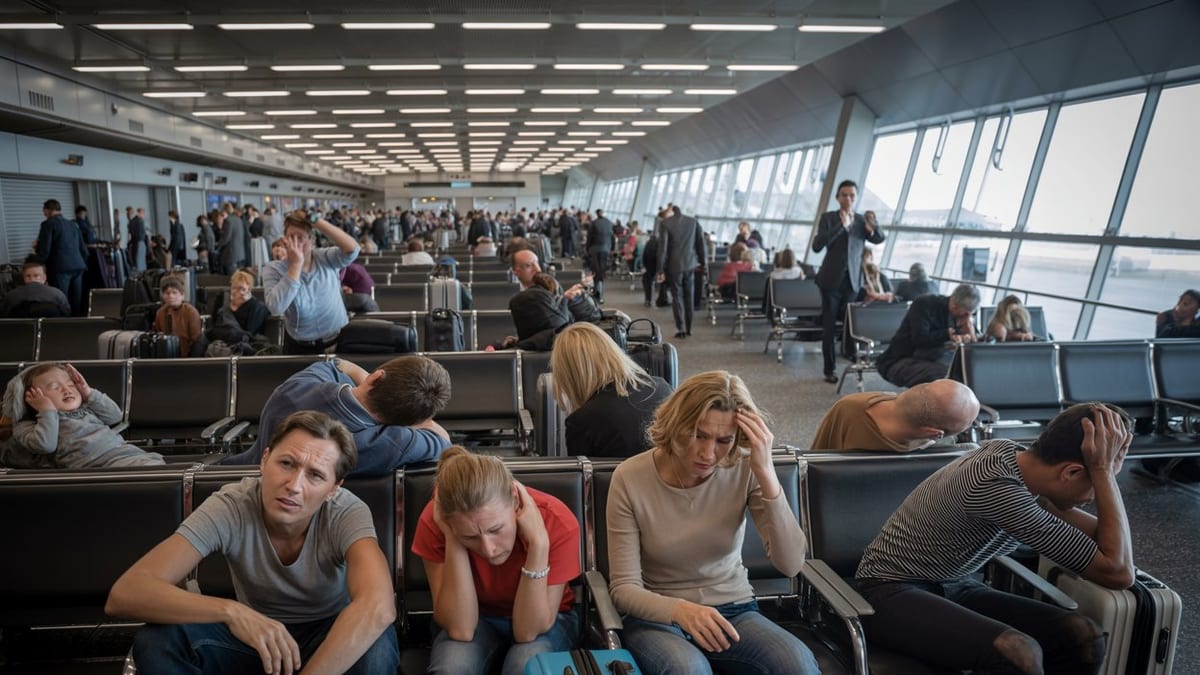
Refunds after a cancellation: the baseline right
In the United States, federal rules make a refund the core protection for passengers when a flight is cancelled. Guidance from the U.S. Department of Transportation states that if a carrier cancels a flight or makes a significant schedule change and the traveler decides not to continue the trip, the traveler is entitled to get their money back rather than a voucher, regardless of the reason for the disruption. That refund must cover the unused portion of the ticket, as well as any fees paid for services not received, such as seat selection or checked baggage.
A new automatic refund rule adopted in April 2024 strengthens how this works in practice. Publicly available information explains that airlines will be required to issue refunds automatically when passengers are owed money, instead of waiting for the customer to chase the airline and submit a claim. Refunds must be paid back in the original form of payment, within defined time limits, and passengers keep the right to refuse credits or miles if they prefer cash.
In Europe, the core right after a cancellation is also a choice between a refund and being rebooked. Under European Union Regulation 261/2004, travelers whose flight is cancelled must be offered the option of reimbursement of their ticket within seven days or rerouting to their final destination at the earliest opportunity or on a later date that suits them, subject to seat availability. The rules apply to any flight departing from an EU airport, and to flights into the EU when operated by an EU carrier.
These refund protections are distinct from compensation: passengers can often claim their money back when a flight is cancelled, but cash compensation on top of that depends on where they are flying, the cause of the disruption and how much notice they received.
When passengers can claim cash compensation in Europe
Europe offers some of the clearest compensation rules worldwide. Regulation 261/2004 sets standard amounts that airlines must pay passengers when flights are cancelled or severely delayed, unless the disruption was caused by extraordinary circumstances that could not have been avoided even if all reasonable measures had been taken. Current EU guidance describes extraordinary circumstances as major safety or security events, political instability or extreme weather, but not most routine technical problems with the aircraft.
For cancellations that are within an airline’s control, passengers are generally entitled to compensation if they were informed less than 14 days before departure and they arrive at their final destination significantly later than originally scheduled. The standard amounts are 250 euros for flights of up to 1,500 kilometers, 400 euros for most intra EU flights and other flights between 1,500 and 3,500 kilometers, and 600 euros for longer routes. Those figures are set per person and apply in addition to the refund or rerouting option.
European institutions have been working on revisions to these rules to clarify gray areas and modernize the list of extraordinary circumstances. Recent summaries from the European Parliament and the Council indicate that lawmakers intend to keep the same compensation bands while giving national authorities more detailed criteria for when airlines can be exempt from paying. The aim is to reduce disputes over events such as air traffic control restrictions or airport staff shortages, where liability has often been contested.
Travelers should also be aware that EU protections can apply even on journeys beginning outside the bloc. A passenger flying from New York to Paris on an EU airline, for example, could be covered by EU compensation rules if their flight is cancelled at short notice, while a traveler on the same route with a non EU carrier would instead rely on the refund and contract policies of U.S. and international law.
Care and assistance at the airport
Beyond refunds and compensation, air passenger rules focus on basic care when people are stranded. In Europe, airlines must provide so called right to care when a flight is cancelled or faces a long delay. Published guidance from the European Commission states that once a disruption passes certain thresholds, carriers must offer meals and refreshments in reasonable relation to the waiting time, hotel accommodation when an overnight stay becomes necessary, and transport between the airport and that accommodation.
These obligations apply even when the disruption is caused by extraordinary circumstances. That means, for example, that a cancellation due to a sudden airport closure may release an airline from paying cash compensation but not from providing food vouchers and a hotel if passengers are stuck overnight. The only practical limit is that assistance must be “reasonable,” a term that national enforcement bodies interpret based on the specific situation.
In the United States, care obligations are less standardized at federal level. DOT rules focus on refunds rather than mandatory meal or hotel vouchers. However, carriers publish their own commitments in their contracts of carriage and in comparison tools maintained by authorities. Many major U.S. airlines now promise hotel accommodation, meals or ground transport when cancellations or long delays are within the airline’s control, but not when they are caused mainly by weather or air traffic control problems. Travelers must therefore check the specific carrier’s policies to know exactly what may be offered.
How “extraordinary circumstances” and fault affect compensation
A critical dividing line in European law is whether the cause of a cancellation is considered extraordinary and outside the airline’s control. Case summaries from the Court of Justice of the European Union and later fact sheets show that events like manufacturing defects revealed by an airworthiness directive, bird strikes or sudden airspace closures are generally treated as extraordinary. In those cases, passengers retain their rights to a refund and to care, but the airline can avoid paying the fixed compensation amounts.
By contrast, problems regarded as inherent in the normal exercise of an air carrier’s activity, such as routine technical faults, crew rostering issues or late arrival of an earlier flight in the same network, are typically not classified as extraordinary. When these issues lead to a last minute cancellation, passengers are more likely to qualify for cash compensation, provided the other conditions around notice and delay at arrival are met. Courts have repeatedly underlined that it is up to the airline to prove that an event was extraordinary and that it took all reasonable steps to avoid the disruption.
In the United States, the distinction is framed differently. Refunds are owed after a cancellation regardless of cause if the passenger does not accept rebooking, but additional compensation for inconvenience is usually a matter of airline policy or goodwill. Regulators have signaled interest in rules that would define compensation when cancellations or long delays are within a carrier’s control, but any such measures would build on, rather than replace, the underlying right to a refund.
Steps travelers can take when a flight is cancelled
When a cancellation occurs, passenger advocates consistently highlight a few practical steps. The first is to document the disruption: save notifications from the airline, take screenshots of new and old itineraries and note any stated reasons for the cancellation. This evidence can help later if the airline disputes whether compensation is due or claims that extraordinary circumstances applied.
The second is to decide quickly whether to accept rerouting or ask for a refund. In both the U.S. and the EU, passengers generally cannot claim both a full refund and a new ticket at the airline’s expense for the same journey. Accepting rebooking often preserves the right to care in Europe, while declining travel altogether may be the better choice when onward connections or hotel bookings can be rearranged more cheaply than enduring a long delay.
Passengers who believe they are entitled to compensation or who have problems obtaining a refund can escalate complaints. In the United States, this can mean filing a case with the Department of Transportation’s Aviation Consumer Protection office. In Europe, travelers can contact the national enforcement body in the member state where the disruption occurred or where the flight was due to depart, using contact lists published by the European Commission. Alternative dispute resolution bodies and claims agencies also operate in this space, though travelers should review fees and terms carefully before signing over part of any payout.
Experts advise that while the legal framework can be complex, especially on multi leg trips involving different jurisdictions, the key pillars are stable. Travelers have the right to a refund when they decide not to travel on a cancelled flight, and under European rules many can claim additional compensation and care. Knowing the difference between those concepts and acting quickly at the airport remains central to protecting both time and money.
US Department of Transportation: Refunds
US DOT automatic refund rule overview
European Commission: Air passenger rights