


Travel companies know that once you have booked flights and a hotel, you are more likely to say yes to a few extras. Airport parking, fast-track security, lounge access, skip-the-line tickets, attraction bundles and insurance are all pushed in the final steps of an online booking. Some of these add-ons can quietly save you hours and real money. Others simply repackage what you could arrange yourself for less. Understanding when holiday extras make sense and when they do not can help you protect both your budget and your sanity on the road.
Get the latest updates straight to your inbox!
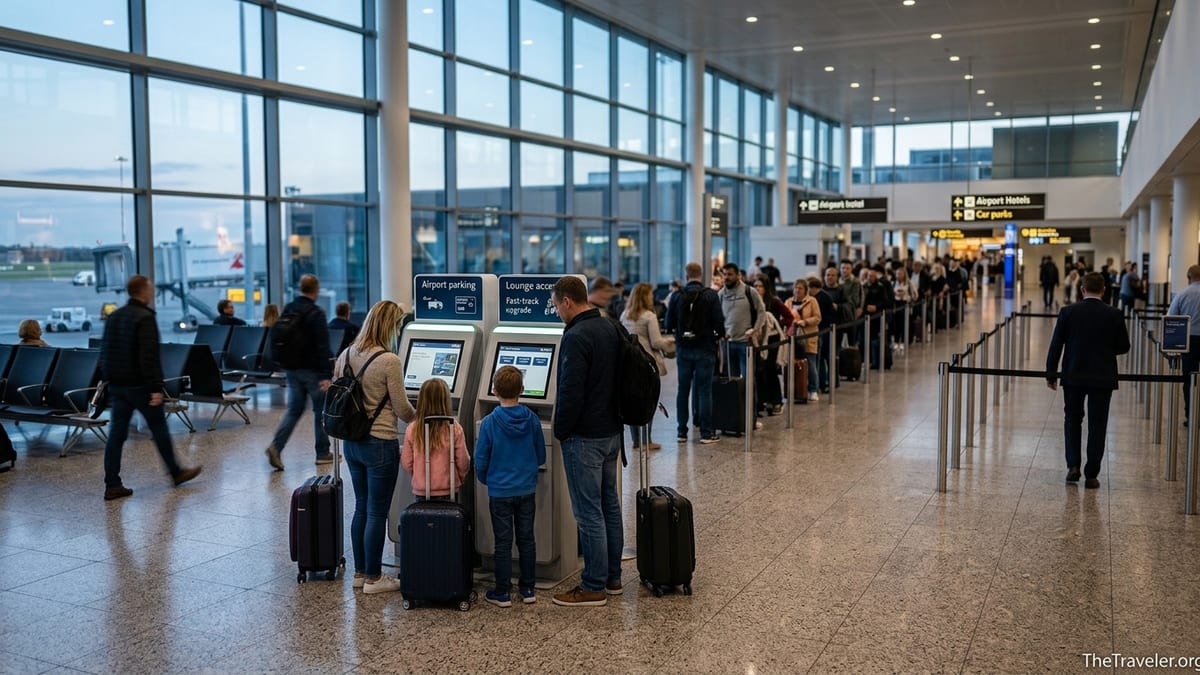
What We Mean by “Holiday Extras” Today
Holiday extras used to mean a simple add-on, like a night at an airport hotel. Today the term covers almost everything that surrounds the core of your trip. In the United Kingdom, the brand Holiday Extras has become almost synonymous with airport parking, hotels and lounges, arranging extras for millions of travellers each year through its own site and partners such as Better Choice Parking and Airparks. Similar bundles appear on airline websites, online travel agencies and credit card portals, from airport parking and transfers to attraction passes and insurance.
Broadly, these extras fall into a few categories. First are airport logistics: parking, hotels, meet-and-greet valet services and shuttle transfers. Second are in-airport comforts such as lounge access, fast-track security and priority boarding. Third are destination extras: skip-the-line tickets, city passes, sightseeing tours and rental car upgrades. Finally there are protection products: travel insurance, car excess waivers and service guarantees that promise refunds or assistance if things go wrong.
The key question is not whether holiday extras are good or bad in principle. The issue is timing, context and price. An airport lounge day pass for 40 dollars on a six-hour layover after an overnight flight can be a bargain; the same pass bought for a short domestic hop when you already have lounge access through a credit card will almost certainly be wasted money. Thinking in terms of value per hour of stress saved is often more helpful than fixating solely on the headline price.
In practice, the smartest travellers rarely buy every extra in one place. They mix and match. You might use a specialist like Holiday Extras or an airline to lock in a discounted airport hotel and parking combo, then buy your city’s public transport pass directly from the local authority and arrange museum tickets from the venue’s own website. The aim is not to avoid extras entirely but to choose them surgically.
Airport Parking and Hotels: When Convenience Beats DIY
Airport parking is one of the most heavily marketed add-ons, and also one of the easiest to misjudge. In the UK, providers working with Holiday Extras sell everything from budget park-and-ride lots several miles from the terminal to premium meet-and-greet valet services where you hand your keys to a driver at departures. On a random weekend at Gatwick or Manchester, pre-booked off-airport parking might run around 6 to 10 pounds per day, while official short-stay parking booked on the day can easily cost double that. In the United States, week-long on-site parking at a major hub can exceed 150 dollars, while reputable off-airport lots often undercut that by 30 to 50 percent when booked ahead.
Holiday extras make obvious sense when the airport is a long drive from home, departure is early in the morning and public transport is limited. A typical package at a regional UK airport might bundle one night at a mid-range hotel, parking for 8 or 15 days and shuttle transfers for only a small premium over parking alone. Travellers from Scotland heading to Newcastle or Prestwick, for example, often find that a hotel-and-parking deal arranged through a consolidator costs little more than stand-alone parking purchased late, while allowing them to arrive the night before and avoid a dawn motorway run.
Meet-and-greet valet services are more situational. At London Gatwick, brands marketed by Holiday Extras or partners such as Maple Parking allow you to drive directly to the terminal, hand your keys to a uniformed driver and walk straight to check-in. On a seven-day trip, this might cost roughly 80 to 120 pounds compared with 60 to 80 pounds for standard long-stay self-park. It becomes good value if you are travelling with young children, bulky ski bags, limited mobility or a tight business schedule, since avoiding a crowded shuttle bus at 5 a.m. can be worth far more than the extra 30 or 40 pounds.
By contrast, airport extras rarely make sense when you live close to the airport or have strong public transport options. If you can take a commuter train directly to the terminal for a few dollars each way, paying for parking on top is usually unnecessary. Similarly, if your departure is mid-morning and you can reach the airport in two hours on a reliable motorway, an airport hotel the night before is a luxury rather than a necessity. In those cases, booking direct with the airport for simple long-stay parking, or even skipping parking altogether, is often the smarter call.
Lounges and Fast Track: Paying for Peace in the Terminal
Airport lounges and fast-track security lanes sit in a grey area between luxury and practicality. Day passes to independent lounges usually cost about 35 to 65 dollars per person depending on region and amenities, with some airline-operated clubs charging closer to 60 dollars or more for walk-up access. Priority Pass and DragonPass memberships, sometimes bundled with premium credit cards, expand that access but come with annual fees that only pay off if you travel frequently.
Adding lounge access as a holiday extra is most worthwhile when you face a long layover, are travelling as a family or are connecting through airports with high food prices and limited comfortable seating. Consider a family of four stuck on a five-hour layover in a hub airport after a transatlantic flight. Terminal restaurants may easily charge 20 to 25 dollars per person for a basic meal and soft drink, plus extra for snacks and coffees. A lounge day pass at roughly 45 dollars that includes hot food, drinks, Wi-Fi and showers can quickly pay for itself, especially if one parent needs a quiet corner to work while the other supervises children in a more controlled space.
Fast-track security and immigration lanes can also be solid value at the right airports. At busy European gateways in peak summer, regular security lines can stretch to 45 minutes or more at certain times of day, while fast-track lanes sold by airlines or third-party providers might limit waits to around 10 to 15 minutes. If you are connecting from a tight inbound flight or flying with someone who struggles to stand for long periods, paying a modest fee for fast-track can be the difference between a calm stroll to the gate and a sprint.
There are clear times when these extras do not make sense. If you already have lounge access through a credit card, frequent flyer status or a business-class ticket, buying a separate lounge pass is redundant unless you specifically want a different lounge. Some airports have little to no lounge offering before short-haul flights, or restrict entry to three hours before departure, so arriving early just to use a lounge can backfire. Likewise, paying for fast-track at a small regional airport early on a Tuesday in February, where the regular queues rarely top 10 minutes, is an unnecessary expense that offers minimal real benefit.
Skip-the-Line, City Passes and Tours: Time vs Money on the Ground
Destination extras can be among the best-value add-ons if you match them carefully to your itinerary. Skip-the-line tickets at heavily visited attractions such as the Eiffel Tower in Paris, the Colosseum in Rome or the Sagrada Familia in Barcelona often cost only a modest premium over standard timed-entry tickets bought directly. In return, they can save you from joining queues that, in peak summer or on holiday weekends, can stretch to an hour or more in full sun. For example, travellers in Rome have reported general admission lines at the Colosseum of several hours on hot days, compared with much shorter waits for holders of pre-booked skip-the-line passes.
City passes, which bundle multiple attractions and public transport for a fixed price, reward dense sightseeing. In destinations such as New York, London or Tokyo, a pass that includes museums, observation decks and unlimited metro rides can deliver strong value if you plan to visit several paid attractions per day. If you are only in town for a short stopover or prefer slow travel with one major sight every other day, these passes may not justify their cost. In that case, buying individual tickets directly from each venue, often with free cancellation, keeps your schedule flexible without locking you into a rushed checklist.
Organised tours fall into a similar pattern. A small-group food tour in a city known for complex local dining customs, or a pre-dawn minibus to a remote temple, can introduce you to experiences that are logistically difficult to arrange alone. Holiday extras make sense here because you are not paying for something you could easily do yourself; you are paying for expertise, safe transport and local context. On the other hand, paying for a simple coach tour that spends most of its time at tourist shops, or booking a “Panoramic City Tour” you could replicate by walking and using public transport, is rarely good value.
Where travellers often overpay is by buying attraction extras impulsively at the checkout page of a flight or hotel booking, before they have planned their day-by-day schedule. A generic “Paris Museum Bundle” suggested by an airline website might sound tempting, but if it includes three museums on opposite sides of the city and your accommodation is far from public transport, you may never use everything you have bought. Waiting until you have a rough itinerary, then looking at official museum sites and local tourism boards for passes and combined tickets, usually leads to more tailored and better-priced choices.
Insurance, Guarantees and “Protection” Products
Insurance and protection-style extras are among the most confusing parts of modern travel booking. At checkout you might be offered trip cancellation insurance, baggage protection, missed-connection cover, car rental damage waivers, weather protection, and various service guarantees that promise assistance if flights are delayed or accommodation changes. Some are underwritten by reputable insurers and can be genuinely useful; others primarily exist to generate commission for the seller.
Holiday extras in this category make sense when they fill a clear gap in your existing cover or match a specific risk. A long, expensive multi-country trip with several non-refundable hotel bookings and internal flights is a classic example. Comprehensive travel insurance purchased once for the entire journey can protect you if illness, family emergencies or airline disruption forces you to cancel or change plans. In car rental, local collision damage waivers with low excesses can be rational if your existing car or credit card insurance specifically excludes rentals in that region, or if local driving conditions significantly increase the risk of minor accidents.
Conversely, insurance-style add-ons often do not make sense when they duplicate cover you already have. Many travellers in North America and Europe, for example, already hold some form of travel protection through premium credit cards, workplace benefits or annual multi-trip insurance policies. Paying again for a basic cancellation plan each time you book a budget flight can mean double or triple coverage with no additional benefit. Similarly, add-ons that promise modest fixed payouts for common inconveniences such as short delays may cost more in aggregate than they ever pay out, especially once you factor in excesses and exclusions.
The safest approach is to treat every insurance or protection offer as a separate product rather than an afterthought. Before checking any box, ask yourself whether you understand the coverage, whether you truly need it for this trip, and whether you could obtain a more comprehensive policy more cheaply elsewhere. Sometimes the best use of your holiday extras budget is to skip a handful of low-value micro-protections and instead invest in a single robust policy bought from a specialist insurer.
Spotting Good Value vs Clever Marketing
The travel industry is expert at making extras feel urgent and scarce. Countdown timers, red “only 2 left at this price” banners and prominent “Recommended” tags are all designed to push you towards yes. To decide whether an extra is genuinely worthwhile, start by doing simple arithmetic. For a lounge pass, compare the cost to what you would realistically spend on food, drinks and perhaps a shower in the terminal. For parking, compare the package price to the cheapest safe alternative, whether that is off-airport parking, a taxi, or public transport tickets for your whole group.
Real-world examples help clarify the difference. Imagine flying from London to New York for a week in July. The booking engine offers Gatwick parking for eight days for 110 pounds, a meet-and-greet upgrade for 155 pounds, or a hotel-and-parking combo for 130 pounds including one night at a three-star hotel. If you need to be at the airport at 6 a.m. and live several hours away, the hotel-and-parking deal probably offers the best blend of value and comfort. If you live 30 minutes away and are flying mid-afternoon, standard long-stay parking booked directly from the airport might be enough, and the extras become harder to justify.
Another example: a short city break to Barcelona for two adults. The airline suggests a 70 euro city pass that includes skip-the-line access to two museums, public transport and a bus tour. Look at your plans. If you only truly care about the Sagrada Familia and Park Güell, you could book timed tickets directly from each site and buy a reloadable metro card once you arrive, likely for less than the bundled pass. In this scenario, the holiday extra is more about convenience and one-stop booking than hard financial savings.
Taking a few minutes to research alternatives can save substantial sums across a year. Independent sites that compare airport parking providers in partnership with brands like Holiday Extras, or tools that list lounge day pass prices by airport, make it much easier to see whether a package is truly discounted or just rebadged. The general rule: the more an extra relies on fear of missing out or a one-click upsell at checkout, the more carefully it deserves to be scrutinised.
The Takeaway
Holiday extras are not inherently good or bad. They are tools. Used thoughtfully, they can protect you from long queues, chaotic departures and unexpected costs. Used blindly, they can quietly double the price of a trip without significantly improving your experience. The difference lies in matching each extra to a clearly defined need, such as arriving rested for an important meeting, navigating a complex city efficiently, or safeguarding a once-in-a-lifetime trip from disruption.
In practical terms, that means reserving your budget for high-impact extras: well-reviewed airport parking and hotel bundles at awkward hours, lounge access when you face a long layover, fast-track when queues are predictably severe, and solid insurance for complex or expensive itineraries. It also means being comfortable declining lower-value offers, from redundant cancellation plans to sightseeing packages that do not fit your pace of travel.
As you plan your next journey, treat every proposed extra as a small business case. Ask what problem it solves, what it would realistically cost you to solve that problem in another way, and whether the extra adds enough comfort or security to justify its price. When you think this way, you will still buy holiday extras, but you will buy fewer of them, more strategically, and with far more confidence that your money is well spent.
FAQ
Q1. Are airport parking packages from brands like Holiday Extras always cheaper than booking direct?
Not always. They can be cheaper, especially for hotel-and-parking bundles or off-airport lots, but sometimes official airport websites or local operators run promotions that beat consolidator prices. It is worth checking at least one independent comparison site and the airport’s own parking page before you commit.
Q2. When is it worth paying for airport lounge access as a holiday extra?
Lounge access is most worthwhile when you have a long layover, are travelling with children, need to work in quiet or expect to spend heavily on food and drinks in the terminal. If your wait is under two hours, you already have status-based access, or the lounge is small and crowded, a paid pass may not represent good value.
Q3. Do meet-and-greet valet parking services provide better security for my car?
Reputable valet providers usually keep vehicles in monitored compounds and often highlight security as a selling point, but standards vary. Meet-and-greet services are primarily about convenience rather than extra security, so it is important to read recent reviews, check whether the parking area is on or off airport grounds and confirm that the operator is properly insured.
Q4. Are skip-the-line tickets at major attractions really necessary?
At very busy sights such as the Colosseum, Eiffel Tower or popular theme parks, skip-the-line or timed-entry tickets can save you from queuing for an hour or more, especially in high season. They are less critical for off-peak visits, early morning entries or smaller museums with manageable queues, so it helps to research typical wait times for your exact travel dates.
Q5. Should I buy city passes that bundle attractions and public transport?
City passes can be excellent value if you plan to visit several covered attractions per day and make heavy use of public transport. They are less useful for slow-paced trips where you only see one paid attraction every couple of days. Before buying, list the places you genuinely intend to visit and add up individual ticket prices to see whether the pass offers real savings.
Q6. Are fast-track security or immigration lanes worth paying for?
Paid fast-track makes sense at airports and times of day known for long queues, or when you have limited mobility, are travelling with young children or face a tight connection. At smaller airports, off-peak times or routes with historically short lines, paying extra for fast-track is unlikely to make much difference to your overall experience.
Q7. Is travel insurance sold at checkout as an extra good enough?
Sometimes, but not always. Checkout insurance may provide basic cover for cancellations and medical emergencies, yet limits, exclusions and claims processes can vary. It is wise to compare the offer with a standalone policy from a specialist insurer and to ensure it does not duplicate protection you already have through credit cards or annual multi-trip policies.
Q8. Are car rental damage waivers offered as extras necessary if I have other insurance?
If your existing car or credit card insurance clearly covers rental vehicles in the country you are visiting, you may not need the full additional waiver. However, local policies often reduce your excess to a low amount and make claims simpler. It is important to read both your existing cover and the rental terms before deciding whether to decline or accept the waiver.
Q9. Can I add holiday extras like lounges or parking after I have finished my booking?
In many cases yes. Airport parking, hotels, lounge passes and fast-track can often be added later directly with providers or through comparison sites, sometimes at similar prices. Buying later gives you time to research options and avoids committing to extras you may not need, though some early-bird discounts do disappear closer to departure.
Q10. What is the simplest rule of thumb for deciding if a holiday extra is worth it?
A practical rule is to ask whether the extra clearly saves you either significant time or significant stress at a cost you are comfortable with. If you can describe the specific problem it solves and cannot easily achieve the same result more cheaply on your own, it is likely a good candidate. If the benefit feels vague or purely based on fear of missing out, it is probably safe to skip.